





The release of the 9th edition of the Dietary Guidelines for Americans (2020-2025) marks a significant milestone in federal nutrition policy. With the overarching mandate to “Make Every Bite Count,” this comprehensive document serves as the cornerstone for policy makers, healthcare providers, nutrition educators, and the architects of federal food programs. Spanning nearly 150 pages, this edition represents a shift toward life-cycle nutrition, providing granular guidance for various age groups—from infants and toddlers to older adults—reflecting an increasingly sophisticated understanding of human development.
However, the guidelines remain a subject of intense academic and public health debate. While they offer a flexible framework for healthy eating, critics argue that the policy fails to bridge the gap between human health and planetary sustainability, ultimately falling short of addressing the systemic challenges of the modern food environment.
Main Facts: A Shift Toward Life-Cycle Nutrition
The most notable evolution in the 2020-2025 iteration is its expansion into the earliest stages of life. For the first time, the guidelines include specific recommendations for infants and toddlers under the age of two, as well as pregnant and lactating women. This "life-stage" approach recognizes that nutritional needs are not static; they fluctuate significantly depending on the developmental milestones of the individual.
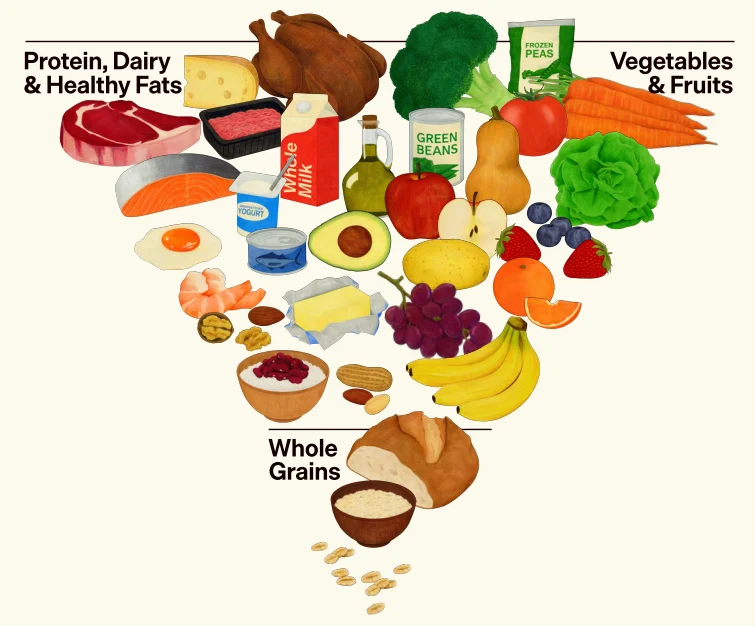
The guidelines continue the trend established in the previous edition by moving away from focusing on specific "superfoods" or isolated nutrients. Instead, they promote a “dietary pattern” approach. By encouraging the consumption of a wide variety of nutrient-dense foods across different categories, the guidelines aim to offer consumers greater flexibility. This shift acknowledges that health is not achieved through the consumption of a single miracle ingredient, but through the aggregate effect of an individual’s daily food choices.
Furthermore, the document places a renewed emphasis on "cultural responsiveness." Nutrition educators are explicitly encouraged to consider how factors such as race, ethnicity, socioeconomic status, food access, and personal preferences influence dietary habits. This acknowledges that a “one-size-fits-all” approach to nutrition is inherently flawed in a country as diverse as the United States.
Chronology: The Path to the 2020-2025 Standards
The Dietary Guidelines for Americans have been mandated by the National Nutrition Monitoring and Related Research Act of 1990, requiring them to be updated every five years.
- 2015-2020: The previous edition broke ground by removing the strict cap on total fat intake, shifting the focus toward the quality of fats consumed. It also introduced clearer limits on added sugars.
- 2020-2025 Development: The current edition underwent rigorous review by the Dietary Guidelines Advisory Committee (DGAC), which analyzed thousands of scientific studies.
- The Public Feedback Phase: During the development of the 2020-2025 edition, there was significant public pressure to include environmental sustainability as a core pillar of the guidelines. However, much like the 2015 cycle, the final report excluded explicit environmental impact assessments from its core recommendations.
- Release: The document was finalized in late 2020, serving as the current gold standard for federal programs like WIC (Women, Infants, and Children) and the National School Lunch Program.
Supporting Data: The Healthy U.S.-Style Dietary Pattern
The guidelines rely on three primary models: the "Healthy U.S.-Style Dietary Pattern," the "Healthy Mediterranean-Style Pattern," and the "Healthy Vegetarian Pattern." While these patterns offer variety, the U.S.-Style pattern remains the baseline for most federal programs.
Dietary Components to Limit
The guidelines maintain strict, evidence-based caps on specific dietary components, with a new focus on age-specific thresholds:
- Added Sugars: Recommended to be less than 10% of daily calories per day for individuals aged 2 and older. They should be avoided entirely for infants under age 2.
- Saturated Fat: Recommended to be less than 10% of daily calories for individuals 2 and older.
- Sodium: Intake should be less than 2,300 mg per day—and less for children younger than 14.
These limits are designed to curb the prevalence of chronic diseases, including cardiovascular disease, Type 2 diabetes, and obesity—conditions that are currently at epidemic levels in the United States.
Official Responses and Critical Analysis
The reception of the guidelines among the scientific community has been mixed. Dr. Walter Willett, Professor of Epidemiology and Nutrition at the Harvard T.H. Chan School of Public Health, has been a vocal critic of the document’s limitations.
"In general, there was minimal change from the last edition," Dr. Willett noted. While he acknowledges the positive steps toward including life-cycle nutrition, he emphasizes that the guidelines remain anchored in outdated paradigms. Specifically, the guidelines continue to recommend three servings of dairy per day. Dr. Willett points out that this recommendation lacks robust evidence regarding improved health outcomes and fails to address the "fantasy" of low-fat dairy.
"Because the disposal of dairy fat would be hugely wasteful, it would almost certainly remain in the food supply," Willett explains. "If we are serious about these guidelines, we have to look at the math. To avoid the large greenhouse gas emissions associated with dairy at three servings per day, the majority of that consumption would need to be plant-based."
The Sustainability Gap
Perhaps the most significant criticism is the "silence" of the guidelines regarding the environmental impact of the recommended diets. Scientific consensus suggests that animal-based food production, particularly red meat and dairy, carries a significantly higher carbon footprint than plant-based nutrition. By failing to integrate environmental sustainability into the dietary targets, the guidelines miss a critical opportunity to align human health with planetary health.
Implications for Public Policy and Individual Health
The implications of these guidelines are profound. Because they dictate the food served in schools, hospitals, and government facilities, they essentially steer the national food supply.
The Protein Conundrum
The guidelines recommend "lean meats" as a primary protein source, yet the definition of "lean" is often confusing to the average consumer. Experts worry that this terminology may inadvertently validate the consumption of processed meats—such as bacon or sausages labeled as "low-fat"—which are linked to negative health outcomes.
While the text does clarify that "most intake of meats and poultry should be from fresh, frozen, or canned, and in lean forms," this vital nuance is buried deep within the document. For the general public, the primary takeaway remains a reliance on animal proteins, potentially at the expense of more sustainable, health-protective plant-based sources like beans, nuts, and legumes.
Moving Forward
For the guidelines to be truly effective in the next cycle (2025-2030), experts argue for a more integrated approach. This would include:
- Sustainability Integration: Acknowledging that a diet high in red meat and dairy is not sustainable for the planet.
- Clearer Language: Moving explicit warnings about processed meats from the back of the book to the front-page recommendations.
- Economic Realism: Providing better strategies for low-income populations to access high-quality, plant-based proteins, rather than assuming that lean, fresh meat is an affordable staple for all.
In conclusion, the 2020-2025 Dietary Guidelines for Americans represent a necessary step forward in recognizing the complexity of human nutrition across the lifespan. However, they remain a "work in progress." To address the dual crises of chronic disease and climate change, future iterations must move beyond the status quo, offering guidance that is not only evidence-based for the individual but also responsible for the global ecosystem. As it stands, the mandate to "Make Every Bite Count" remains a noble goal, but one that currently lacks the structural support required to truly transform the American diet.