The landscape of metabolic medicine is undergoing a seismic shift. For years, the conversation surrounding GLP-1 receptor agonists—a class of drugs including semaglutide (Ozempic, Wegovy) and tirzepatide—has centered on their capacity to regulate blood sugar and curb physical hunger. However, a groundbreaking study from the University of Virginia, supported by the National Institutes of Health (NIH), has uncovered a new dimension to these medications. Researchers have identified that a specific class of newer, oral "small-molecule" GLP-1 drugs does more than just suppress appetite; they appear to fundamentally alter how the brain processes pleasure, effectively "dialing back" the desire for hedonic, or enjoyment-based, eating.
This discovery moves the needle from treating weight loss as a simple caloric deficit problem to understanding it as a complex neurological interaction. By targeting a deep-brain circuit previously thought to be outside the reach of these medications, this research opens the door to potential new therapies for everything from obesity to substance use disorders.
The Core Discovery: Breaking the Pleasure Cycle
To understand the magnitude of this finding, one must distinguish between two types of eating: homeostatic and hedonic. Homeostatic eating is the body’s way of signaling that it needs fuel to survive. Hedonic eating, conversely, is driven by the brain’s reward system—the "comfort food" phenomenon where we eat for pleasure, social connection, or stress relief, regardless of energy requirements.
Previous studies on injectable peptide-based GLP-1s showed they primarily target the hypothalamus and hindbrain, which act as the body’s "fuel gauge." However, the University of Virginia team, led by Professor Ali Guler, discovered that oral small-molecule GLP-1 receptor agonists—specifically orforglipron and the experimental compound danuglipron—operate differently.
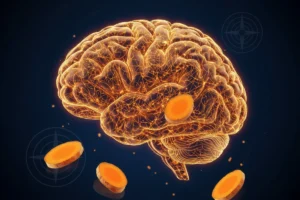
When administered to mice with humanized GLP-1 receptors, these oral drugs bypassed the typical satiety centers and made a direct impact on the central amygdala. This region, tucked deep within the brain, is a critical node in the processing of desire and reward. The study revealed that by activating this region, the drugs significantly dampened dopamine release—the brain’s chemical messenger for pleasure—during the act of eating. In essence, the drugs make high-calorie, pleasurable food less "rewarding" to the brain, stripping away the neurological feedback loop that encourages overconsumption.
Chronology: A New Frontier in Pharmacology
The journey to this discovery represents a multi-year effort to understand why patients on these medications report a psychological shift alongside physical weight loss.
- 2010s–Early 2020s: The medical community observes the transformative success of injectable GLP-1 drugs like Ozempic. While clinical trials confirm weight loss, anecdotal reports from patients suggest an unexpected "quieting" of food noise—an obsessive, constant focus on food.
- Early 2024: Research teams at the University of Virginia shift focus to the pharmacological differences between large-molecule peptides and small-molecule oral alternatives. They hypothesize that the smaller chemical structure of the newer pills might allow for different physiological pathways.
- Mid-2024: Using advanced gene-editing techniques, the researchers modify mice to possess human-like GLP-1 receptors, creating a more accurate model for how these drugs interact with human neural pathways.
- Late 2024: The team maps the neural activation in the mice after administering orforglipron and danuglipron. The discovery of the amygdala-based pathway confirms that these oral drugs are engaging the brain’s reward system, distinct from the satiety systems targeted by their injectable predecessors.
- Present Day: The findings are published, setting the stage for future clinical trials to determine if these effects hold true in human subjects and if they can be leveraged to treat broader addiction-related pathologies.
Supporting Data: Why "Small-Molecule" Matters
The transition from injectable peptides to oral small-molecule drugs is not merely a matter of convenience; it is a fundamental shift in drug delivery. Peptide-based drugs (like semaglutide) are large, complex chains of amino acids. Because they are large, they are difficult to manufacture, expensive to produce, and require injection.
Small-molecule drugs, such as orforglipron, are synthesized chemically. They are compact, stable, and—crucially—can be formulated into a pill. The University of Virginia’s research suggests that their smaller size may influence their pharmacokinetics, or how they move through the body and penetrate the blood-brain barrier.
In the study, the research team monitored neural activity using high-resolution imaging. While the control groups showed standard activity in the hypothalamus, the experimental groups treated with small-molecule GLP-1s showed distinct, heightened activation in the central amygdala. When the researchers monitored dopamine levels during feeding, they observed a measurable decrease in dopamine surges compared to untreated mice. This data provides the first concrete evidence that the "hedonic brake" is a pharmacological reality rather than just a subjective patient experience.
Official Responses: The Scientific Community Weighs In
The implications of this study have drawn significant attention from the National Institute on Drug Abuse (NIDA). Lorenzo Leggio, M.D., Ph.D., Clinical Director at NIDA, emphasized the necessity of this work as these drugs become a household staple.
"As the accessibility of these medications continues to rise and patient uptake increases, it’s crucial that we understand the neural mechanisms underlying the effects we’re seeing," Dr. Leggio stated. His interest is not limited to obesity; the NIDA is deeply invested in the potential for these drugs to serve as a treatment for substance use disorders. If these medications can dull the "reward" signal of food, scientists hypothesize they may be able to do the same for the addictive properties of nicotine, alcohol, or other substances.
However, the scientific community remains cautious. The authors of the study have been careful to note that this is a preclinical study. While the findings in mice are robust, they have not yet been replicated in human clinical trials specifically designed to measure amygdala activation. Furthermore, the study is not a clinical trial associated with FDA approval for psychiatric indications, meaning it is still in the "investigative" phase.
Implications: A Future Beyond Obesity
The potential applications of this research are profound. If we can target the central amygdala to reduce the rewarding nature of food, we may be looking at a new generation of behavioral medicine.
1. Tackling Substance Use Disorders
The most exciting implication lies in addiction medicine. Addiction is often characterized by a hyper-responsive reward system that drives compulsive behavior. If oral GLP-1 drugs can dampen the dopamine-driven reward of a substance, they could potentially serve as a "chemical buffer," helping individuals break the cycle of cravings that leads to relapse.
2. Redefining "Food Noise"
For many, the struggle with weight is not about lack of willpower; it is about an internal "food noise" that makes the brain prioritize high-calorie rewards. By understanding the neural pathway, clinicians may soon be able to prescribe medications that specifically target this cognitive burden, providing a more compassionate and effective approach to weight management.
3. Economic and Accessibility Shifts
The shift toward oral medications is also an economic imperative. By lowering the cost of manufacturing, these treatments could become accessible to a much broader demographic, addressing health inequities that often prevent lower-income populations from accessing effective weight-loss treatments.
4. Regulatory and Ethical Considerations
As we look forward, the research also raises ethical questions. If we are modifying the brain’s reward circuitry, we must be vigilant about potential side effects, such as the suppression of natural, healthy sources of pleasure or motivation. The long-term impact of "dialing back" the reward system is an area that requires extensive longitudinal study before these drugs can be repurposed for non-metabolic conditions.
Conclusion: The Path Forward
The University of Virginia study serves as a masterclass in how basic science can bridge the gap between anecdotal patient reports and clinical reality. By identifying the central amygdala as a key player in the efficacy of oral GLP-1 drugs, researchers have provided a roadmap for the next decade of metabolic and psychiatric research.
We are currently in a transition period where these drugs are viewed primarily through the lens of weight loss. However, as the evidence mounts, it is becoming clear that we are witnessing the emergence of a new class of "neuro-metabolic" agents. These drugs do not just change the body; they change the mind’s relationship with its environment. As the scientific community continues to explore the boundaries of these pathways, the hope is that we will move toward a future where craving is no longer an insurmountable barrier to health, but a manageable component of our biological makeup.
Funding Disclosure: This research was supported by the National Institute of Neurological Disorders and Stroke (NINDS) grants R01NS111220, R01NS122834, and R01NS120702; the National Institute of General Medical Sciences (NIGMS) grant R35GM140854; the National Heart, Blood, and Lung Institute (NHLBI) grant R01HL153916; and the National Cancer Institute (NCI) grant P30CA044579.