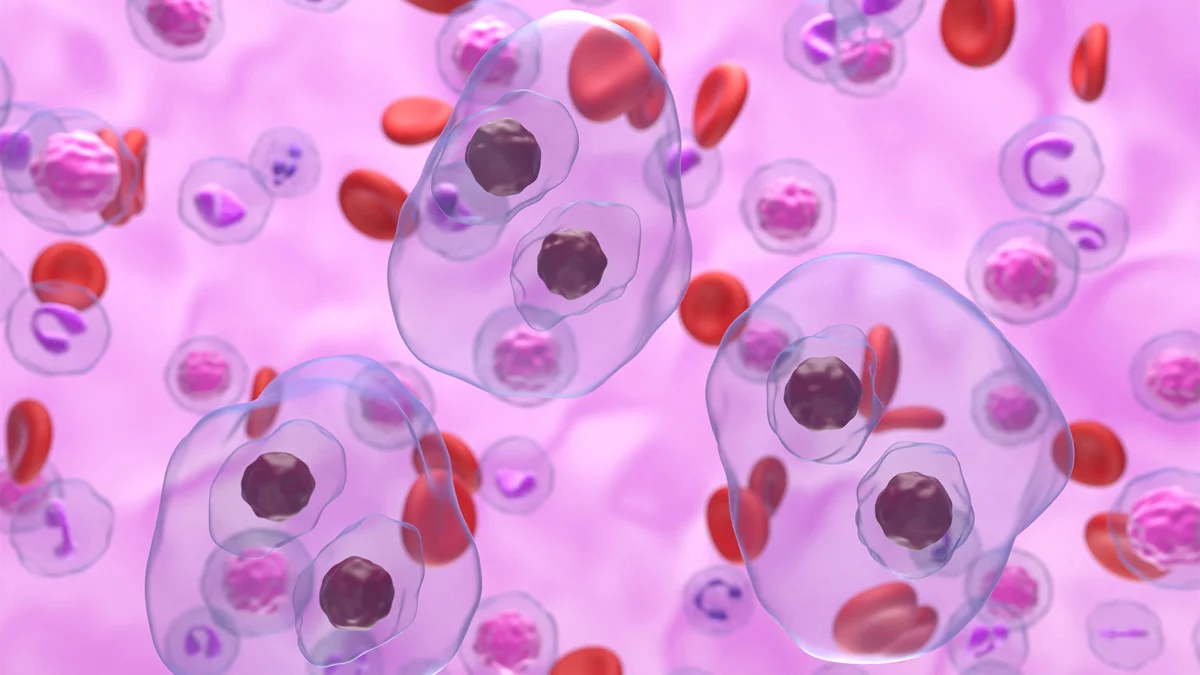
The landscape of hematologic oncology is witnessing a transformative shift. According to a landmark retrospective study published in The Lancet Haematology, clinical outcomes for patients battling relapsed or refractory (R/R) classical Hodgkin lymphoma (cHL) have seen substantial improvements over the last decade. By analyzing data from over 19,000 patients across 53 countries, researchers have confirmed that advancements in pre-transplantation salvage therapy and refined transplantation techniques are significantly extending both progression-free survival (PFS) and overall survival (OS).
The study, led by Dr. Ali Bazarbachi of the American University of Beirut and an international team of researchers, serves as a comprehensive "state of the union" for hematopoietic cell transplantation (HCT) in the context of Hodgkin lymphoma, providing granular insights that suggest we are entering an era of improved durability and success for these complex patients.
Main Facts: A Decade of Progress
The primary takeaway from this extensive registry-based cohort study is that the efficacy of HCT—both autologous (using the patient’s own stem cells) and allogeneic (using donor stem cells)—has trended upward since 2010.
For patients undergoing their first autologous HCT, the 2-year progression-free survival rate climbed from 63% in the 2010–2014 period to 73% in 2019–2022. During that same timeframe, overall survival rates rose from 85% to 93%.
The gains were even more pronounced in the allogeneic HCT group, which typically consists of patients with more aggressive or resistant disease who have failed previous interventions. Among these patients, the 2-year PFS jumped from 44% to 62%, while 2-year OS improved from 66% to 72%.
The researchers attribute these improvements largely to a reduction in post-transplantation relapse incidence. While non-relapse mortality (NRM) remained relatively stable or saw only marginal improvement, the ability to keep the cancer at bay—the primary driver of mortality in this population—has clearly strengthened.
Chronology of the Data: Mapping the Shift
The study encompassed a vast dataset provided by the European Society for Blood and Marrow Transplantation (EBMT), covering more than 600 centers worldwide. Researchers identified a staggering 22,047 patients who underwent a first HCT for relapsed or refractory Hodgkin lymphoma between 2010 and 2022. Of these, 19,498 were included in the final analysis, with 15,648 receiving autologous transplants and 3,850 receiving allogeneic transplants.
The 2010–2014 Benchmark
In the early part of the last decade, patients faced higher relapse rates. For autologous recipients, the 2-year relapse incidence sat at 33%, with a 4% non-relapse mortality rate. The allogeneic group faced even steeper challenges, with a 40% relapse rate and a 17% non-relapse mortality rate.
The 2019–2022 Transformation
By the most recent period, the clinical picture had shifted significantly. Autologous relapse rates dropped to 25%, and allogeneic relapse rates saw a dramatic decline to 18%. This improvement demonstrates that the standard of care—incorporating newer salvage agents such as brentuximab vedotin and checkpoint inhibitors—is successfully "clearing the field" before the patient ever reaches the transplant bed.
Supporting Data: The Variables of Success
To understand why these improvements occurred, the researchers utilized multivariate analysis to isolate the factors most predictive of success.
Critical Drivers for Autologous HCT
For those undergoing autologous transplantation, the status of the disease at the time of the procedure is the single most important factor. The study found that patients who were in complete remission (CR) at the time of transplant had significantly better outcomes. Conversely, patients with partial response or stable/progressive disease faced a significantly higher risk of failure.
- Partial Response: Hazard Ratio (HR) 1.92
- Stable/Progressive Disease: HR 2.45
Other key contributors to success included younger age, female sex, higher Karnofsky performance status (indicating better physical function), a low comorbidity index, and a longer interval between the initial diagnosis and the transplantation.
Critical Drivers for Allogeneic HCT
In the allogeneic setting, where the donor immune system acts as a "graft-versus-tumor" mechanism, the factors for success are more complex. While achieving complete remission before the transplant remains a priority, the conditioning regimen—the chemotherapy or radiation given to prepare the body—plays a vital role. Reduced-intensity conditioning (RIC) emerged as a significant factor in improving survival. Furthermore, the use of checkpoint inhibitors prior to allogeneic transplant was associated with a significant improvement in PFS.
The study also highlighted the importance of modern prophylaxis strategies, specifically the use of post-transplantation cyclophosphamide, which has become a game-changer in managing graft-versus-host disease (GVHD).
Official Responses and Clinical Perspectives
Dr. Bazarbachi and his colleagues emphasize that this research is not merely a record of the past but a roadmap for the future. "To our knowledge, this is the largest cohort study reporting trends in patient characteristics and post-transplantation outcomes," they noted in The Lancet Haematology.
The research team suggests that the clinical community must double down on achieving deep, complete remission before transplant. "Modern salvage approaches incorporating brentuximab vedotin with or without checkpoint inhibitors should aim to reach complete remission before transplantation whenever possible," they urged.
Regarding the role of allogeneic HCT, the authors frame it as an "important curative option" rather than a last-ditch effort, particularly when it utilizes reduced-intensity conditioning and modern GVHD prophylaxis. They specifically noted that when unrelated donors are paired with post-transplantation cyclophosphamide, the outcomes are categorized as "excellent."
Implications: The Road Ahead
The findings of this study have profound implications for how oncologists approach R/R Hodgkin lymphoma.
1. The Power of "Pre-habilitation"
The data reinforces that the transplant is only as successful as the status of the disease entering the procedure. There is a clear mandate for clinicians to utilize the most effective salvage therapies available—specifically brentuximab vedotin and immune checkpoint inhibitors—to bridge patients to a state of complete remission. The "cost" of transplanting a patient with active or refractory disease is now statistically quantified as a higher risk of relapse.
2. Refining the Donor Strategy
The study sheds light on the evolving donor landscape. While matched related donors have historically been the gold standard, the data suggests that with the inclusion of post-transplantation cyclophosphamide, the gap between related and unrelated donors is closing. This provides more flexibility for clinicians to find suitable donors for patients who might otherwise lack a perfect genetic match.
3. Acknowledging the Limitations
Despite the study’s massive scale, the authors are careful to acknowledge the inherent limitations of registry-based research. One critical "blind spot" is the patient attrition rate—it remains unknown how many patients were intended for transplant but were unable to reach it due to disease progression or the toxicities of salvage therapies. This suggests that while the transplant outcomes are better, there is still a significant clinical need for better-tolerated, more effective salvage therapies that allow more patients to actually make it to the transplant center.
4. Setting the Basis for Future Trials
This research provides the necessary baseline for future prospective clinical trials. By identifying that checkpoint inhibitors, reduced-intensity conditioning, and specific donor-prophylaxis combinations drive better outcomes, the researchers have effectively identified the variables that should be tested in randomized, prospective settings.
Conclusion
The progress reported by the EBMT-led team is a testament to the cumulative efforts of thousands of hematologists, researchers, and patients worldwide. By moving from a "one-size-fits-all" approach to a more nuanced strategy—prioritizing pre-transplant remission and optimizing donor-recipient compatibility—the oncology community has successfully moved the needle for a notoriously difficult-to-treat patient population.
As we look toward the future, the focus will likely remain on integrating newer, non-chemotherapy-based salvage therapies and further refining the immunological interplay of allogeneic transplantation. For the thousands of patients diagnosed with relapsed or refractory Hodgkin lymphoma each year, these findings offer something invaluable: a higher probability of long-term, curative success.