









For decades, the scientific community relegated the late-career work of Linus Pauling to the fringes of medical history. A titan of 20th-century science, Pauling remains the only person to have been awarded two unshared Nobel Prizes—one for Chemistry and another for Peace. Yet, to many of his contemporaries, his later obsession with high-dose vitamin C as a panacea for cancer and the common cold served as a cautionary tale: a classic illustration of the "halo effect," where genius in one domain leads to hubris and error in another.
However, half a century later, the narrative is undergoing a nuanced, evidence-based revision. While Pauling’s sweeping claims were undoubtedly exaggerated and his early methodology flawed, modern oncology is beginning to suggest that he wasn’t entirely wrong. By distinguishing between oral supplementation and intravenous infusion, contemporary researchers are finding that, under specific clinical conditions, vitamin C does not merely act as a dietary supplement—it functions as a potent, albeit experimental, pharmacological agent.
The Chronology: A History of Hope and Skepticism
The controversy began in the 1970s when Pauling collaborated with Scottish surgeon Ewan Cameron. Together, they explored the potential of high-dose ascorbic acid to treat terminal cancer patients. In their studies, patients receiving large quantities of vitamin C—initially via intravenous (IV) drip and subsequently through oral tablets—reported improved quality of life and, in some cases, significantly extended survival times compared to those receiving standard care.
The medical establishment, however, was unconvinced. To test these findings, the Mayo Clinic conducted two rigorous, randomized, placebo-controlled trials. The results were categorical: vitamin C offered no survival benefit for cancer patients. The scientific community largely accepted these findings as the final word, filing vitamin C away under "alternative medicine" and viewing Pauling’s crusade as a tragic departure from his earlier, brilliant contributions to chemical bonding and protein structure.
The Critical Omission: Bioavailability and the "Drip" Factor
The central tension between the Pauling-Cameron studies and the Mayo Clinic trials lay in the method of administration. Critics and defenders alike overlooked a fundamental physiological reality: the human gut has a strict "ceiling" on vitamin C absorption.
When taken orally, the body tightly regulates blood plasma levels through saturation in the intestines and rapid excretion by the kidneys. Once a modest daily intake threshold is reached, blood levels plateau regardless of how many additional tablets are ingested.
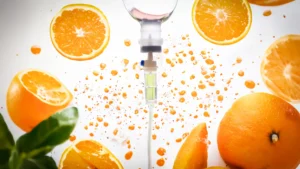
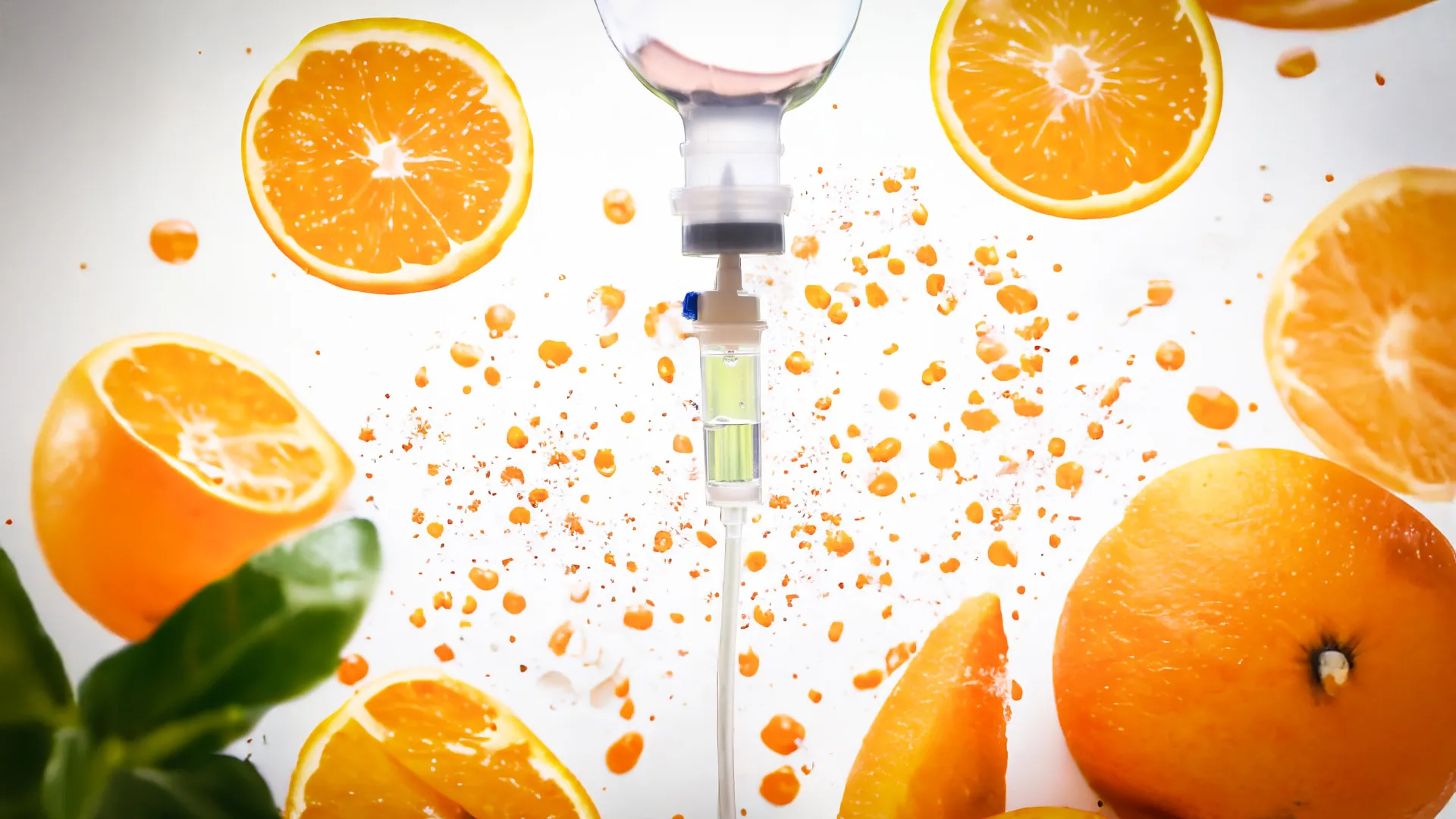
Conversely, intravenous infusion bypasses the digestive system entirely, allowing blood plasma concentrations to reach levels tens or even hundreds of times higher than those achievable through oral intake. It is only at these extreme, supra-physiological concentrations that vitamin C begins to deviate from its traditional role as a benign antioxidant.
Supporting Data: The Biological Shift
At everyday dietary levels, vitamin C acts as a vital antioxidant, protecting cells from oxidative stress. But in the high-concentration environment of a tumor site, this dynamic flips.
Laboratory studies have revealed that high-dose vitamin C can act as a pro-oxidant. When infused into the bloodstream at pharmacological levels, it facilitates the production of hydrogen peroxide. Cancer cells, which often exist in an environment of metabolic chaos, possess compromised antioxidant defense systems. Unlike healthy cells, which can neutralize the sudden surge of reactive oxygen species, many cancer cells are overwhelmed. The resulting oxidative stress damages their DNA and energy-producing machinery, effectively triggering a process of selective cellular death.
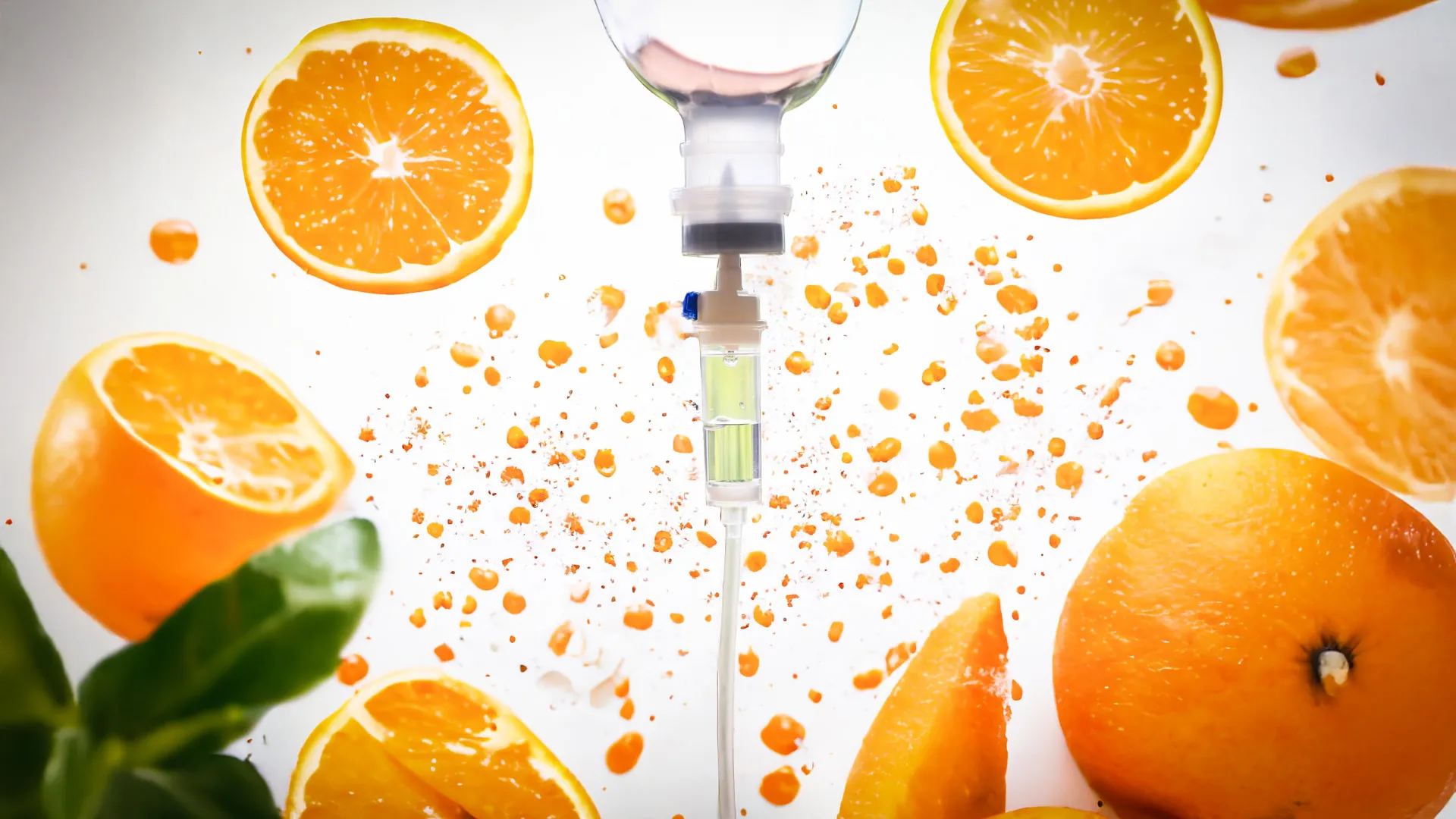
In this light, intravenous vitamin C behaves less like a vitamin and more like a weak, targeted chemotherapy drug. Crucially, this effect is dose-dependent; it simply cannot be replicated by swallowing pills.
The Current Clinical Landscape: What the Evidence Shows
While the mechanism is compelling in a petri dish, translating these findings to human patients is a complex, ongoing challenge. Current clinical trials are small, heterogeneous, and primarily focused on safety and feasibility rather than definitive survival outcomes.
Emerging Findings
- Safety and Tolerability: Small-scale trials for hard-to-treat cancers, including ovarian, pancreatic, and glioblastoma, have demonstrated that high-dose IV vitamin C is generally well-tolerated when administered by medical professionals.
- Quality of Life: One of the most consistent signals in recent research is not necessarily tumor shrinkage, but patient experience. Trials indicate that when used as an adjunct to conventional chemotherapy, IV vitamin C may reduce symptoms such as debilitating fatigue, pain, and chemotherapy-induced nausea.
- Synergy with Standard Care: Some experimental data suggest that vitamin C may sensitize cancer cells to traditional treatments, potentially making radiation or chemotherapy more effective, although this remains an area of active, non-conclusive investigation.
Important Warnings
Despite the excitement, the medical community remains cautious. High-dose vitamin C is not a "harmless wellness drip." It can pose significant risks to patients with underlying conditions, such as kidney dysfunction or specific hereditary enzyme deficiencies. It is strictly a medical procedure that requires professional monitoring, not a supplement to be sought out at high-street wellness clinics.
Implications: A New Chapter for Integrative Oncology
The story of vitamin C and cancer serves as a profound lesson in the evolution of scientific knowledge. It highlights the dangers of dogma—both the dogma that dismisses potentially viable ideas because they originate from controversial sources, and the dogma that accepts anecdotal "cures" without rigorous testing.
Re-evaluating Pauling’s Legacy
Was Linus Pauling right? The fairest assessment is that he was "partly right." He was incorrect to frame vitamin C as a universal cure-all, and he was scientifically inaccurate in his promotion of oral tablets for terminal cancer. However, he possessed the intuition to suspect that pharmacologically high concentrations of vitamin C could alter the biological landscape of disease.
The Path Forward
The future of this research lies in moving away from the binary "cure vs. fraud" debate and toward a sophisticated understanding of how nutrients interact with cellular metabolism. Large-scale, randomized, and rigorously designed trials are necessary to determine whether IV vitamin C has a place in standard oncology protocols.
Until such evidence exists, high-dose vitamin C remains an experimental therapy. It sits in the "promising" category—worthy of intense study but not ready to replace proven therapies like surgery, chemotherapy, or immunotherapy.
Conclusion: Science as a Non-Linear Journey
If the history of vitamin C in cancer teaches us anything, it is that science rarely moves in a straight line. It is a messy, iterative process defined by bold ideas, flawed early experiments, fierce backlash, and, eventually, a quiet, methodical return to the data.
We are currently in that "quiet return" phase. Researchers are finally looking past the myth of the "wonder vitamin" to examine the chemical reality of ascorbic acid as a therapeutic tool. While Pauling may never be fully vindicated in the way he hoped, his late-career obsession may have sparked a flicker of insight that—decades later—is finally being illuminated by the rigor of modern science. The lesson for the next generation of researchers is clear: stay skeptical, but remain open to the possibility that the most profound discoveries often hide in the shadows of previously discarded ideas.