










On Friday, August 14, 2026, the protracted and highly publicized legal saga surrounding the killing of UnitedHealthcare CEO Brian Thompson reached a significant milestone. Luigi Mangione, the man accused of the brazen, cold-blooded assassination that shocked the American corporate and public health sectors, entered a guilty plea to federal stalking charges. This admission of guilt—and his explicit acknowledgement that he targeted and executed the 50-year-old executive—marks the resolution of the federal component of a dual-track prosecution that has dominated headlines for nearly two years.
As Mangione prepares for a state murder trial scheduled to commence on September 8, the legal community remains fixated on the unprecedented complexities of this case, which has spanned multiple jurisdictions, navigated the elimination of terrorism charges, and seen the death penalty taken off the table.
The Assassination of Brian Thompson
The tragedy unfolded on the morning of December 4, 2024, in the heart of New York City. Brian Thompson, a high-profile executive at the helm of UnitedHealth Group, was walking toward the New York Hilton Midtown to attend the company’s annual investor conference. In a meticulously planned ambush captured on surveillance footage, a lone gunman—later identified by authorities as Mangione—waited for approximately an hour before approaching Thompson and firing.
The execution was swift and calculated. Following the shooting, the perpetrator fled through Central Park, navigated the complex transit systems of Upper Manhattan, and eventually boarded an Amtrak train bound for Philadelphia. The brazen nature of the attack, coupled with the victim’s position as a leader in the controversial health insurance industry, immediately ignited a nationwide firestorm of debate regarding corporate security, political violence, and the systemic frustrations surrounding the American healthcare system.
Chronology of a High-Stakes Investigation
The path from the sidewalk in Manhattan to the federal courtroom has been defined by a series of dramatic developments and aggressive maneuvers by both the prosecution and the defense.
The Planning and the Flight (November – December 2024)
- November 24, 2024: Mangione reportedly arrives in New York City via Greyhound bus. Prosecutors allege he checked into a hostel under the alias "Mark Rosario," utilizing a forged New Jersey driver’s license.
- December 2, 2024: Thompson arrives in New York, staying at a hotel directly across from the Hilton Midtown, unaware he is being tracked.
- December 4, 2024: The day of the assassination. After the shooting, the suspect’s trail leads through Central Park to Penn Station.
- December 6, 2024: Police recover a backpack in Central Park containing a black Tommy Hilfiger jacket and Monopoly money, signaling a bizarre signature left by the perpetrator.
- December 9, 2024: The manhunt ends at a McDonald’s in Altoona, Pennsylvania. Mangione is apprehended after a manager reports a suspicious individual. Police discover a 3D-printed pistol—the alleged murder weapon—and a notebook detailing a desire to "wack" a health insurance executive.
The Legal Escalation and Extradition (December 2024 – 2025)
- December 11, 2024: A defiant Mangione makes his first public appearance, shouting about an "insult to the intelligence of the American people" while being processed in Altoona.
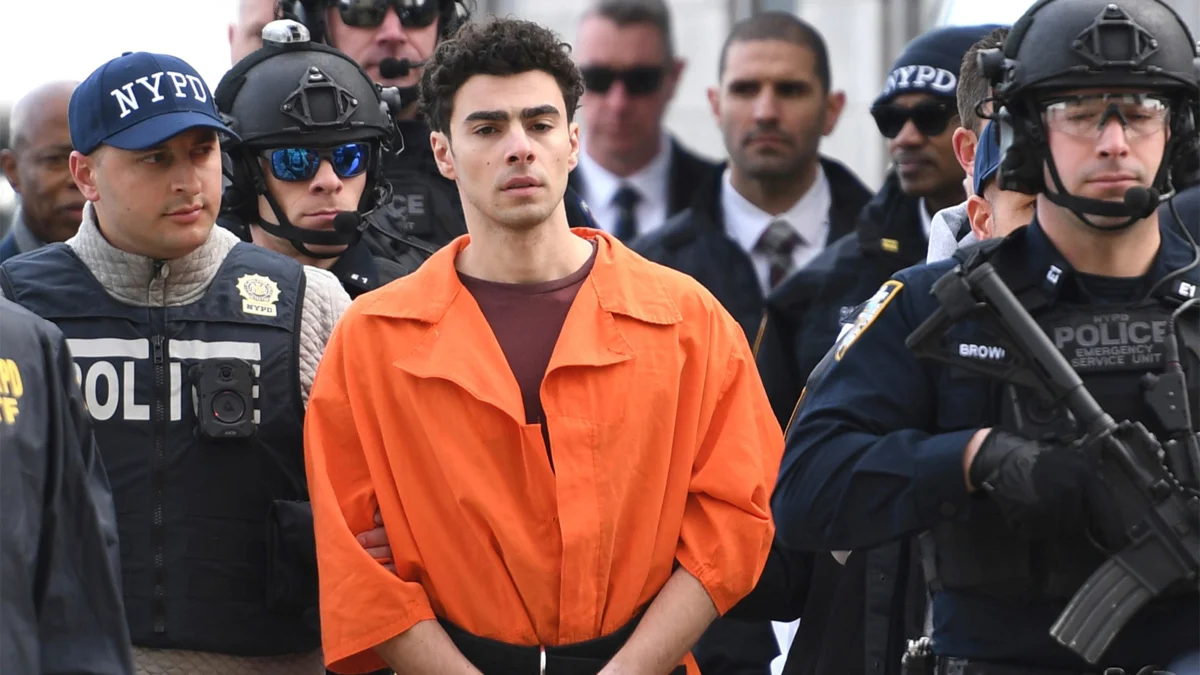
- December 19, 2024: Following his extradition, Mangione is transported to New York. The "perp walk" at a Manhattan pier becomes an iconic image of the case, attended by top city officials including then-Mayor Eric Adams.
- April 1, 2025: U.S. Attorney General Pam Bondi announces that the federal government will pursue the death penalty, labeling the act as "political violence."
- September 16, 2025: A massive blow to the state’s case occurs when Judge Gregory Carro dismisses the terrorism charges. The court rejects the argument that the killing was intended to evoke mass terror, removing the possibility of a mandatory life sentence without parole under that specific statute.
The Road to the Plea (2026)
- January 30, 2026: U.S. District Judge Margaret Garnett delivers a major ruling, barring federal prosecutors from seeking the death penalty and dismissing the specific federal murder charge tied to that potential outcome.
- June 17–18, 2026: Mangione’s legal team briefly indicates an intent to pursue a psychiatric defense, claiming "extreme emotional disturbance," only to reverse course 24 hours later.
- August 14, 2026: Mangione pleads guilty to federal stalking charges. His defense immediately files a motion to dismiss the state murder case, citing "double jeopardy" protections.
Supporting Data and Evidence
The prosecution’s case against Mangione relies on a mountain of digital and physical evidence. During the three-week evidentiary hearing that began in December 2025, prosecutors presented:
- Digital Footprints: Surveillance footage from the hostel, subway stations, and the crime scene itself.
- The "Survival Kit": Notes recovered from Mangione’s possession that detailed specific escape plans, "intel check-ins," and survival strategies.
- Ballistic Evidence: The 3D-printed firearm seized in Altoona, which forensic experts successfully linked to the shell casings recovered from the Manhattan scene.
- The Notebook: A handwritten journal explicitly outlining his animosity toward health insurance executives, which the prosecution argues demonstrates clear, premeditated intent.
Official Responses and Legal Wrangling
The case has been defined by a tense power struggle between federal and state authorities. Manhattan District Attorney Alvin Bragg initially characterized the killing as a "frightening, well-planned, targeted murder," pushing for terrorism charges that would have sent a strong message against political violence. Conversely, the federal government’s attempt to seek the death penalty was met with significant judicial scrutiny.
Defense attorneys have consistently complained that the dual-track system has treated their client like a "human ping-pong ball." By pleading guilty to federal stalking, Mangione’s lawyers are attempting to force a legal precedent: if he is punished for the federal aspect of the crime, they argue, the state cannot constitutionally subject him to a second trial for the same underlying act of homicide.
Implications for the American Justice System
The Mangione case serves as a flashpoint for several major issues in modern American law:
1. The Death Penalty and Political Violence
The federal government’s attempt to classify the killing as "political violence" rather than a standard criminal homicide reflects a post-2020s trend where authorities are increasingly willing to label targeted killings of public or corporate figures as acts of domestic terrorism. The eventual rejection of this classification by Judge Carro suggests a high bar for such designations, protecting the state from overreaching in its pursuit of enhanced sentencing.
2. Double Jeopardy in a Modern Context
The defense’s motion to dismiss the state murder trial on double jeopardy grounds is likely to reach higher courts. This case may eventually define the extent to which state and federal governments can overlap in prosecuting the same defendant for a single incident. If the court upholds the "dual sovereignty" doctrine, Mangione will face the state trial on September 8; if the defense succeeds, it could fundamentally alter how high-profile crimes are handled in the future.
3. Corporate Security in an Age of Extremism
The assassination of Brian Thompson has forced every major corporation to re-evaluate the security of its leadership. The ease with which Mangione tracked and ambushed a high-level executive has sparked a move toward increased executive protection and tighter digital privacy protocols for corporate officers.
As the state murder trial approaches, the nation watches to see if the legal system will successfully navigate the final chapter of this tragedy. For now, Luigi Mangione remains behind bars, his fate dependent on the resolution of a conflict between two legal systems determined to hold him accountable for one of the most calculated killings of the decade.