










The Democratic Republic of Congo (DRC) is currently grappling with one of the most volatile and rapidly evolving public health emergencies of the decade. An aggressive Ebola outbreak, fueled by the rare and lethal Bundibugyo strain, has surged to over 4,600 confirmed cases, claiming more than 2,100 lives. While the figures alone are staggering, the speed at which the death toll has climbed—three times faster than major outbreaks seen over the last ten years—has triggered an international alarm among global health experts and humanitarian organizations.
This is not merely a biological challenge; it is a complex humanitarian catastrophe unfolding within a landscape defined by armed conflict, fragile infrastructure, and profound community skepticism.
The Anatomy of the Outbreak: Why This Strain is Different
The current crisis is driven by the Bundibugyo strain of the Ebola virus, a variant that has historically received less clinical focus than the more common Zaire strain. This distinction has had devastating consequences for containment. Because the diagnostic tests deployed in the early stages of the epidemic were specifically calibrated to detect the Zaire strain, the Bundibugyo virus circulated undetected for months.
Dr. Anne Rimoin, Director of the Center for Global Health Security at UCLA and a leading authority on Ebola in the DRC, notes that the diagnostic gap was a critical failure point. "The tests that were available were targeting Ebola Zaire, not Ebola Bundibugyo," Dr. Rimoin explained during a recent briefing. "It wasn’t until samples were sent to a laboratory in Kinshasa equipped with the correct assay that we could identify what we were dealing with. By that time, the virus had already established deep transmission chains."
With mortality rates ranging from 25% to 50% for those infected, the lack of approved, readily available therapeutics and vaccines for this specific strain has left clinicians struggling to provide more than palliative care.
A Chronology of Neglect and Spread
The official declaration of the outbreak in May masked a much more troubling reality: retrospective analysis by the World Health Organization (WHO) suggests that the virus began circulating as early as February. This three-month "silent phase" allowed the disease to establish a foothold in both rural areas and dense urban centers like Bunia.
- February – April: The virus spreads undetected. Misdiagnosis is common, as Ebola symptoms often mimic other endemic illnesses like malaria or typhoid.
- May: The outbreak is officially declared. Efforts to mobilize resources begin, but are immediately hampered by a lack of specialized diagnostic tools.
- June – August: The infection rate shifts into an exponential growth phase. Public health infrastructure in the affected regions, already strained by years of systemic neglect, begins to buckle.
- September – Present: The crisis reaches a boiling point. Healthcare workers, unpaid for months, begin to strike, and the virus spreads to additional provinces, complicating the logistics of contact tracing and patient isolation.
The Human Toll: Fear and Financial Ruin
Beyond the clinical statistics, the social fabric of the DRC is fraying. In cities like Bunia, the impact of the epidemic is visible in the empty markets and the desperate attempts of residents to maintain a semblance of normalcy.
For the average citizen, the outbreak has resulted in extreme economic hardship. Local transit, such as motorcycle taxis, has been restricted by authorities to prevent the spread of the virus, limiting drivers to one passenger at a time. For individuals like Claude Steven Kato, a motorcycle taxi manager, these regulations are a death knell for their livelihood. "We’re barely making any money," Kato said through an interpreter. "The authorities are trying to control the movement, but for us, it means we cannot put food on the table."
Compounding this economic distress is a deep-seated mistrust of medical intervention. Misinformation persists, with some communities denying the existence of the virus entirely. "We must continue to focus our awareness efforts on those who are unable to accept the existence of Ebola," said Bienvenu Kambale Vayilanda, director of the Tokobika Medical and Surgical Center. "They are dying in the community because they refuse to seek care until it is too late."
The Healthcare Worker Crisis: Fighting on the Frontlines
The backbone of the Ebola response is the medical workforce, yet they are increasingly becoming the most vulnerable demographic. The WHO has reported a distressing number of infections among doctors, nurses, and hygienists.
The reasons for this are threefold:
- Direct Exposure: Healthcare workers are the only ones interacting with highly infectious bodily fluids, placing them in the direct line of fire.
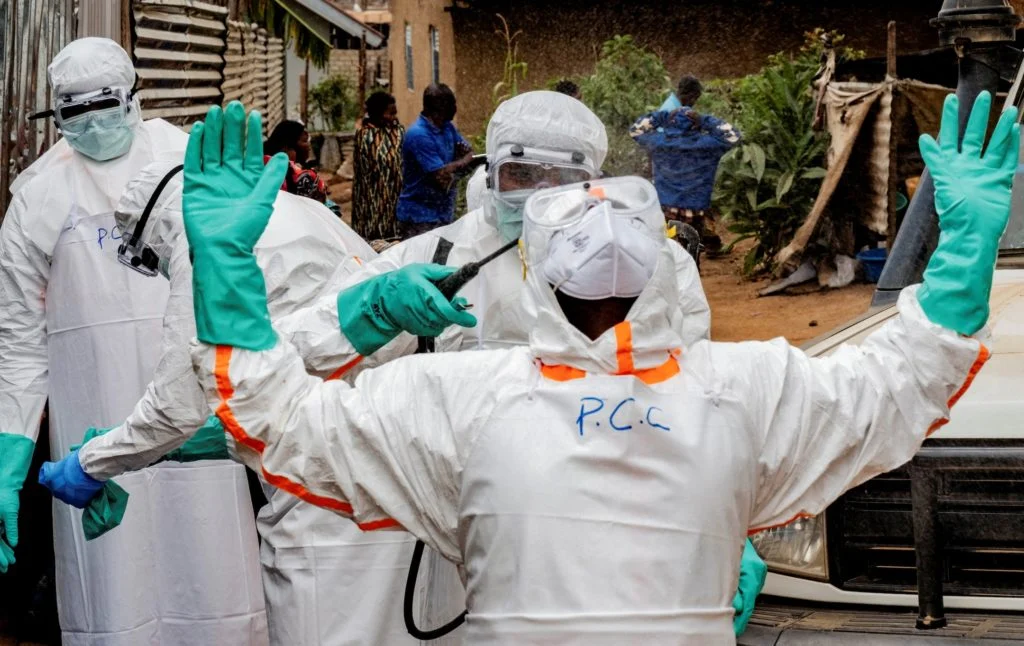
- Lack of Protective Equipment: Many clinics operate with a chronic shortage of personal protective equipment (PPE), forcing staff to work in unsafe conditions.
- The "Invisible" Patient: Due to the wide range of Ebola symptoms, many patients arrive at clinics without clear signs of the disease, leading to accidental exposures among staff who were not prepared for an Ebola-specific protocol.
The situation has reached a breaking point. Frontline workers, some of whom have gone three months without pay, have staged protests, arguing that they cannot be expected to risk their lives—and the lives of their families—without basic institutional support. "You can’t defeat Ebola without the effort of nurses and doctors," says Chadrack Rilego, a nurse at the Elikya Ebola Treatment Center. "We put our lives in danger, but if I am hit by the epidemic, I go home to my wife and children. My entire family becomes a target."
Official Responses and Strategic Failures
The World Health Organization, led by Dr. Tedros Adhanom Ghebreyesus, has classified this as the second-largest Ebola epidemic on record. Dr. Tedros has warned that if the current trajectory holds, this outbreak could eclipse the catastrophic West African epidemic of 2014–2016.
However, the response is severely hindered by the "emergency on top of an emergency" dynamic. The UN has highlighted that the ongoing conflict over the DRC’s mineral-rich regions, involving various Rwandan-backed groups and the Congolese military, creates "no-go zones" for medical teams. Farhan Haq, the UN Deputy Spokesman, noted that 60% to 70% of Ebola deaths occur in the community rather than in treatment centers, primarily because insecurity prevents patients from seeking help or prevents ambulances from reaching those in need.
Broader Implications: A Global Warning
The implications of this outbreak extend far beyond the borders of the DRC. The crisis highlights a systemic failure in global health preparedness: the inability to rapidly pivot diagnostic and therapeutic infrastructure to address non-Zaire strains of Ebola.
Dr. Rimoin emphasizes that the lesson of this outbreak is the necessity of building resilient, local health systems rather than relying on reactive, external surges. "You have an outbreak occurring on top of a series of emergencies," Dr. Rimoin observes. "When you have poor healthcare infrastructure and active conflict, the virus wins. We have to be able to identify, isolate, and trace contacts with speed and community trust. If you aren’t in front of the virus, you are forever chasing chains of transmission."
As the outbreak spills into new provinces, the international community faces a reckoning. The failure to secure sustained funding for healthcare workers, the inability to guarantee humanitarian access in conflict zones, and the lag in diagnostic adaptation serve as a grim blueprint of how a manageable outbreak can spiral into a regional disaster. Without a massive, coordinated effort to address the root causes—insecurity, lack of worker pay, and diagnostic inequality—the path forward remains perilous. The Ebola virus does not wait for political stability, and as the death toll climbs, the world is reminded that in the face of such a pathogen, inaction is not just a policy failure—it is a humanitarian tragedy.