









By DM Sullivan
July 2026
As the Ehlers-Danlos community gathers in Allen, Texas, for the 2026 Annual Global Learning Conference (July 24–26), the air is thick with a mixture of celebration and critical assessment. This year’s event marks a significant dual milestone: the primary focus on the complex, often debilitating comorbidities of Ehlers-Danlos Syndrome (EDS) and Hypermobility Spectrum Disorders (HSD), and the ten-year anniversary of the founding of The Ehlers-Danlos Society.
For patients, caregivers, and advocates who have spent years navigating the labyrinth of rare disease medicine, this is a moment to pause. It is an opportunity to measure the distance covered in scientific understanding against the persistent, grueling reality of the "patient journey." While research has flourished, the systemic gaps in clinical care remain a formidable barrier to those living with connective tissue disorders.
The Evolution of the EDS Landscape: A Chronological Retrospective
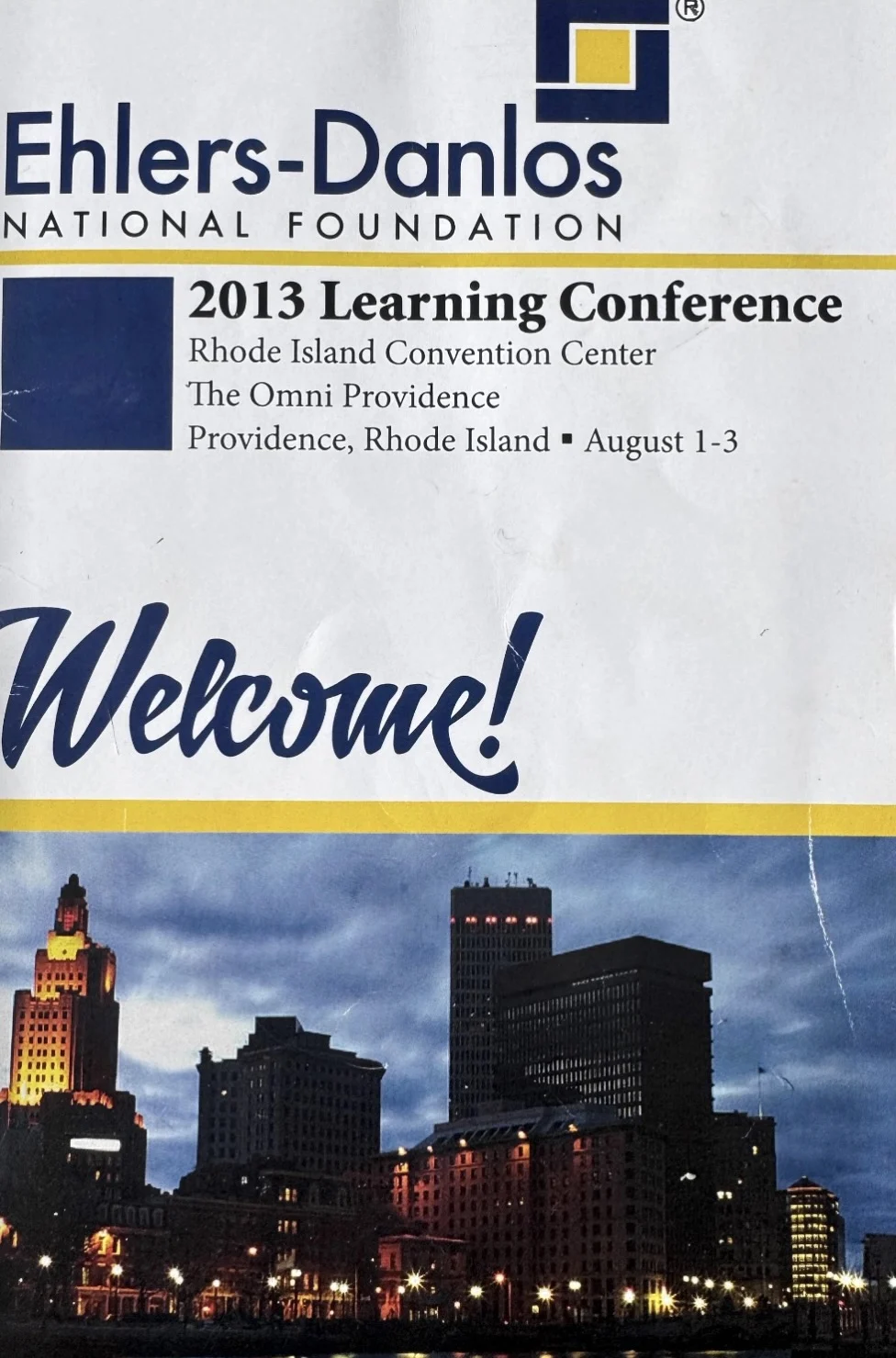
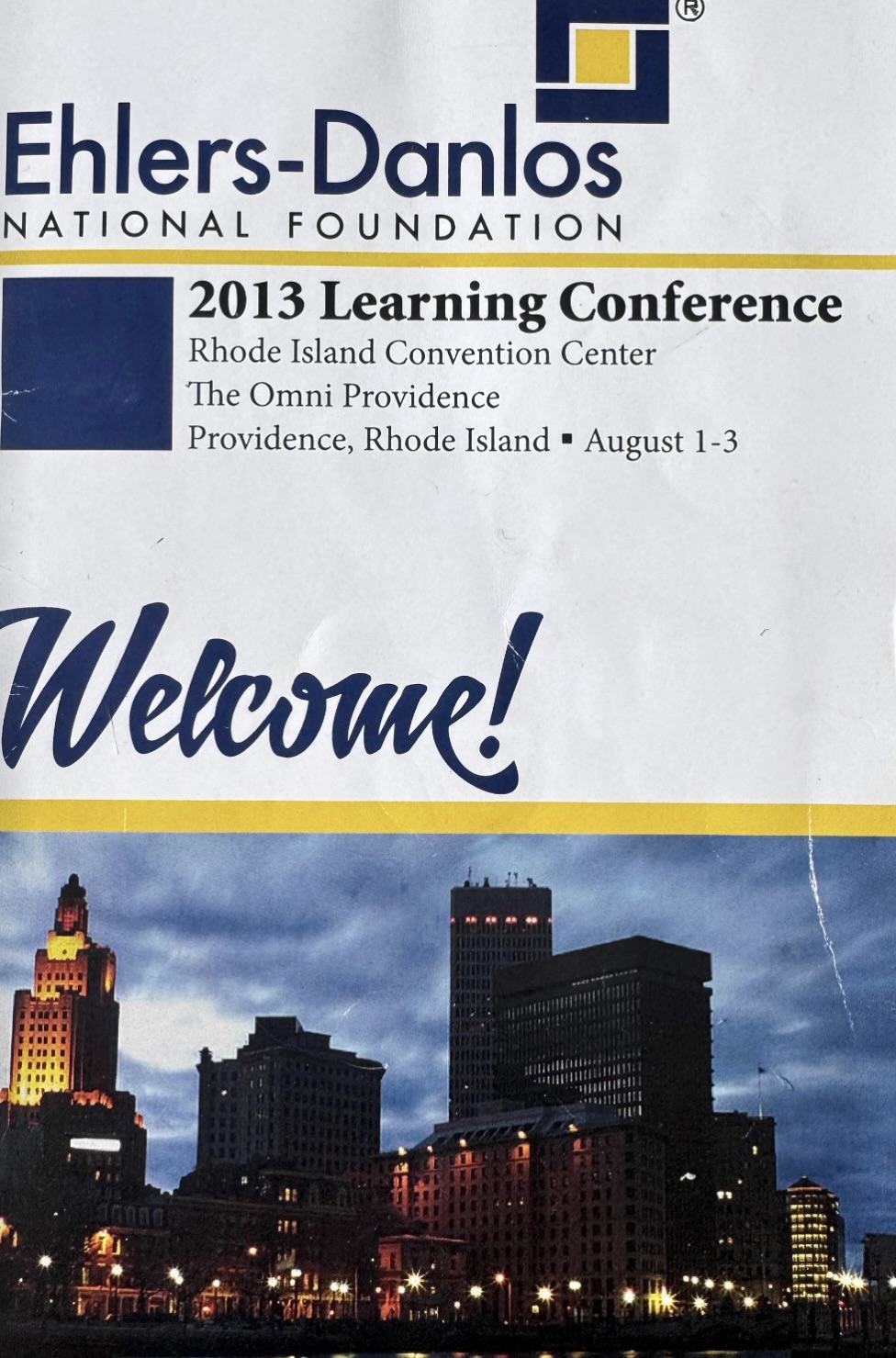
To understand where we are, one must look at where we started. Recently, while organizing long-neglected storage, I unearthed a relic: the brochure from the 2013 Ehlers-Danlos National Foundation (EDNF) Learning Conference.
Looking at the document today, it serves as a profound "time capsule." In 2013, I was a young mother with three children, all grappling with a constellation of symptoms that no pediatrician could identify. The diagnosis of EDS was brand new to our family, and our local medical team admitted they had no clinical roadmap to assist us. The 2013 conference was a lifeline—a rare gathering where pioneering physicians like Dr. Claire Francomano, Dr. Frasier Henderson, and Dr. Pradeep Chopra shared early insights into what we now recognize as a systemic, multisystemic condition.
The trajectory from that 2013 meeting to the 2026 Global Learning Conference reveals a shift from "awareness" to "specialization." In 2013, the focus was on identifying the condition itself. Today, the focus has shifted to the "why" and "how" of its complex comorbidities—the neurological, gastrointestinal, and vascular issues that often dictate the severity of a patient’s disability.
The Burden of Complexity: Understanding Comorbidities
The theme of this year’s conference, "Exploring Comorbidities in EDS & HSD," strikes at the heart of the patient experience. The most severe manifestations of these disorders are rarely isolated to joint hypermobility alone. They are, by nature, multi-systemic.
When a patient presents with a cocktail of Postural Orthostatic Tachycardia Syndrome (POTS), Temporomandibular Joint (TMJ) dysfunction, and severe gastrointestinal failure, they often encounter a medical system built for silos. Cardiologists treat the heart, gastroenterologists treat the gut, and neurologists treat the brain—rarely do they coordinate to address the connective tissue pathology underlying all three.
This lack of "cohesive care" is where disability often begins. When clinicians fail to see the forest for the trees, patients are frequently dismissed. The psychological toll of being told that one’s physical suffering is "all in your head" is immense. It is a form of medical gaslighting that, despite a decade of advocacy, remains a pervasive hurdle for the EDS community.
Historical Precedent and the Persistence of Misdiagnosis
A striking aspect of the 2013 brochure is how "ironically timely" the past remains. Sessions such as Dr. Rodney Grahame’s "What Should We Call Our Syndrome?" mirror the current community debates regarding upcoming revisions to diagnostic criteria. Similarly, early sessions by Dr. Alan Pocinki and Dr. Richard Barnum—titled "Pseudopsychiatric Symptoms in EDS" and "Psychiatric Questions in Pediatric Pain Disorders," respectively—were ahead of their time.
These physicians were attempting to bridge the gap between physical pathology and psychological stigma over a decade ago. They recognized that when medical science cannot explain a patient’s pain, the system defaults to psychiatric labeling. The fact that this remains a major topic of discussion in 2026 indicates that while our understanding of the science has grown exponentially, our institutional response to patient symptoms has been painfully slow to change.
The Human Element: Advocacy and Empowerment
The power of these conferences lies not just in the podium presentations, but in the hallways. It was at the 2013 conference that I met Karen Richards, the young woman who would later be featured in our documentary, Complicated. Her interaction with the late Professor Rodney Grahame—where she famously told him, "I have a lot of doctors, they hear me but they don’t listen to me"—remains the definitive summary of the patient-physician power dynamic.
I remember my own encounter with Dr. Frasier Henderson in the hotel lobby in 2013. A simple, compassionate review of an X-ray that had baffled our local surgeons provided the clarity needed to navigate a dangerous surgical period for my daughter. That moment of validation was, and remains, the primary motivator for my work in advocacy. It taught me that while we need research, we also need human connection—the ability to be heard by someone who possesses the clinical vocabulary to translate our suffering into action.
Implications for the Next Decade: From Knowledge to Access
As we enter this ten-year anniversary, we must distinguish between "knowing" and "doing." We have moved from a place of ignorance regarding EDS to a place of significant scientific accumulation. We know more about the genetic markers, the systemic nature of the condition, and the physiological triggers of its comorbidities than we ever have.
However, the "last mile" of medicine—the actual delivery of care—remains broken. The implications of this are severe:
- Financial Strain: Patients continue to spend inordinate amounts of money traveling to "specialists" because local care is non-existent.
- Delayed Diagnosis: The time-to-diagnosis remains high, allowing secondary complications to progress beyond the point of easy intervention.
- Clinical Erosion: Without accessible, coordinated models of care, the best research in the world is effectively locked away from those who need it most.
Looking Toward the Future: The Call to Action
Next week, as I sit through the sessions in Allen, Texas, I will do as I did in 2013: I will take notes, I will gather resources, and I will tuck another brochure away. But my hope for the next ten years is different from my hope for the last.
We no longer need to convince the medical establishment that these conditions are real; the evidence is irrefutable. What we need now is a radical restructuring of clinical pathways. We need "Centers of Excellence" that are not just research hubs, but functional, multi-disciplinary clinics that treat the patient as a whole entity. We need education for primary care physicians that moves beyond "it’s rare" to "here is how you coordinate care for this patient."
When I look at the documentary Complicated, I am often asked why we chose to focus on such difficult, raw experiences. The answer is simple: to stop the gaslighting, we must shine a light on the reality. The overlapping symptoms are not a "complaint"—they are the diagnostic map of the condition.
As the Ehlers-Danlos Society celebrates ten years of progress, let this anniversary serve as a pivot point. We have built the foundation of awareness. Now, we must build the structure of accessibility. I look forward to the day—perhaps ten years from now, when I clean out that closet again—that I can look at these conference materials not as memories of a struggle, but as reminders of how we finally solved the crisis of care.
DM Sullivan is an author, producer of the documentary ‘Complicated,’ and the Founder and Executive Director of Elevate Rare.