By Kari McBride
The human experience is often measured in monumental milestones: the first step, the graduation ceremony, the professional breakthrough. For many, these are the anchors of memory. However, for those navigating the relentless landscape of chronic pain, life is often defined by a different metric—one measured in the endurance of days and the reclamation of fleeting, quiet moments.
As we navigate an era where health-related anxieties and chronic conditions are increasingly prevalent, the necessity of finding psychological refuge has never been more vital. This article explores the intersection of parenting, chronic health challenges, and the profound, transformative power of "savoring"—a psychological practice that, for many, serves as a bridge between surviving and truly living.
The Weight of Memory and the Burden of the Present
I remember my daughter’s first steps with a clarity that defies the erosion of time. They were not merely a developmental milestone; they were a hard-won victory. Following 18 months of grueling medical appointments, frequent hospitalizations, and intensive physical therapy, those tentative, wobbly movements were a testament to her resilience.
Watching her swagger and sway down the hallway, I felt an overwhelming surge of joy—a visceral, electric excitement. It was a moment etched in the bedrock of my memory, one I instinctively sought to hoard, to hold onto forever. Like many parents, I was frequently told, "Savor this moment; it won’t happen again." At the time, I believed I understood the weight of that advice. I thought it meant capturing the perfect photograph or documenting the date in a baby book.
I was wrong. I did not yet understand that "savoring" is not about possession; it is about presence. Now, as a mother to a teenager navigating the complexities of chronic pain alongside me, the meaning of those words has shifted entirely.
Chronology of a Shift: From Chores to Connections
The transition from the frantic pace of early motherhood to the quietude of our current reality did not happen overnight. It was a slow, sometimes painful evolution.
The Bird Feeder Negotiation
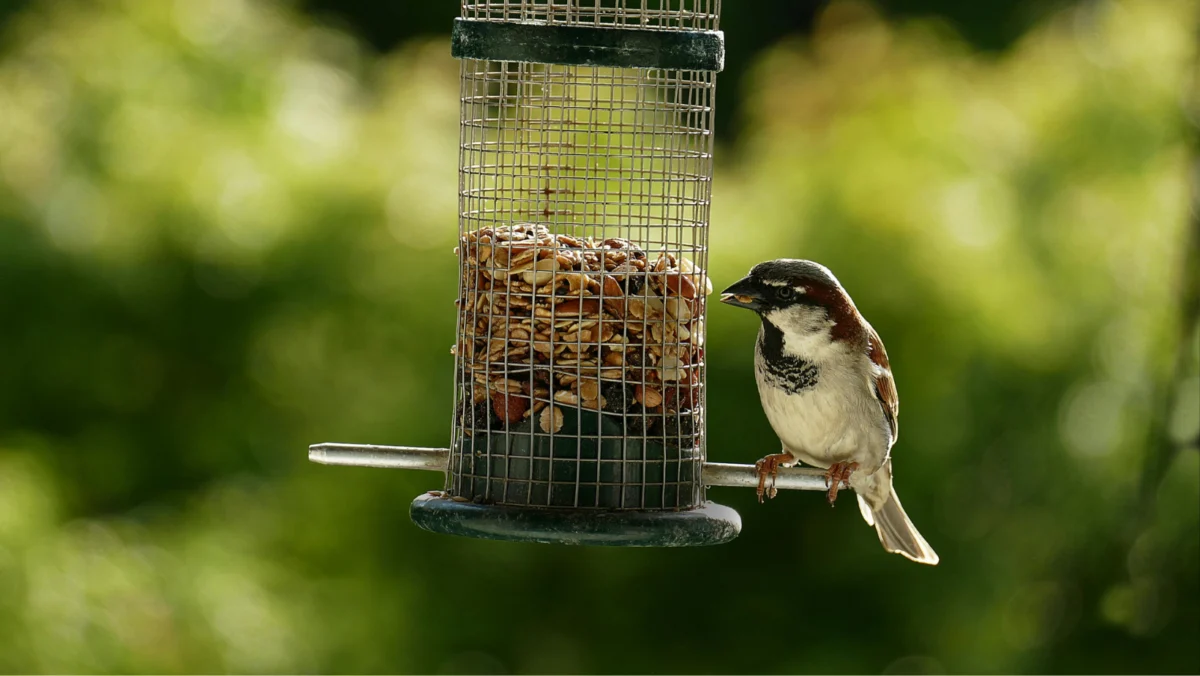
Recently, my daughter—now a teenager—insisted that our home required a bird feeder to attract the local avian population. Initially, my response was rooted in the exhaustion that often accompanies chronic illness. I saw the request as an unnecessary addition to a to-do list that already felt insurmountable. My life, dictated by the limitations of pain, is often a calculated management of energy. Adding the responsibility of maintaining feeders in both the front and backyard felt like a burden.
However, after a period of negotiation, I relented. I viewed it as a simple act of maternal compromise. I did not anticipate that this small, domestic decision would become a cornerstone of our daily mental health.
The Observation Period
What began as a chore quickly morphed into a ritual. I found that the act of filling the feeders provided a sensory anchor. I began to observe the visitors: a dove alighting on the grass, a mockingbird hopping along the fence line. I realized that each creature possessed a distinct temperament, a unique way of navigating its own environment.
In the quiet moments of observation, the internal noise of my own life began to dissipate. The pain, the uncertainty, and the relentless, grinding reality of chronic health issues began to loosen their grip. I was no longer just managing a household; I was participating in the rhythm of the natural world.
Supporting Data: The Science of Savoring and Mindfulness
The psychological practice of "savoring" is not merely a poetic concept; it is a scientifically backed approach to emotional regulation. According to research published in the Journal of Positive Psychology, individuals who practice intentional savoring—the act of stepping out of an experience to review and appreciate it—report significantly higher levels of life satisfaction, even when facing significant physical stressors.
The Physiology of Stillness
When we stand still and observe, we engage in what neuroscientists call "bottom-up" regulation. By focusing on sensory input—the sight of a bird, the sound of wings, the rhythm of our own breath—we bypass the "top-down" cognitive loops of anxiety and catastrophizing that often plague those living with chronic pain.
Data from the National Center for Complementary and Integrative Health (NCCIH) suggests that mindfulness-based interventions can significantly reduce the pain interference experienced by chronic patients. While these interventions are often formal, such as meditation classes, the "informal mindfulness" of watching a bird feeder acts as a micro-intervention, providing the nervous system with a much-needed "reset" button.
Official Perspectives: Managing Chronic Pain through Behavioral Change
Medical professionals increasingly emphasize that while physical treatment is essential for chronic pain, behavioral and psychological interventions are equally critical for quality of life.
The Role of Micro-Moments
Dr. Elena Rodriguez, a pain management specialist, notes: "For patients living with chronic conditions, the ‘big’ moments are often punctuated by symptoms. We encourage the identification of ‘micro-moments’—small, low-energy activities that provide a sense of agency and calm. Whether it is gardening, observing wildlife, or practicing a hobby, these activities act as a buffer against the pervasive nature of pain."
The shift from the "big" to the "small" is not a surrender to one’s limitations, but a strategic reallocation of focus. It is the recognition that while we cannot always control the level of pain we experience, we can control our relationship with the time that exists between the flare-ups.
Implications: Redefining "The Firsts"
Perhaps the most profound realization in this journey is that the "firsts" of life are not the only moments worth savoring. In our culture, we are obsessed with the novelty of the beginning—the first steps, the first day of school, the first job. But there is a secondary, deeper beauty in the continuity of the everyday.
The Architecture of a Life
My daughter’s transition into adolescence has been defined by a shared reality of chronic pain. This is a difficult path, one that requires a unique brand of courage. But in this landscape, the small experiences—the ones that pass in the blink of an eye—are the ones that matter most. They are the moments that, if we choose to ignore them, disappear into the void of the daily grind.
If we choose to stop, to breathe, and to see them, they become something else: a source of resilience.
Lessons for the Future
The implications for others navigating similar challenges are clear:
- Remove the pressure of ‘Big’: You do not need to create monumental memories to find meaning.
- Accept the Temporary: Savoring is not about holding onto a moment forever; it is about honoring the fact that it occurred. The birds will fly away. The pain will return. But the experience of the peace you felt in that moment remains part of your internal narrative.
- Practice Intentionality: Savoring is a choice. It requires the conscious decision to pause when the instinct is to rush, to notice when the instinct is to overlook.
In a life shaped by chronic pain, I have learned that the capacity to savor is not a luxury; it is a survival skill. It is the ability to find a reprieve in the middle of a struggle. My daughter’s first steps were a miracle, but so is the mockingbird on the fence, and so is the breath I take while watching it. I am learning that this, precisely this, is what it means to truly savor a moment. It is the act of noticing that, despite everything, we are still here, still breathing, and still able to find beauty in the quiet gaps of our lives.