







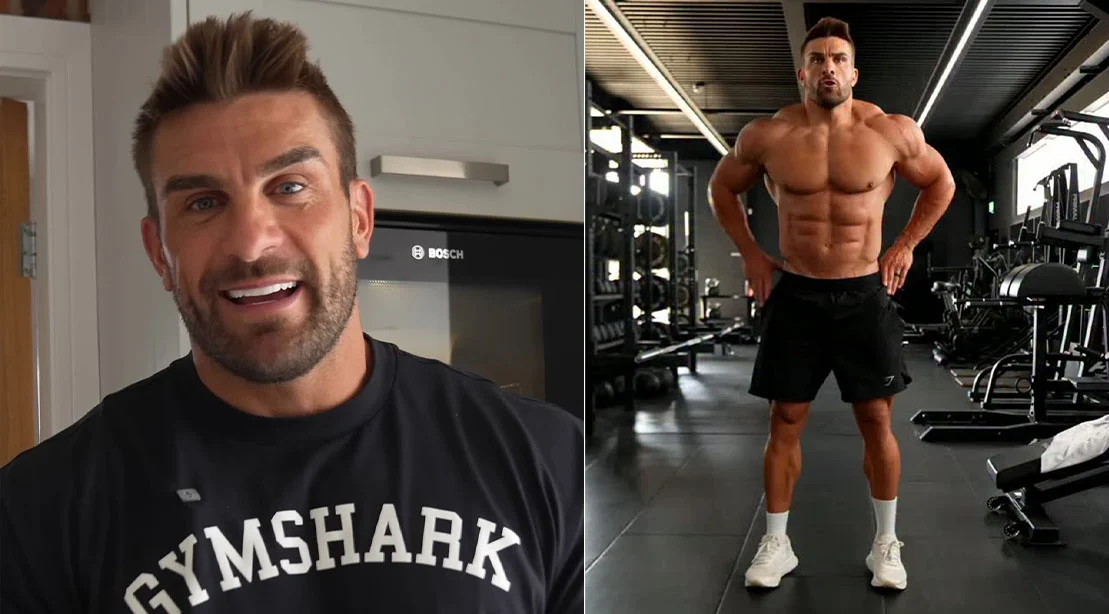
With the bright lights of Las Vegas beckoning and the 2026 Olympia stage just weeks away, the bodybuilding world is once again turning its eyes toward the reigning king of the Men’s Physique division, Ryan Terry. As he prepares to defend his title and chase a historic fourth Olympia victory, the British icon is signaling a radical shift in his methodology. While his physical intensity in the gym remains as formidable as ever, the secret weapon behind his current campaign isn’t found in a new rep range or a radical diet—it is a total overhaul of his mental landscape.
For years, the narrative surrounding elite bodybuilding has been one of "war"—a grueling, often dark pursuit where rivals weaponize animosity to find an edge. Yet, Terry is proving that for a veteran at the top of his game, the path to a superior physique is paved not with spite, but with a newfound, wholesome approach to the sport he has dominated for over a decade.
The Main Facts: A Champion in Transition
Ryan Terry enters the 2026 Olympia not as an underdog, but as a seasoned titan. The British bodybuilder, whose career spans more than ten years of professional competition, has become synonymous with the aesthetic ideal of the Men’s Physique category. However, his journey to the top has been anything but linear.
Last year, the prep for the Olympia was defined by a departure from his usual stoicism. Faced with a barrage of "mind games" from aggressive challengers—most notably the two-time Arnold Classic winner Ali Bilal—Terry found himself drawn into a cycle of psychological warfare. Bilal, known for his outspoken nature and tendency to cast doubt on the longevity of his rivals, repeatedly suggested that Terry’s best years were behind him.
For a man known for his professional demeanor, Terry’s uncharacteristic decision to fire back at the pre-Olympia press conference was a shock to the industry. It was a sign that the pressure had permeated his defenses. While he successfully defended his crown and later credited Bilal’s hostility for "unlocking a new level" of intensity, the toll on his personal well-being was significant. This year, the script has flipped. Terry has explicitly moved away from the "negative fuel" model, opting instead for a holistic, family-centric approach that he believes is yielding a superior, more refined physique.
A Chronological Look at the Evolution of a Kingpin
To understand the significance of Terry’s shift, one must look at the trajectory of his career over the last two years:
- Late 2024: Terry establishes himself as the dominant force in the Men’s Physique division, though the intensity of the sport begins to demand a higher psychological price.
- Early 2025: The "Year of Conflict." As the 2025 Olympia approaches, the rivalry with Ali Bilal intensifies. The public war of words leads to a high-stress preparation period.
- September 2025: Terry wins the Olympia. In his post-victory interview with Bob Cicherillo, he admits that the conflict served as a catalyst, but hints at the emotional exhaustion it caused.
- Early 2026: Terry transitions into his current prep. He begins emphasizing balance, mental health, and the integration of family life into his training cycle.
- August 2026: Mid-way through his current prep, Terry confirms that his physical response to this year’s training has been unprecedented, noting that his body is shedding weight more efficiently than in previous, high-stress years.
Supporting Data: The Science of Stress and Physical Performance
While bodybuilding is often viewed through the lens of hypertrophy and caloric deficits, the endocrine system plays a critical role in the final stages of contest prep. Chronic stress, such as the kind Terry experienced during the 2025 season, spikes cortisol levels. Elevated cortisol is a notorious enemy of the bodybuilder; it can lead to water retention, muscle catabolism, and a sluggish metabolic rate—exactly the hurdles Terry faced last year.
By shifting to a positive mindset, Terry is effectively lowering his systemic inflammation and cortisol levels. When the mind is at peace, the body often responds with a more efficient "fat-burning" state. Terry’s own account supports this physiological reality: he reports that his weight is "coming off nice and easy" this year, a stark contrast to the "failing" and metabolic resistance he experienced during the high-stress 2025 cycle. This is a powerful case study for athletes: the state of the nervous system is just as important as the grams of protein consumed.
Official Responses: From the Champion’s Own Words
In a candid series of updates via his official Instagram channel and his work with his brand, RT-Fit, Terry has been transparent about his evolution.
"If you guys followed me last year, you’ll see that my motivation was very different to years before that," Terry shared with his followers. "It came from a negative place. I let other people’s energy in, and I absorbed it."
He confessed that during the 2025 prep, he was "obsessed" and "in his head" for the final ten weeks—a state of mind that, while effective for a single win, was unsustainable for a long-term career. "Bodybuilding has to be enjoyable to sustain it 365 days a year," he noted.
By including his family in his journey, Terry has created a buffer against the isolating nature of contest prep. "It’s a positive thing, rather than a negative thing," he says. "I’m happy, I’m doing things with the kids, the family, so that’s all I can ask for." This philosophy marks a maturation of the professional athlete—the realization that true greatness is not about how much you can endure, but how well you can thrive while doing the work.
Implications for the Future of Bodybuilding
The implications of Terry’s shift are profound for both his competitors and the sport at large.
1. The Myth of the "Angry Athlete"
For decades, the trope of the "angry, obsessed bodybuilder" has dominated gym culture. Terry is actively debunking this, proving that a balanced, happy athlete is often more capable of achieving the extreme conditioning required for the Olympia stage. If the defending champion succeeds in September using this "zen" approach, it may cause a paradigm shift in how younger competitors approach their own preps.
2. Longevity and Career Sustainability
At 37, Terry is entering a phase of his career where recovery and long-term health become paramount. By removing the self-inflicted stress of rivalries and negativity, he is extending his career longevity. His success serves as a blueprint for other veterans who wish to remain competitive well into their late 30s and 40s.
3. The Psychology of Peak Performance
Terry’s experience demonstrates that performance is a derivative of mental clarity. When he stops focusing on what his rivals are saying and starts focusing on his own internal "why," his body responds with better conditioning. This is a lesson in mindfulness that extends far beyond the gym.
Conclusion: The Final Countdown to Las Vegas
As the 2026 Olympia approaches, the industry is watching not just for the physical package Ryan Terry will bring, but for the legacy he is building. By choosing to prioritize his love for the sport over the toxicity of the game, he has transformed his preparation into a celebration of his craft.
Whether he secures his fourth title or not, the "new" Ryan Terry has already won a more significant battle: the battle to remain human, happy, and healthy in a sport that often demands the opposite. In the high-stakes world of professional bodybuilding, he is proving that nice guys don’t just finish first—they finish with their integrity and their longevity intact. As he prepares to step onto the stage in Las Vegas, the world will see a man who has mastered his body, but more importantly, one who has mastered his mind.