







In the high-stakes world of professional bodybuilding, stagnation is the enemy of progress. For 2019 Mr. Olympia Brandon "The Prodigy" Curry, maintaining a physique that consistently competes for the sport’s most prestigious titles requires more than just heavy iron and sheer willpower. It demands innovation. As Curry eyes the 2026 Mr. Olympia stage in Las Vegas, he has unveiled a brutal, high-intensity training methodology that eschews traditional ego-lifting in favor of "mechanical dropsets"—a strategy designed to force muscle growth through structural adaptation rather than raw, incremental weight.
By leveraging unconventional angles and deliberate pauses, Curry is redefining how athletes approach the hack squat machine, turning a standard gym staple into a crucible for quad development.
The Genesis of a New Protocol: Mechanical Overload
Traditional bodybuilding wisdom often dictates a simple path to progress: add weight to the bar. However, for elite athletes like Curry, whose joints have endured decades of professional-grade stress, the law of diminishing returns begins to apply to absolute load. The mechanical dropset is his answer to this physiological ceiling.
Unlike a standard dropset, which involves reducing the weight as a muscle reaches failure, Curry’s mechanical dropset works in reverse order of leverage. He transitions from the most biomechanically disadvantageous movement to the most advantageous. By starting with the "hardest" version of a movement and progressing to an "easier" one, the athlete keeps the target muscle under constant, unrelenting tension without needing to strip plates off the machine between sets. This method ensures that even as the quads fatigue, they are forced to continue working through a range of motion that remains challenging, ultimately pushing the muscle fibers past the point of traditional failure.
Chronology of the Session: A Three-Phase Torture Test
Curry recently shared his specialized leg day routine with his 1.1 million followers on Instagram, providing a rare glimpse into the tactical preparation of a former Mr. Olympia. The routine is not merely a collection of sets; it is a carefully orchestrated sequence designed to exhaust the quadriceps from multiple angles.
Phase 1: The Full-Stretch Sissy Squat
The sequence begins with the most grueling variation: the full-stretch sissy squat. By incorporating a wedge on the floor and a foam roller positioned behind his shoulders, Curry manipulates his center of gravity. This forces his torso into a slight forward lean while keeping the heels elevated. The result is an intense isolation of the quads, stripping away the ability of the hips and lower back to compensate. Curry emphasizes a "slight pause" at the bottom of the movement, maximizing time under tension and preventing the use of momentum.
Phase 2: Partial Sissy Squats
Once the initial full-range reps are completed, Curry transitions immediately into partial sissy squats. In this phase, he stops his descent when his thighs reach parallel with the floor. Because the hips are effectively taken out of the equation at this depth, the stress is redistributed entirely to the lower quads and the surrounding stabilizer muscles. The pause at the bottom is maintained, ensuring that the fibers remain under constant load.
Phase 3: The Hack Squat Finale
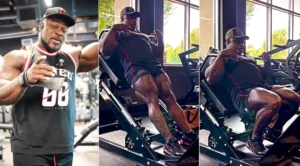
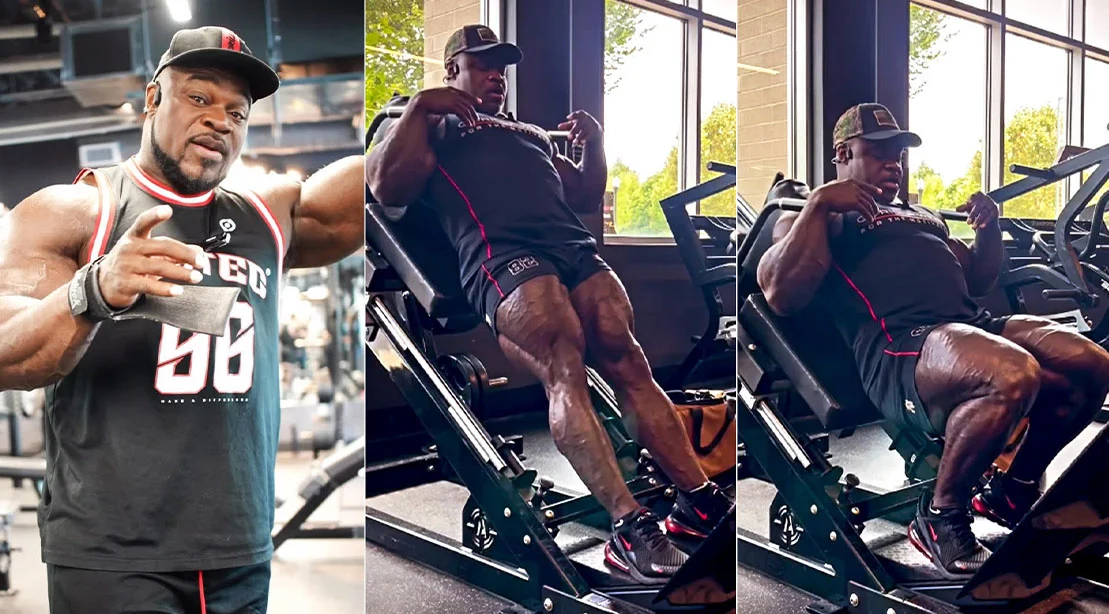
The final movement in the trifecta is a modified hack squat. Maintaining the foam roller for thoracic support, Curry locks his feet into a tight stance on the machine’s plate. By shifting his hips back and maintaining a vertical torso, he focuses the mechanical force directly through the knee joint and into the quadriceps. This final burn-out phase, lasting roughly three minutes of continuous work, pushes the muscle to its absolute limit of metabolic exhaustion.
Supporting Data: Why "Harder" Doesn’t Mean "Heavier"
The scientific community in exercise physiology has long debated the efficacy of mechanical dropsets compared to traditional weight-based sets. Research suggests that mechanical dropsets are highly effective for hypertrophy because they allow the athlete to maintain a high level of "Time Under Tension" (TUT) while navigating the fatigue-recovery curve.
When Curry claims that his method makes things "harder" without going "heavier," he is tapping into the principle of intensity of effort. By changing the angle of the load (mechanical advantage), he is effectively increasing the intensity on the muscle fibers without increasing the risk of structural injury associated with massive, spine-compressing loads.
For the everyday gym-goer, the data is clear: increasing the weight is not the only variable for growth. Variables such as tempo, range of motion, and mechanical leverage can be manipulated to produce significant hypertrophy. Curry’s protocol serves as a practical, real-world application of these principles, demonstrating that one can achieve a "granite" aesthetic by mastering the movement rather than just moving the weight.
Official Perspective: The Prodigy’s Philosophy
In his own words, Curry has been vocal about his departure from the "heavier is better" mentality that plagues many amateur bodybuilders. Addressing his audience during the workout, he noted, "In the goal of making things harder, I have used, basically, a mechanical dropset. Going from the hardest exercise to the easiest exercise."
Curry’s philosophy is deeply rooted in longevity. Having reached the pinnacle of the sport, he understands that his career depends on his ability to train consistently over the long term. By removing ego from the equation, he preserves his connective tissues while maximizing the signal for muscular adaptation. His warning—"Does it have to be heavier? No"—is a directive to the bodybuilding community to prioritize the quality of the contraction over the number on the weight stack.
Implications for Future Training
What does this mean for the future of competitive bodybuilding and recreational fitness? Curry’s approach suggests a pivot toward "intelligent hypertrophy." As we approach the 2026 Mr. Olympia, the trend of high-volume, high-intensity, and low-load training is likely to gain further traction.
Implications for Athletes:
- Joint Longevity: By prioritizing mechanical disadvantage over total weight, athletes can mitigate the wear and tear on joints that often leads to early retirement or chronic injury.
- Hypertrophy Optimization: The use of pauses and partials increases the metabolic stress on the muscle, which is a primary driver of hypertrophy.
- Versatility: This methodology can be applied to almost any muscle group, not just legs. Whether it is a mechanical dropset for the chest using cable crossovers or back training using varying grips on pull-downs, the principle remains the same.
A Challenge to the Community
Curry’s routine is not for the faint of heart. The three-minute duration of the triple-set, combined with the extreme focus on deep-stretch, creates an environment of profound metabolic demand. For those looking to incorporate this into their own routines, Curry suggests a target of 8 to 12 reps per phase, though he encourages those who wish to "bring the heat" to push to failure in each segment of the set.
As Brandon Curry continues his pursuit of another Mr. Olympia title, his training remains a barometer for the sport. He is proving that while genetics provide the foundation, it is the mastery of biomechanics that builds the house. By turning the hack squat into a tool for torture—and growth—Curry is reminding the world that being a "Prodigy" is not just about raw talent; it is about the constant evolution of one’s craft.
For those inspired to test their own limits, the blueprint is available. Whether you are prepping for a local show or simply aiming to improve your leg development, the mechanical dropset offers a path to growth that respects the athlete’s body while pushing the muscles to the brink. As the bodybuilding world looks toward 2026, one thing is certain: Brandon Curry is far from finished.