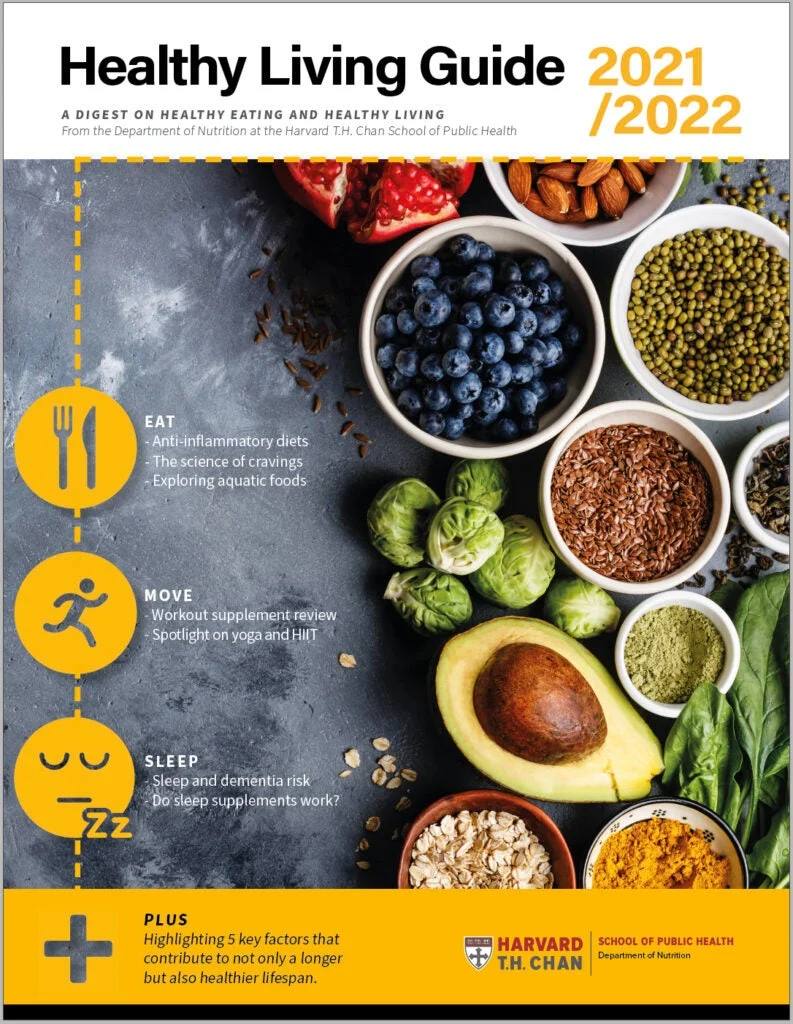
As we transition further into a post-pandemic reality, the landscape of human health—both individual and collective—continues to shift. The year 2021 served as a pivotal transitional period, a bridge between the acute shock of 2020 and a more nuanced, albeit unpredictable, "new normal." In response to these evolving challenges, the Harvard T.H. Chan School of Public Health has released its latest Healthy Living Guide, a resource designed to provide evidence-based strategies for maintaining physical and mental equilibrium amidst global uncertainty.
Main Facts: The Evolution of Dietary Habits
The core of our contemporary health crisis is not merely biological; it is behavioral. The COVID-19 pandemic fundamentally altered how we interact with food. During the initial lockdowns of 2020, consumers retreated into their homes, leading to a surge in home cooking and, concurrently, a significant increase in stress-related snacking and overconsumption.
Data from the International Food Information Council’s 2021 Food & Health Survey reveals a fascinating regression in these behaviors as society reopened. While 32% of Americans reported "snacking more" in 2020, that figure dropped to 18% in 2021. Similarly, reports of "eating more in general" fell from 20% to 11%. However, this normalization came with a trade-off: the communal and health-conscious practice of home cooking saw a decline, dropping from 60% in 2020 to 47% in 2021. This indicates that while the immediate "panic-eating" phase of the pandemic subsided, the challenge of maintaining consistent, nutritious habits remains a struggle in a fast-paced, "reopened" world.
Chronology: A Timeline of Behavioral Shifts
To understand the current state of public health, one must look at the progression of the last 24 months:
- Early 2020: The "Acute Disruption." Global lockdowns force an immediate shift toward home-based living. Panic buying and sedentary behavior become the norm, leading to spikes in processed food consumption.
- Late 2020: The "Adaptation Phase." Consumers begin to experiment with new cooking skills as restaurants close. Health awareness increases, but so does the mental health burden of isolation.
- Early 2021: The "Transition." As vaccines roll out, the "new normal" takes shape. People begin returning to the workplace, leading to a decline in home-cooking frequency as time constraints re-emerge.
- Late 2021/Early 2022: The "Consolidation." The focus shifts from emergency adaptation to long-term sustainability. The medical community emphasizes the need to integrate sleep, movement, and nutrition into the fluctuating rhythms of hybrid work and social life.
Supporting Data: Disparities and Emerging Trends
The narrative of "getting back to normal" is, unfortunately, not universal. While the general population may have regained a sense of routine, the survey data highlights significant, systemic disparities in food security. The pandemic exacerbated existing socio-economic gaps, leaving vulnerable populations struggling to access fresh, nutrient-dense food even as the global supply chain stabilized.
Furthermore, the emergence of COVID-19 variants served as a stark reminder that physical health is inextricably linked to global equity. Public health experts have repeatedly emphasized that until vaccination rates reach critical mass in low- and lower-middle-income nations, the global population remains in a state of precarity. Nutritional status, which influences immune response, is therefore not just a personal choice but a public health imperative.
Official Responses: The Philosophy of the "Healthy Living Guide"
The Harvard Healthy Living Guide acts as a manifesto for the modern individual. It posits that health is not a destination but a practice—a series of daily decisions that, when compounded, create a resilient biological foundation.
The guide focuses on three "pillars of wellness":
- Nutritional Integrity: Moving away from the fad-diet culture toward sustainable, whole-food consumption.
- Physical Activity: Addressing the sedentary nature of remote work by integrating "movement snacking" and intentional exercise into daily routines.
- The Science of Sleep: Recognizing sleep as the primary recovery mechanism for both cognitive function and immune health.
By revisiting these core themes, the guide aims to empower readers to take control of their personal environments, regardless of what the broader pandemic climate dictates.
Implications: Building Long-Term Resilience
What are the implications of these trends for the future of public health?
The Decline of Home Cooking
The drop in home cooking frequency is perhaps the most concerning trend for long-term health. When we cook at home, we retain control over ingredient quality, portion sizes, and sodium content. The shift toward convenience-based eating, as people return to offices, threatens to undo the health gains made by those who discovered the benefits of home-prepared meals in 2020. Public health initiatives must now focus on "time-efficient nutrition"—teaching individuals how to prepare healthy meals in 15-20 minutes to bridge the gap between busy schedules and nutritious outcomes.
The Mental Health-Nutrition Link
The correlation between the "snacking more" statistics and the stress of the pandemic is no coincidence. As we move forward, the medical community is focusing heavily on the gut-brain axis. Emerging research suggests that the quality of our diet is a primary regulator of our stress response. Therefore, nutrition is not just about physical weight management; it is a vital tool for emotional regulation.
The Role of Global Advocacy
The guide serves as a reminder that personal health is embedded within global health. The emphasis on vaccinations in developing nations is a call for civic engagement. We cannot achieve a "healthy living" standard in a vacuum; we are part of an interconnected ecosystem. The resilience we build through better nutrition and sleep should be matched by an advocacy for equitable health access for all.
A Call to Action: Testing Your Knowledge
The Healthy Living Guide is not merely a collection of essays; it is an interactive tool designed to challenge misconceptions. Many of the "popular" nutrition topics that dominate social media—from intermittent fasting to specific superfood trends—are often stripped of nuance. The guide encourages readers to test their knowledge, acting as a filter for the rampant misinformation that has characterized the "infodemic" accompanying the COVID-19 pandemic.
Readers are encouraged to:
- Download the printable tip sheets: These are designed to be placed in high-traffic areas, such as the kitchen or home office, to act as constant, gentle reminders of health goals.
- Utilize the online repository: The guide links to comprehensive articles that dive deeper into the science of inflammation, the impact of ultra-processed foods, and the latest in exercise physiology.
- Assess Personal Habits: Use the provided benchmarks to audit one’s current lifestyle. Are you hitting the recommended sleep targets? Is your movement consistent, or are you oscillating between sedentary work and "weekend warrior" exercise?
Conclusion: A Vision for 2022 and Beyond
As we navigate the ongoing twists and turns of the pandemic era, the path forward is clear: consistency trumps intensity. The goal is not to achieve a "perfect" lifestyle, but to build a robust framework that can withstand the inevitable stresses of a changing world.
By prioritizing the fundamentals—nutrient-dense food, consistent physical activity, and adequate rest—we can move beyond the reactionary habits formed in the heat of the pandemic and settle into a sustainable, fulfilling way of living. Whether you are looking to refine your diet, improve your sleep quality, or better understand the complex intersection of global and individual health, the Healthy Living Guide provides the evidence-based roadmap required for the journey.
In an era where much is out of our control, our daily habits remain the most powerful tool we possess. Let this year be one of intentionality, where the lessons learned from the challenges of 2020 and 2021 are transformed into the habits that will define a healthier, more resilient future.
For those interested in deep-diving into the research, the full 2022 Healthy Living Guide is available for download as a printable PDF, alongside an archive of previous editions that remain highly relevant to the evolving public health discourse.