





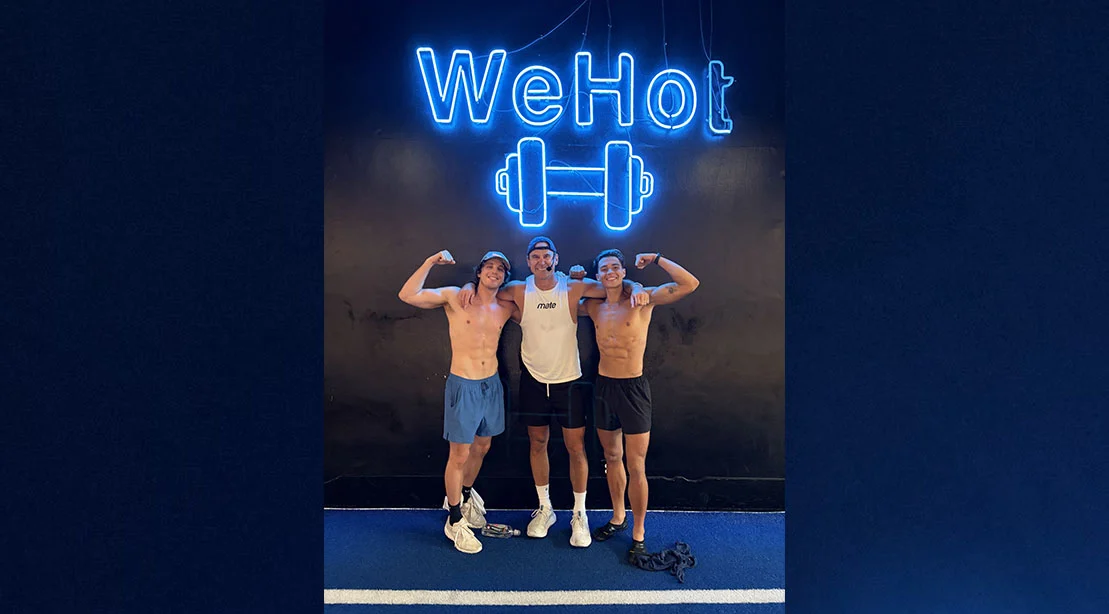
In the high-stakes world of Hollywood, the traditional "movie star transformation" has long been synonymous with aesthetic extremes—think extreme caloric deficits to reveal shredded abs or intensive bulk cycles for superhero-sized deltoids. However, for actor Lukas Gage, the preparation for the highly anticipated Prison Break reboot took a distinctly different turn. Eschewing the vanity-driven pursuit of a "penitentiary physique," Gage opted for a regimen rooted in functional longevity, resilience, and raw endurance.
As he steps into the role of Jackson, a high-pressure congressional candidate, Gage’s priority shifted from how his body looked on camera to how it would hold up under the brutal reality of a professional production schedule. In an exclusive interview with Muscle & Fitness, the actor detailed the philosophy behind his training, proving that in the modern era of film and television, the most impressive physical feat isn’t a six-pack—it’s the ability to stay in the fight.
The Core Objective: Building a Durable Performer
The narrative surrounding Jackson is one of relentless motion. As a politician navigating the pressures of a campaign, the character is, by definition, constantly in the crosshairs of stress. For Gage, capturing this energy meant his body had to be a reliable instrument capable of withstanding the rigors of long production days, overnight shoots, and the unforgiving heat of West Virginia summers.
"Jackson is someone who is constantly operating under pressure, so there is a real physicality to the role," Gage explains. "He is running for Congress and constantly trying to keep up with staying fit for the campaign. I didn’t want to just look the part; I wanted to feel capable of enduring it."
This approach represents a shift in how modern actors prepare for physically demanding roles. Instead of chasing a specific silhouette, Gage spent the months leading into filming focused on metabolic conditioning and cardiovascular capacity. The objective was simple: build a level of baseline athleticism that would allow him to deliver a consistent performance, regardless of whether he was on his first take or his fiftieth.
A Chronology of Preparation: The Five-Day Split
To achieve this level of durability, Gage adopted a structured, five-day-a-week training protocol. His regimen was meticulously designed to balance strength, stamina, and recovery, ensuring he didn’t hit a wall midway through production.
His weekly cycle was broken down into a hybrid of modalities:
- Two HIIT-focused sessions at Training Mate: Leveraging the Australian-inspired group fitness concept, these sessions focused on high-intensity circuit training that mimicked the stop-and-start intensity of a film set.
- Two personal training sessions at Dogpound: These sessions provided the strength foundation, using functional movements to protect against injury and maintain muscle integrity.
- One dedicated endurance day: Gage rotated between running, swimming, and cycling to build a massive aerobic base.
"I liked that it combines strength and cardio in a way that never feels repetitive," Gage says. "It’s fun, social, and practical for my schedule. I love anything that feels collaborative; it makes it easier to stay consistent and come back for more."
Supporting Data: The Science of "Functional Capacity"
The physiological demands of a film set are often underestimated by the public. Actors are frequently required to perform the same physical action—running, fighting, or dramatic gesturing—repeatedly for hours. Without proper aerobic conditioning, the quality of a performance inevitably degrades as lactic acid builds up and fatigue sets in.
By incorporating rowing, jumping, and functional strength movements, Gage’s training at Training Mate ensured that his "energy systems" were primed for these spikes in activity. Interestingly, the actor highlighted the importance of mobility work, noting that while it is an area he intends to prioritize further, the current integration of functional movement is what kept him from succumbing to the common aches and pains associated with 12-hour shooting days.
However, even the most dedicated athletes have their weaknesses. Gage admits that burpees—the quintessential full-body conditioning move—remain a hurdle. "Burpees still make me feel like I’m insane and going to throw up," he says with a laugh, highlighting the grueling nature of his high-intensity sessions.
Historical Context: From Road House to the Campaign Trail
Gage’s commitment to physical preparation is a hallmark of his career, though the goals have evolved with every project. For the remake of Road House, the focus was on fight choreography and the mechanics of cinematic combat. For Fargo, the challenge was the technical precision of a golf swing—a task he admits is still a work in progress.
In contrast, his role in Voicemails for Isabelle allowed for a more "relaxed" approach, given the character was a chef. Prison Break, however, demanded a return to peak physical readiness. The role requires a holistic approach to fitness that isn’t tethered to a specific skill, but rather to the overall resilience of the human machine.
"There are days when you’re running, climbing, swimming, or repeating physically demanding scenes for hours in the blazing sun," he says. "On those days, listening to your body is important. There’s a difference between being uncomfortable and being genuinely exhausted or at risk of injury."
The "20-Minute Rule": Managing Inevitable Set Disruptions
Perhaps the most professional aspect of Gage’s training philosophy is his pragmatic approach to the chaotic nature of film production. When call times shift or night shoots bleed into the next day, the "perfect" workout often becomes impossible. Instead of abandoning his goals, Gage adheres to what he calls the "20-Minute Consistency Rule."
"I’ve learned to be flexible," Gage explains. "Some days that means a full workout, and other days it means 20 focused minutes and calling it a win. Consistency matters more than perfection."
On days when he cannot reach the gym, he improvises—hitting a 10,000-step goal or performing mobility work in his trailer. This mindset shift has removed the intimidation factor often associated with elite-level fitness. By focusing on "showing up" rather than hitting a specific PR, he keeps his body primed and his mind disciplined.
"Acting comes with a lot of uncertainty," he notes. "Having something that challenges me physically helps me stay grounded and focused. It gets me out of my head and into my body."
Nutrition and Recovery: The Foundation of Performance
Gage’s recovery strategy is as deliberate as his training. He prioritizes sleep above all else, followed by hydration and active recovery. His nutrition is equally calculated; he has largely removed processed foods from his diet to maintain steady energy levels, though he maintains a balanced perspective on indulgence.
"I tried to cut out all processed foods, but I still have fun," Gage says. "I need In-N-Out once a week."
This "80/20" approach to nutrition underscores his philosophy that fitness is not a temporary requirement for a role, but a long-term lifestyle choice. By fueling his body with intention, he ensures that he is not just performing for the camera, but enjoying the quality of life that comes with a healthy, functioning body.
Implications: The New Standard for Hollywood Fitness
The implications of Gage’s approach are significant. He represents a growing cohort of actors who are redefining what it means to be "in shape" for the screen. By moving away from the aesthetic-first mentality, these performers are setting a standard that emphasizes health, longevity, and professional capability.
For those looking to adopt similar habits, Gage’s advice is universal: "Consistency beats intensity. Just get your ass to the gym, class, hike, or whatever—and keep showing up, even when it’s inconvenient."
As the Prison Break reboot prepares to hit screens, the audience may not be analyzing the specific muscle fibers Gage built during his five-day splits. However, they will undoubtedly feel the results of his preparation. In the quiet intensity of his performance as Jackson, viewers will see an actor who didn’t just walk onto a set—he built a foundation of strength that allowed him to own every frame. For Lukas Gage, the goal was never just to look like a hero; it was to be capable of acting like one.