










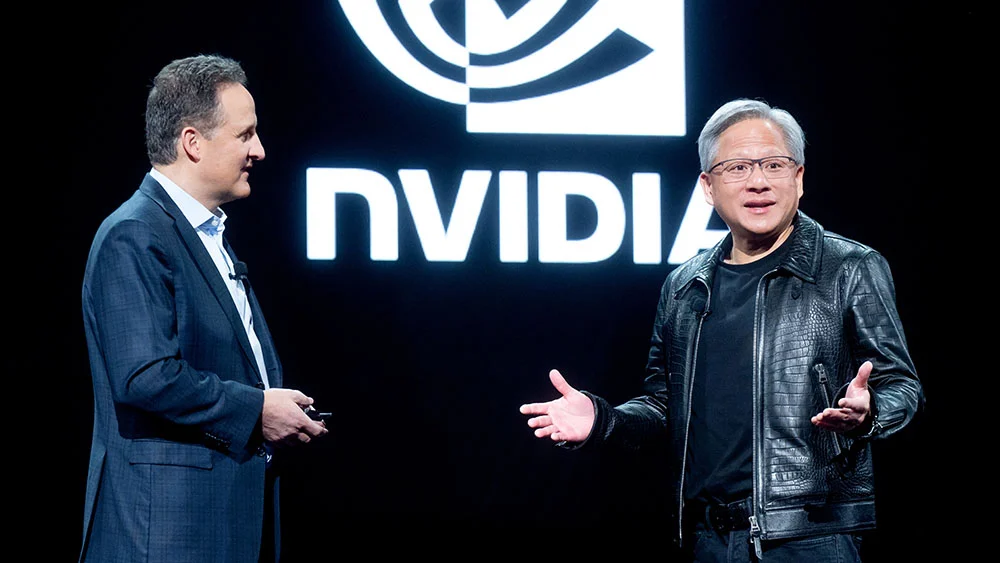
The landscape of the White House complex, a site of American history and executive administration, is undergoing a transformation that has ignited a firestorm in Washington. At the center of this controversy is the "Donald J. Trump Ballroom," a massive 90,000-square-foot construction project that has bypassed conventional congressional oversight. According to a report by the Washington Post on October 15, 2026, the project has secured $333 million in private funding, with major corporate titans—including Nvidia and Apple—contributing $25 million apiece.
The influx of private capital for a project on federal property has triggered an outcry from legal experts, watchdog organizations, and members of Congress, all of whom are raising alarms over the potential for "pay-to-play" politics. With the project’s funding shielded by a non-disclosure agreement through a private trust, the public remains largely in the dark regarding the motivations of these high-profile donors.
The Financial Web: Who Funded the Ballroom?
The list of donors contributing to the Trump Ballroom project reads like a "who’s who" of American corporate power. In addition to the $25 million commitments from tech giants Nvidia and Apple, the list includes the Adelson family and Charles Ergen, co-founder and chairman of Dish Network, who matched those contributions. Further down the ledger, major federal contractors—Microsoft, Lockheed Martin, and Palantir Technologies—each chipped in $10 million.
The mechanism for these payments is a non-profit trust, which provides donors with official pledge forms for the "Donald J. Trump Ballroom." By funneling the money through this private entity rather than through traditional government appropriations, the White House has effectively sidestepped the transparency requirements that usually govern federal construction projects.
Records analyzed by the Washington Post indicate that roughly 50% of the total donations came from entities or executives currently holding or bidding for federal contracts. This statistical overlap is the primary driver of the ethical questions now facing the administration. With 67 separate contributions exceeding $10,000 recorded through late September, the scope of the fundraising operation is unprecedented for a presidential project of this nature.
Chronology: From Concept to Construction
The ballroom project did not emerge in a vacuum. It was born from a pivot in the president’s infrastructure goals. Initially, President Trump proposed that he and his team of private donors would foot the bill for the $400 million renovation and construction plan. However, the administration later approached Congress, seeking a $1 billion allocation for a reinforced underground bunker and advanced security features, a request that stalled amidst partisan gridlock.
Following the legislative impasse, the project proceeded via private financing. The timeline of the development has been marked by legal friction:
- Early 2026: Plans for the 90,000-square-foot facility, incorporating subterranean military-grade defenses, are formalized.
- Spring/Summer 2026: Preservationists launch a campaign to save the historic East Wing, which included the First Lady’s offices and the White House movie theater. Their efforts culminate in a lawsuit to halt the demolition.
- August 2026: The Supreme Court issues a 5-4 ruling allowing construction to continue despite a lower court order that sought to halt the work. In a blistering dissent, Chief Justice John Roberts noted that the project was "likely unlawful," signaling deep judicial concern over the executive’s reach.
- October 15, 2026: The Washington Post exposes the identities of major corporate donors, sparking a national debate on government transparency and ethics.
The Case for Transparency and Legal Scrutiny
The lack of public disclosure regarding the donor list has created a bipartisan sense of urgency in the halls of Congress. Senator Elizabeth Warren (D-MA) and Representative Dave Min (D-CA) have led the charge, issuing letters to the five tech firms involved. Their inquiry is focused on whether these contributions were intended to influence federal policy or secure favorable treatment in government procurement processes.
"The secrecy is a huge problem," stated Eric Petry of the Brennan Center for Justice. "When people with business before the government can give millions to the president’s pet project, and the public can’t see who or how much, there’s no way to tell whether they’re buying access or favors."
The letters from Democratic lawmakers specifically ask whether these corporations were solicited by White House aides, whether the donations correlate with specific government contracts, and whether the firms expect to claim tax benefits for their contributions. These questions touch on the core of federal bribery law, which prohibits the exchange of value for official acts. If a direct link between these donations and federal policy or contract awards is established, the administration could face significant legal peril.
Official Responses and the "Deep State" Narrative
The White House has maintained a defiant stance against critics. White House spokesman Davis Ingle defended the project in a statement to Reuters, arguing that the donors represent the backbone of American industry.
"The same critics who are alleging fake conflicts of interests would also complain if American taxpayers were footing the bill for these long-overdue renovations," Ingle asserted. He framed the project as a necessary upgrade to the White House infrastructure, dismissing the allegations of influence peddling as politically motivated.
Nvidia, for its part, issued a brief statement attempting to distance its business interests from the donation: "We were proud to make a donation to a nonpartisan trust that serves Americans. Our support for the U.S. is paramount and independent of any business interests." Apple, the other major donor, has declined to comment on the matter.
Supporters of the project, including commentators aligned with the president’s populist base, view the destruction of the East Wing as a symbolic cleansing of the executive branch. Some argue that the demolition clears away the "legacy of the Deep State" to make room for a structure that symbolizes modern American sovereignty. This ideological framing contrasts sharply with the views of preservationists, who decry the loss of historic architecture in favor of a private-funded, high-security ballroom.
Implications for Public Governance
The construction of the Trump Ballroom serves as a case study in the evolving intersection of private wealth and public governance. By relying on private trusts rather than public budgets, the administration has introduced a new paradigm of funding that bypasses the oversight of the legislative branch.
The implications are twofold:
- Erosion of Public Trust: When citizens cannot see who is paying for the infrastructure that houses their president, the perception of impropriety inevitably grows. This erodes the public’s confidence in the impartiality of the executive branch.
- The "Pay-to-Play" Risk: In a system where the president’s personal project is funded by federal contractors, the line between "charitable contribution" and "access-seeking" becomes dangerously blurred. If the government is no longer the sole financier of its own facilities, it may become beholden to those who are.
The Supreme Court’s intervention in August only delayed the inevitable clash between executive prerogative and the rule of law. As construction continues, the facility—which reportedly includes bomb shelters, medical facilities, and drone defenses—stands as a physical manifestation of the tensions within the American political system.
Whether the donors are motivated by patriotic vision or corporate strategy remains the central, unanswered question of this saga. Until full financial transparency is achieved, the Donald J. Trump Ballroom will likely remain a symbol of the friction between the requirements of democratic accountability and the ambitions of a modern presidency operating at the intersection of power and private capital.
As legal and legislative inquiries continue, the American public is left to grapple with the reality that, in the 21st century, the most prominent symbols of the presidency are being built not by the people, but by the very corporations that the government is tasked with regulating.