










For millions of women entering their seventh decade, the mirror often reflects a physical change that feels both inevitable and frustrating: the emergence of "bat wings." This term refers to the loose skin and soft tissue that gathers on the underside of the upper arm, often becoming more pronounced after the age of 60. While many believe this is an irreversible sign of aging or a consequence of skin elasticity loss, industry experts suggest a different narrative. The issue is rarely the skin itself; rather, it is a matter of muscle atrophy.
With nearly 40 years of experience as a personal trainer and as a co-founder of TRAINFITNESS, one of the UK’s leading fitness education providers, I have spent decades analyzing the biomechanics of aging. The secret to addressing arm sagging does not lie in expensive surgery or heavy gym equipment, but in targeted, consistent movement. By utilizing a simple piece of furniture—a standard chair—women can effectively reverse the atrophy of the triceps in just 21 days.
The Physiology of "Bat Wings"
To understand why the arms lose their shape, one must first look at how we use our bodies in modern life. The biceps, located at the front of the arm, are constantly engaged in daily tasks such as lifting groceries, carrying laundry, or pulling doors open. Conversely, the triceps—the large muscle group on the back of the arm—are frequently neglected.
When a muscle is not regularly challenged, it undergoes atrophy, shrinking in size and density. As the tricep muscle fades, the space it once occupied becomes "empty." Because the skin is no longer supported by firm muscle tissue, it naturally loses its tension and begins to hang.
This process is compounded by the natural decline in muscle mass that occurs with age. Research indicates that after age 60, individuals lose approximately one percent of their total muscle mass per year if they do not engage in resistance training. For women who have experienced a lifetime of fluctuating body weight, the skin has already been stretched; when the underlying muscle support disappears, the appearance of "bat wings" becomes the default.
The Case for Chair-Based Resistance Training
Why focus on chair exercises rather than traditional free weights or gym machines? The answer is twofold: stability and safety.

For many women in their 60s and 70s, the joints—specifically the wrists, shoulders, and elbows—may be more sensitive than they were in younger years. Heavy gym machinery can sometimes force the body into awkward positions that place excessive strain on these vulnerable areas.
Chairs provide a stable, controlled platform. They allow the user to isolate the triceps while minimizing the need for the trunk or shoulders to stabilize the rest of the body. This allows for a more intense, focused contraction of the target muscle without the risk of aggravating joint issues. Furthermore, the accessibility of a home-based routine is a critical factor in success. By removing the barriers of travel, gym memberships, and specialized attire, the likelihood of consistency increases exponentially.
The 21-Day Protocol: A Scientific Approach
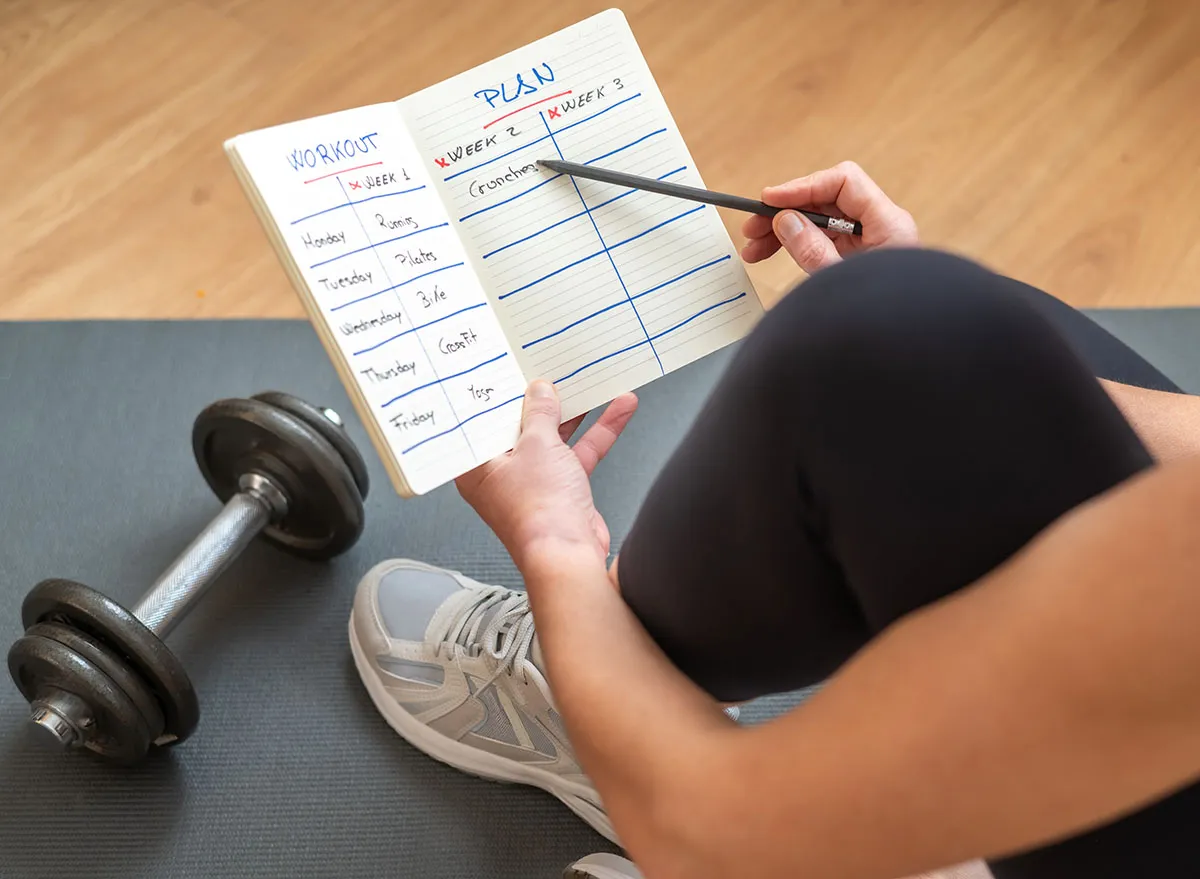
The key to muscle development is not just the exercise selection, but the consistency of the stimulus. The following three-step program is designed to be performed six days a week, allowing for one day of recovery.
1. Chair Tricep Dips
The dip is the gold standard for tricep development. It utilizes a portion of your own body weight, providing a level of resistance that is difficult to replicate with light weights. By keeping the torso close to the chair, you ensure the triceps—not the shoulders—do the heavy lifting.
- Execution: Place your hands on the edge of a sturdy, non-sliding chair. Extend your legs forward, keeping your feet flat on the floor. Slowly lower your body by bending your elbows, ensuring they point directly behind you. Push back up using the strength of your triceps.
- Goal: 8 to 12 repetitions.
- Common Pitfalls: Avoid letting the elbows flare out to the sides, as this shifts the focus to the shoulder joints. Keep your back close to the chair to maintain optimal tension on the triceps.
2. Seated Overhead Tricep Extension
This exercise targets the "long head" of the tricep. Because this muscle head spans the shoulder and elbow joints, it is essential for creating the defined shape of the arm.
- Execution: While seated, hold a water bottle or small weight in both hands. Extend your arms straight up toward the ceiling. Keeping your elbows tucked close to your ears, slowly lower the weight behind your head by bending only at the elbows. Press the weight back up to the starting position.
- Goal: 12 to 15 repetitions.
- Progressive Loading: As the movement becomes easier, increase the weight by using a larger water bottle (e.g., moving from 500ml to 750ml).
3. Seated Bent-Over Rear Raise
While the triceps are the focus of the "bat wing," the overall appearance of the upper arm is influenced by the surrounding muscles, including the rear deltoids and the muscles between the shoulder blades.
- Execution: Sit on the edge of the chair with your feet flat. Lean your torso forward slightly, keeping your spine straight. With a light weight in each hand, lift your arms out to the side in a "reverse fly" motion, squeezing the muscles between your shoulder blades at the top of the movement.
- Goal: 12 to 15 repetitions.
Chronology of Results: What to Expect
Commitment to this routine triggers a physiological adaptation that occurs in distinct phases over the course of three weeks.
- Days 1–7 (The Wake-Up Phase): The primary objective is establishing the movement pattern. You may feel slight muscle soreness, which is a normal response to "waking up" dormant tissue. By the end of the first week, many practitioners report that their arms feel "firmer" to the touch, even if the visual change is minimal.
- Days 8–14 (The Strengthening Phase): During the second week, you should introduce a second set of each exercise. The muscle fibers are beginning to adapt to the resistance, and you will notice that the "wobble" of the arm becomes less pronounced when the limb is lifted.
- Days 15–21 (The Defining Phase): By the final week, the cumulative effect of the training becomes visible. You may add a third set or increase the tempo, such as slowing the downward phase of the movement to three seconds. This increased "time under tension" is where visible definition accelerates.
Implications for Longevity and Health
It is important to manage expectations: 21 days is the timeframe for the start of a transformation, not the finish line. While the "bat wing" appearance will be meaningfully reduced by day 21, the subsequent 60 days are where the most significant structural changes occur.
Muscle tissue is metabolically active, and building it provides benefits far beyond aesthetics. Increased tricep strength improves functional independence—making it easier to push yourself up from a chair, reach for high shelves, or handle daily household tasks with ease.
Furthermore, this protocol underscores a vital truth about health in the later stages of life: it is never too late to initiate muscle protein synthesis. Whether you are 60, 70, or beyond, your body retains the capacity to build, strengthen, and redefine its composition. By committing to just 10 to 12 minutes of daily, focused movement, women can take control of their physical health and, in the process, find renewed confidence in their appearance.
The journey to firmer arms is not about chasing youth, but about honoring the body’s capability to adapt at any age. With a sturdy chair, a bit of determination, and a 21-day commitment, the results are not just possible—they are inevitable.