









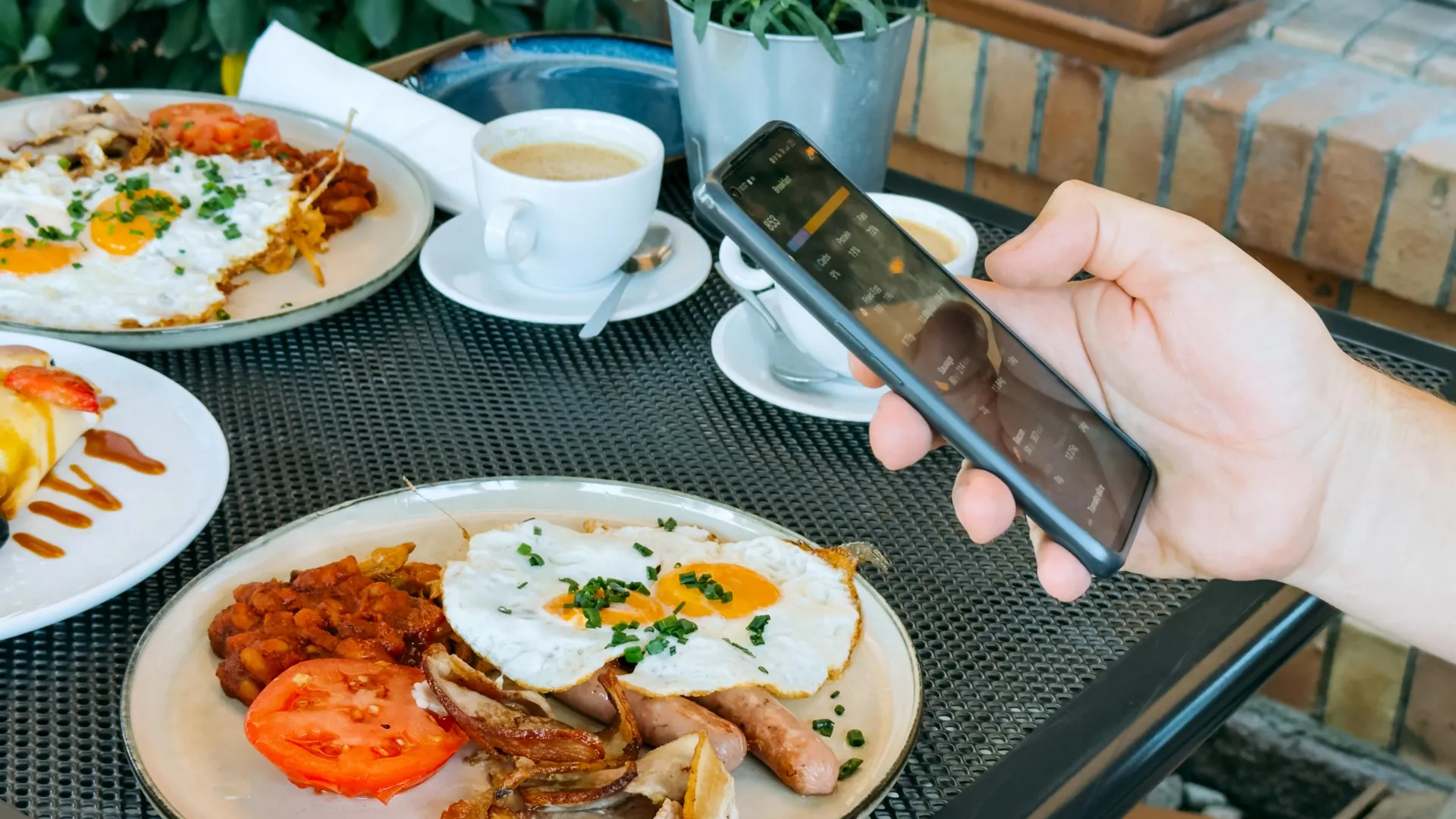
For millions of health-conscious individuals, the era of tedious manual food logging—manually inputting every gram of almond butter or every slice of sourdough—is rapidly drawing to a close. In its place, a new generation of artificial intelligence-powered applications promises a friction-free experience: take a photo of your plate, and receive an instant, detailed nutritional breakdown.
However, a groundbreaking study presented at NUTRITION 2026, the annual flagship meeting of the American Society for Nutrition, suggests that this digital convenience comes at a significant cost to accuracy. According to researchers from the National Institute of Diabetes and Digestive and Kidney Diseases (NIDDK), part of the National Institutes of Health (NIH), these AI tools are consistently underestimating caloric intake by a substantial margin, potentially undermining the weight-loss and health management goals of the very people relying on them.
The Promise vs. The Reality: A Discrepancy on the Plate
The allure of photo-based calorie tracking is undeniable. By leveraging advanced image recognition algorithms and machine learning, these apps aim to identify food items and estimate portion sizes automatically, cross-referencing this data with vast nutritional databases.
"Photo-based calorie tracking apps are very popular, especially for people trying to manage their health or lose weight," notes Aaron Hengist, a postdoctoral visiting fellow with the NIDDK. "However, the accuracy of many of these apps has not been thoroughly evaluated. Our study helps address this question by looking at whether these apps can reliably estimate calories."
The results of the study, presented by Olivia Charles, a postbaccalaureate intramural research training fellow at NIDDK, were sobering. In a rigorous test involving four of the most popular tracking applications—MyFitnessPal, LoseIt!, CalAI, and Appediet—researchers discovered that calorie and fat estimates were, on average, approximately one-third lower than the actual values. In practical terms, this means that a user might believe they are consuming a balanced, calorie-controlled meal, while in reality, they are ingesting hundreds of calories more than their app reports.
A Chronology of the Investigation
The project originated within the broader scope of nutrition research conducted at the NIH Clinical Center. The goal was to investigate how the human body processes nutrients under different dietary paradigms, specifically comparing a low-carbohydrate ketogenic diet against a standard, balanced diet.
Phase One: The Gold Standard
To conduct their evaluation, the researchers needed a baseline of absolute truth. They utilized meals prepared in a tightly controlled metabolic kitchen at the NIH. In this environment, ingredients were measured to the nearest 0.1 gram, providing a "gold standard" reference point.
Researchers collected 102 standardized photographs of these precisely measured meals. These images were then submitted to the four selected applications. By comparing the AI-generated output against the known, measured nutritional content, the team was able to quantify exactly how far off these digital trackers were.
Phase Two: Expanding the Scope
Following the initial findings, the research team expanded their inquiry to include more than 200 additional meals. This second phase was designed to identify the specific variables—such as food density, macronutrient composition, and meal complexity—that contribute to the AI’s failure.
The preliminary results from this secondary analysis, presented at the Gaylord National Resort & Convention Center, have provided deeper insight into why these systems struggle, particularly when faced with the high-fat profiles characteristic of ketogenic diets.
Supporting Data: The Magnitude of the Miscalculation
The numbers paint a clear picture of the challenge facing AI-based nutrition tools. Across the four apps tested, the discrepancy was not a minor rounding error; it was a systemic deficit.
- Caloric Underestimation: On average, the apps missed between 250 and 345 calories per meal. For an individual tracking a 2,000-calorie daily budget, this error could lead to an accidental surplus of nearly 1,000 calories a day if the user relies solely on the app for three meals.
- Fat Estimation Failures: The apps struggled most significantly with fat, underestimating content by an average of 30 grams per meal. Given that fat is the most calorie-dense macronutrient (9 calories per gram), this specific error accounts for the bulk of the total caloric shortfall.
- Performance Variance: While MyFitnessPal and LoseIt! showed slightly better accuracy when dealing with higher-calorie meals, the consistency across the board was lacking. Interestingly, all four apps demonstrated more reliable estimation for carbohydrates than for fats or proteins, suggesting that AI models are currently better at identifying structured, recognizable items like bread or fruit than they are at estimating the volume of hidden fats or sauces.
Official Responses and Scientific Context
It is important to note the status of this research. While the findings were selected by a committee of experts for presentation at NUTRITION 2026, the study has not yet completed the full peer-review process required for publication in a major scientific journal.
"These results should be considered preliminary until they appear in a peer-reviewed publication," the researchers noted in their abstract. Despite this caveat, the caliber of the NIH-led study provides a high level of credibility that cannot be ignored by the developers of these applications.
The findings highlight a fundamental limitation in current computer vision technology. AI models are trained on large datasets of images, but they lack the ability to understand the "hidden" aspects of food. A photo can identify a piece of chicken, but it cannot determine if that chicken was cooked in two tablespoons of oil or if it was poached. It cannot "see" the caloric density of a cream-based sauce hidden beneath a garnish.
Implications for Health and Weight Management
The implications for the general public are significant. For those using these apps to manage chronic conditions like diabetes, where precise carbohydrate and caloric intake is essential for blood glucose management, the systematic underestimation could lead to poor health outcomes. For the average weight-loss seeker, these "missing" calories could be the primary reason for a plateau in progress, leading to frustration and the eventual abandonment of healthy habits.
Moving Toward a Hybrid Model
Hengist suggests that users should not abandon these tools entirely, but rather change how they use them. "People using a photo-based tracking app without adjusting the portions or entering the amounts of food should take the results with a grain of salt," he says. "These apps tend to underestimate calories, especially from fats, so what they actually ate is likely higher than what the app shows."
The researchers propose a "hybrid" approach to digital nutrition tracking. Rather than relying solely on the "snap-and-track" method, users might consider:
- Manual Verification: Using the AI as a starting point, but manually verifying or adjusting the portion sizes it suggests.
- Focus on Composition: Being aware that the apps struggle with high-fat, high-density meals, and manually logging those items.
- Traditional Methods: Supplementing AI tools with traditional tracking methods—such as weighing food or using standardized measuring cups—for at least one meal a day to calibrate their own estimation skills.
The Future of AI in Nutrition
As artificial intelligence continues to evolve, developers will likely incorporate better depth perception, improved object detection, and perhaps even integration with "smart" kitchen appliances that communicate directly with the app. However, as of 2026, the technology remains an assistive tool rather than an authoritative one.
For now, the lesson from the NIDDK research is clear: the camera lens is not a scale. While AI can certainly save time, it currently lacks the precision required for rigorous nutritional monitoring. Until these algorithms improve their ability to detect hidden fats and complex ingredients, the most effective way to track what we eat remains a combination of technological convenience and human oversight.
As we look toward the future of digital health, the gap identified by Hengist and Charles serves as a vital reminder that in the world of biology and nutrition, there is no substitute for the precision of a controlled environment—and that "what you see" is not always "what you get."