





With the global bodybuilding community turning its eyes toward Las Vegas, the intensity of the "Olympia season" is reaching a fever pitch. As the industry counts down the final six weeks before the world’s elite gather for the most prestigious event in the sport, a recent live-streamed installment of "The Olympia Prep Show" offered an unprecedented look behind the curtain of professional competition.
Hosted by Frank Sepe, the broadcast featured two of the most iconic figures in the history of the sport: seven-time Mr. Olympia Phil "The Gift" Heath and three-time Arnold Classic champion Kai "The Predator" Greene. For fans who witnessed the peak of their rivalry from 2012 to 2014, seeing the two men share a screen in harmony was a revelation. Yet, beyond the nostalgia, the conversation provided a masterclass in the psychological warfare and unwavering dedication required to ascend to the pinnacle of the IFBB Pro League.
The Evolution of a Legendary Rivalry
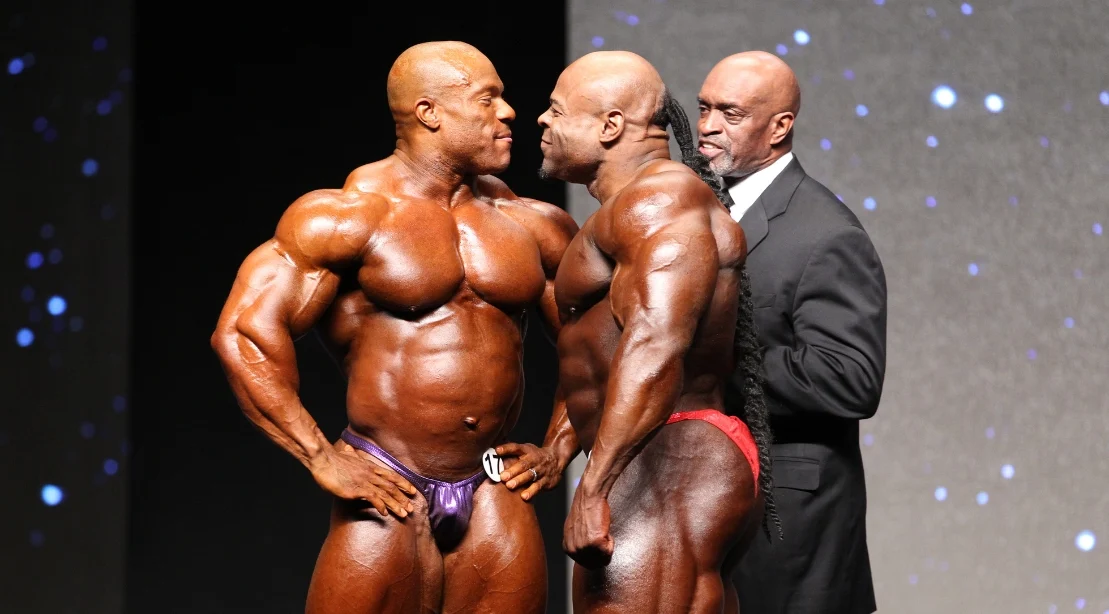
The history between Phil Heath and Kai Greene is etched into the bedrock of modern bodybuilding. During their active years as primary competitors, their rivalry was characterized by palpable tension, theatrical face-offs, and a distinct contrast in training philosophies and personas.
For many fans, the spectacle of their rivalry peaked during the mid-2010s. During the 2012, 2013, and 2014 Mr. Olympia contests, Greene consistently pushed Heath to his absolute limit, ultimately securing the runner-up position each time. This period defined the era; Heath was the "gifted" technician with near-perfect genetic proportions, while Greene was the "predator"—a blue-collar, high-intensity worker whose raw drive and artistic flair brought a different aesthetic to the stage.
However, the "Olympia Prep Show" served as a bridge between that past and the present. Host Frank Sepe admitted that his social media direct messages were flooded with fan speculation regarding the potential for a hostile interaction between the two legends. "People are like, ‘Are they gonna fight?’" Sepe remarked during the stream.
The response from the legends was one of mutual respect and seasoned maturity. "Why would we?" Heath asked, laughing off the tension. "I mean, we collectively have boosted the Olympia." His sentiment highlights a reality often overlooked by casual fans: the rivalry was a professional catalyst that pushed both men to heights they might not have reached in isolation.
Chronology of the Titans: From Conflict to Collaboration
The narrative of their relationship is best viewed through a chronological lens of competition:
- 2010: The turning point. Kai Greene secured a monumental victory over Phil Heath at the Arnold Classic, signaling to the world that Heath was not invincible. This served as the catalyst for the psychological intensity that would define their future encounters.
- 2012–2014: The "Golden Era" of their rivalry. Heath claimed the Sandow trophy in three consecutive years, but only after grueling battles with Greene. These events were characterized by high-stakes press conferences and a level of fan engagement that elevated the sport’s profile.
- Present Day: Both men have pivoted to roles as ambassadors and educators. Their appearance on the Olympia Prep Show signals a shift from direct competition to the preservation and promotion of the sport’s history and methodology.
Inside the Gym: The Psychology of "The Gift" and "The Predator"
The core of the discussion centered on the "competitive mindset." For Heath, bodybuilding is not merely about hypertrophy or symmetry; it is a psychological chess match.
"I feel that Kai and I were some of the most competitive bodybuilders ever," Heath reflected. "Not just great bodybuilders. I think to be an awesome bodybuilder, you have to be competitive."
Heath shared an anecdote that perfectly illustrates the lengths to which these men pushed one another. During a training block in preparation for a major show, Heath was working with his legendary trainer, Hany Rambod. Across the gym, he noticed Greene grinding away on the step mill. The intensity was so pervasive that it became a mental game of attrition.
"I’m over here training with Hany, and I’m like, ‘He’s on this step mill all freaking night!’" Heath recalled. The question of "Who is going to leave the gym first?" became a recurring theme in his training, a testament to the psychological pressure that top-tier athletes exert on one another even during the off-season or private training sessions.
The Roots of Ambition: Kai Greene’s Perspective
While Heath approached the sport with the precision of a scientist, Kai Greene’s journey was rooted in a deep, transformative connection to the stage. During the show, Greene opened up about his early inspirations, noting that his drive was initially ignited by watching veterans like Frank Sepe perform.
"I was a teenager standing there watching you on the stage dominating and destroying," Greene told Sepe. This admission provides insight into the lifecycle of a professional athlete: the transition from being a star-struck fan to an admirer of the craft, and finally, to a competitor who must eventually shed the "fan" mentality to become an icon in his own right.
Greene emphasized that the sport acted as a crucible for self-discovery. "I think the sport helped me to discover and realize myself," he noted. By internalizing the work ethic of his predecessors—such as the late Rodney St. Cloud—Greene was able to synthesize his own path, eventually becoming one of the most recognizable figures in the history of the sport.
Official Implications for the 2026 Olympia
The return of the Olympia to the Orleans Arena in Las Vegas is a symbolic homecoming for the sport. As Heath noted, "With the Olympia going back to the Orleans, man, that’s pretty awesome because that’s where (Greene) and I used to have a lot of battles."
The implication of this reunion is significant for the current generation of competitors. By demonstrating that the fiercest rivalries can evolve into professional camaraderie, Heath and Greene are providing a blueprint for modern athletes. The 2026 Olympia, scheduled for September 24–27, promises to be a convergence of history and the future.
For the current crop of bodybuilders, the message from the veterans is clear: success at the Olympia is not just about muscle mass or conditioning; it is about the ability to endure the mental weight of expectation and the drive to outwork every other person in the gym.
The Broader Impact on Professional Bodybuilding
The insights shared during the Olympia Prep Show suggest that the industry is entering a new phase of maturity. The era of manufactured conflict is giving way to a culture of shared expertise. By discussing their past struggles, Heath and Greene are effectively mentoring the next generation, teaching them that the "rivalry" is a tool to be used, not a burden to be carried.
As the industry prepares for the upcoming Olympia, the focus remains on the pursuit of the Sandow trophy. Whether the current generation of athletes can replicate the intensity that Heath and Greene brought to the stage remains to be seen. However, if the current crop of competitors can adopt even a fraction of the competitive psychology displayed by these two legends, the 2026 Olympia is destined to be a watershed moment for the sport.
In summary, the reunion of Phil Heath and Kai Greene serves as a reminder that the true greatness of bodybuilding lies not just in the hardware, but in the human stories behind the muscle—the hours spent on the step mill, the psychological battles of the mind, and the eventual realization that, in the pursuit of greatness, we are all students of the game.
Event Details:
The 2026 Mr. Olympia competition will take place from September 24–27. For ticketing, event schedules, and updates on the competitors vying for the coveted Sandow trophy, visit the official Mr. Olympia website.