









Executive Summary
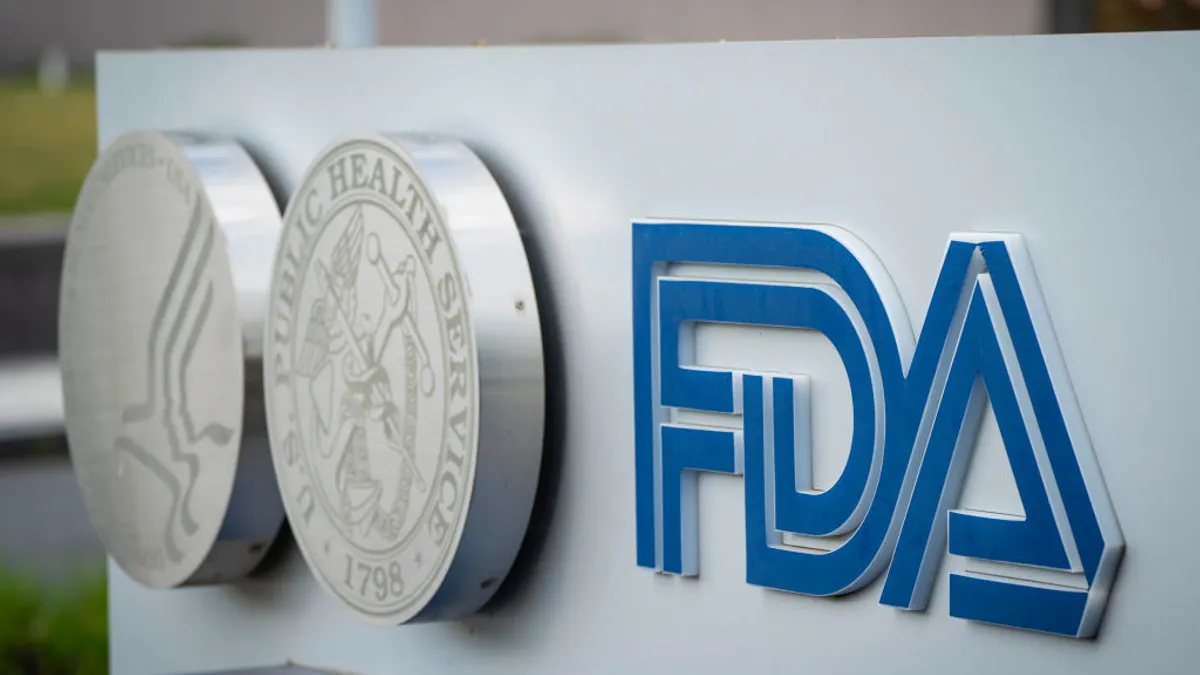
The U.S. Food and Drug Administration (FDA), long considered the "gold standard" for global drug safety and efficacy, currently finds itself at a precarious crossroads. Following a period of intense turbulence characterized by mass layoffs, the resignation of high-ranking officials, and a series of controversial policy shifts, the agency is facing a leadership vacuum that has left investors and the pharmaceutical industry deeply unsettled. As the administration weighs potential candidates to steer the agency, the name of Dr. Heidi Overton has emerged as a focal point of intense scrutiny. A medical doctor and veteran of the America First Policy Institute, Overton represents a departure from traditional, career-track FDA leadership, signaling a potential pivot toward a more politically integrated regulatory environment.
Chronology: A Period of Unprecedented Agency Volatility
The current state of the FDA cannot be understood without examining the rapid-fire changes that have defined the second Trump administration’s approach to public health oversight.
- Early Transition: Upon the inauguration of the second Trump administration, an aggressive restructuring initiative began within the Department of Health and Human Services (HHS). This initiative, championed by leadership closely aligned with the "Make America Healthy Again" (MAHA) agenda, sought to decentralize what many in the administration described as "bureaucratic bloat."
- The Departure of Institutional Knowledge: Over the past year, the agency experienced a wave of resignations. Key figures in the Center for Drug Evaluation and Research (CDER) and the Center for Biologics Evaluation and Research (CBER) departed, citing concerns over the politicization of scientific decision-making.
- Policy Instability: Under the previous tenure of Dr. Marty Makary, the agency was frequently criticized for "erratic decision-making." Industry observers noted that regulatory rulings—once viewed as predictable based on clinical data—began to shift based on external political pressures, causing significant volatility in the biopharma stock market.
- The Interim Stabilization: In recent months, officials such as Diamantas have acted as a "stabilizing force," attempting to maintain the integrity of clinical trial reviews while navigating a hostile internal environment. However, the search for a permanent, long-term director continues to loom over the agency.
Supporting Data: The Cost of Ambiguity
For the pharmaceutical industry, the FDA’s most valuable currency is predictability. When drug developers submit an Investigational New Drug (IND) application or a New Drug Application (NDA), they are essentially betting millions—sometimes billions—of dollars on a regulatory framework that is supposed to be rooted in objective, peer-reviewed science.
According to market analysis from RBC Capital Markets, the current lack of a permanent, experienced regulatory leader has created a "risk premium" for biopharma investments. Analyst Brian Abrahams noted that while the agency’s internal processes remain functional, the interpretation of those processes is in flux.
The Overton Factor
Dr. Heidi Overton, currently serving as the deputy director of the White House Domestic Policy Council, is a polarizing figure in the context of the FDA. Her background is unconventional for the role:
- Academic Background: A graduate of the University of New Mexico School of Medicine (2015), she holds a Ph.D. in clinical investigation from Johns Hopkins and is board-certified in public health and preventive medicine.
- Political Path: Unlike predecessors who spent decades in clinical research or regulatory affairs, Overton transitioned from surgical residency to the White House in 2019.
- The "America First" Alignment: During her time at the America First Policy Institute, Overton established herself as a fierce advocate for conservative healthcare reform, focusing on price transparency, the opioid crisis, and vocal opposition to abortion. Her rhetoric, particularly in pieces co-authored with former Governor Bobby Jindal, suggests a leader who views the FDA not just as a technical body, but as an extension of the administration’s broader cultural and political agenda.
Implications for the Biopharma Industry
The potential appointment of Dr. Overton carries profound implications for drug development, patient access, and regulatory flexibility.
1. The Question of Regulatory Flexibility
The pharmaceutical industry thrives on "regulatory flexibility"—the ability for sponsors to engage in dialogue with the FDA regarding trial design, endpoint selection, and biomarker validation. If the agency becomes a top-down entity directed by political appointees, there is a risk that this dialogue will evaporate. "Her impact to biopharma and new drug review flexibility is uncertain," Abrahams wrote, noting that Overton’s lack of a track record in drug regulation leaves stakeholders guessing whether she would support or hinder the current speed of innovation.
2. The Influence of the HHS Secretary
It is widely expected that if Overton is appointed, she would operate under the close supervision of HHS Secretary Robert F. Kennedy Jr. For the industry, this represents a double-edged sword. Kennedy has been a vocal proponent of the MAHA agenda, which emphasizes chronic disease prevention and skepticism of traditional drug industry practices. While some might welcome a shake-up of the "revolving door" between the FDA and Big Pharma, others fear that a departure from established regulatory science could lead to international isolation, where FDA approvals are no longer recognized by the European Medicines Agency (EMA) or other global regulators.
3. Internal Agency Culture
The FDA is a massive machine composed of career scientists, pharmacologists, and statisticians. The report that some MAHA followers believe Overton has "slowed down" progress suggests that she may be attempting to balance the administration’s desire for rapid change with the agency’s inherent, cautious, data-driven nature. For the staff at White Oak, this creates an environment of "watchful waiting." If the leadership is perceived as prioritizing ideological goals over scientific rigor, the agency risks further "brain drain," as the most talented researchers leave for academia or the private sector.
Official Responses and Public Perception
The discourse surrounding Overton’s work at the White House is emblematic of the current administration’s friction. While she has been praised by the inner circle of the MAHA movement for her dedication to reform, she has also been the subject of criticism from those who feel the pace of change is too slow.
In an interview with The Atlantic, anonymous White House officials defended Overton, stating that she works with surgical precision to ensure that policies are "advanced the right way." This suggests that Overton views herself as a guardian of the administration’s vision, ensuring that systemic changes—such as those targeting the FDA’s approval pathways—are implemented with legal and administrative durability.
However, the political nature of her past writings, including inflammatory op-eds regarding state-level healthcare policies, suggests that her confirmation or appointment would be anything but quiet. Industry lobbyists are currently in a state of high alert, attempting to determine if her focus will be on streamlining drug approvals or if she will prioritize a more restrictive, skeptical approach to pharmaceutical oversight.

The Path Forward: A Call for Stability
As the administration continues to navigate these leadership transitions, the underlying needs of the American public remain constant: safe, effective, and timely access to medical innovation.
The next director of the FDA will face the daunting task of reconciling three conflicting mandates:
- Restoring Scientific Morale: Rebuilding the trust of the thousands of career civil servants who feel the agency has been politicized.
- Satisfying the Political Base: Executing the MAHA agenda and delivering on the promise of a leaner, more transparent, and less industry-beholden FDA.
- Maintaining Global Credibility: Ensuring that the agency’s decisions remain grounded in objective clinical science so that the U.S. remains the global leader in medical innovation.
For Dr. Overton, should she be the chosen candidate, the transition from a political think tank to the helm of the most powerful public health agency in the world will be the defining challenge of her career. The pharmaceutical industry, which once sought only to understand the FDA’s scientific guidelines, is now forced to become an expert in the agency’s internal politics.
Until a clear direction is established, the "steady hand" remains elusive. Investors will continue to watch for signals, the scientific community will watch for evidence of bias, and the public will wait to see whether these structural changes will ultimately lead to a healthier nation or simply a more divided regulatory system. In the words of one industry veteran, "The FDA is currently a ship without a compass, and the coming months will determine whether it finds its way back to port or continues to drift in increasingly choppy waters."