In a groundbreaking development that bridges the gap between biodiversity and oncology, researchers at the Japan Advanced Institute of Science and Technology (JAIST) have uncovered a potent weapon against cancer residing in the most unlikely of places: the intestines of the Japanese tree frog (Dryophytes japonicus).
As detailed in their recent publication in the journal Gut Microbes, the research team has successfully identified a naturally occurring bacterium, Ewingella americana, capable of eradicating colorectal tumors in mice with a 100% complete response rate. This study represents a paradigm shift in how scientists approach microbiome-based therapies, moving away from the passive alteration of gut health and toward the active deployment of "living drugs" designed to hunt down and destroy malignant cells.
The Core Discovery: A New Frontier in Oncology
For decades, cancer research has focused heavily on pharmaceuticals—synthetic compounds designed to inhibit specific cellular pathways. While breakthroughs in immunotherapy and targeted chemotherapy have extended survival rates, many solid tumors remain notoriously difficult to treat due to their complex microenvironments.
The team at JAIST, led by pioneering researchers in synthetic biology and microbiology, hypothesized that nature might have already evolved the perfect tools for tumor destruction. By screening the intestinal microbiota of three species—the Japanese tree frog, the Japanese fire-bellied newt, and the Japanese grass lizard—the researchers aimed to isolate strains with inherent anticancer properties.
After rigorously screening 45 distinct bacterial strains, the team identified nine candidates that exhibited significant tumor-suppressive activity. Among these, E. americana emerged as the clear frontrunner. Unlike traditional therapies that often struggle with systemic toxicity or poor tumor penetration, E. americana demonstrated a remarkable ability to infiltrate tumor tissues while leaving healthy organs completely untouched.
Chronology: From Amphibian Gut to Lab Bench
The path to this discovery was one of methodical biological screening and validation. The research project followed a strictly defined trajectory:
- Phase I: Environmental Prospecting: The research team collected microbiome samples from three amphibian and reptilian species native to Japan. The goal was to identify microbes that coexist with their hosts while maintaining a balance that might include inherent defense mechanisms against pathogens or abnormal cell growth.
- Phase II: In Vitro Screening: Once isolated, the 45 bacterial strains were cultured in laboratory settings. Researchers exposed them to cancer cell lines to determine which strains could induce apoptosis (programmed cell death) or inhibit cell proliferation.
- Phase III: Mouse Model Validation: The most promising strains were introduced into mouse models of colorectal cancer. This was the turning point where E. americana demonstrated its extraordinary efficacy. A single intravenous dose led to the total regression of tumors in every subject treated.
- Phase IV: Safety and Mechanism Analysis: Over the following months, the team analyzed the biological mechanisms behind the bacterium’s success. They monitored the subjects for 60 days to ensure no long-term toxicity, confirming that the bacteria were cleared from the bloodstream within 24 hours without colonizing vital organs.
Supporting Data: Why E. americana Succeeds
The efficacy of E. americana is rooted in a "dual-attack" strategy that exploits the unique biological environment of a tumor.
1. Direct Intratumoral Proliferation
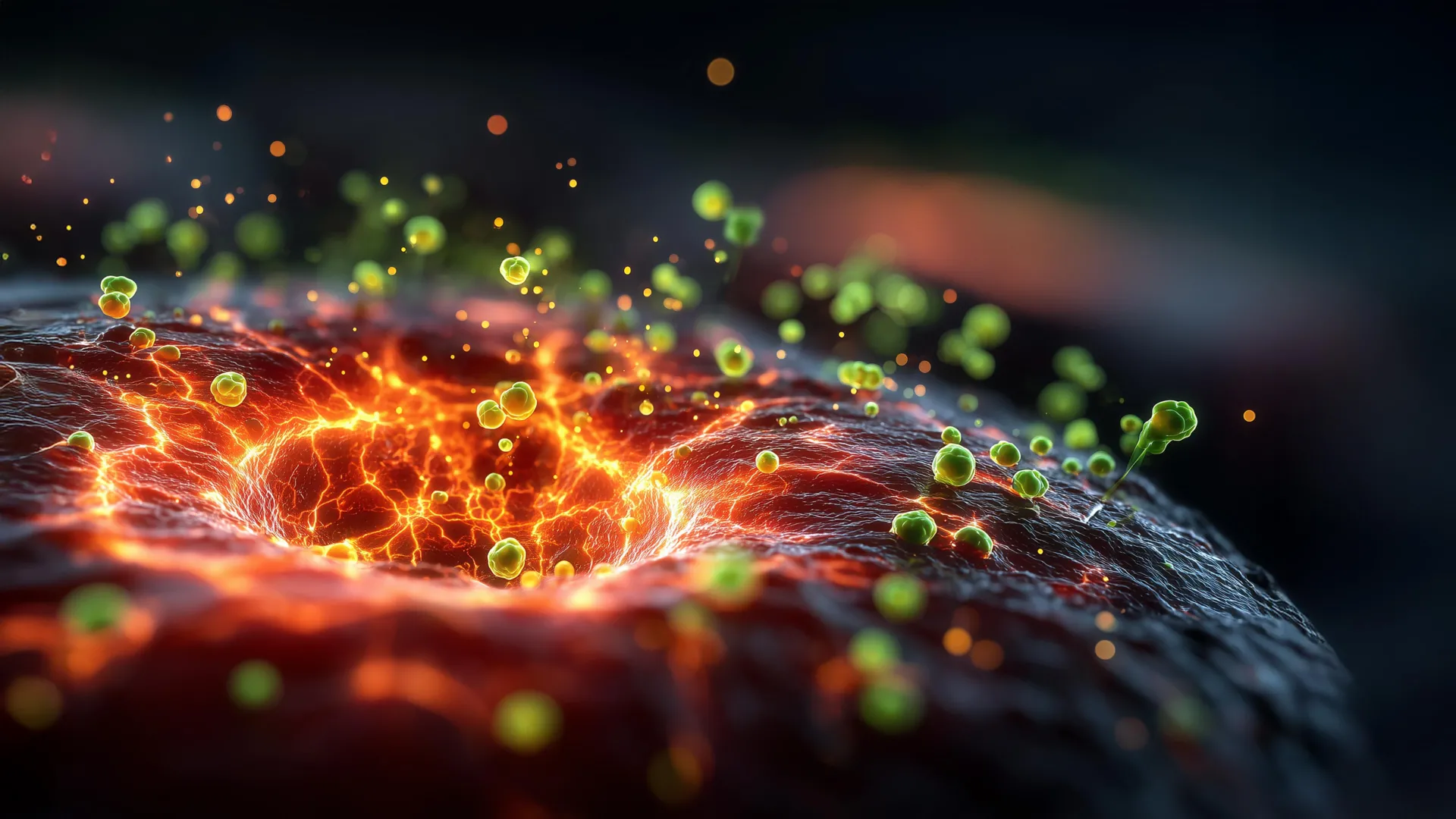
Solid tumors are often characterized by dense, oxygen-deprived (hypoxic) cores, which frequently render conventional chemotherapy and radiation ineffective. E. americana, as a facultative anaerobe, is uniquely equipped to thrive in these conditions. Upon intravenous injection, the bacteria are carried through the bloodstream but specifically congregate within the tumor mass. Once inside, they replicate with astonishing speed, increasing their population by approximately 3,000-fold within the first 24 hours. This localized explosion of microbial presence exerts direct physical and chemical stress on cancer cells, leading to their collapse.
2. Immune System Mobilization
Beyond direct action, the bacteria serve as a beacon for the host’s immune system. By accumulating in the tumor, E. americana triggers an inflammatory response that recruits T cells, B cells, and neutrophils to the site. These immune cells release powerful signaling molecules—specifically TNF-α and IFN-γ—which act as a secondary, sustained attack force. This creates a "hot" tumor environment, making the cancer vulnerable to the immune system’s natural cleanup mechanisms.
3. Precision Targeting and Safety
Perhaps the most significant finding regarding clinical viability is the bacterium’s specificity. In the study, E. americana was cleared from the bloodstream with a half-life of just 1.2 hours. It showed no inclination to colonize the liver, lungs, heart, or kidneys. During the 60-day observation window, the researchers noted only mild, transient inflammation, with no evidence of chronic toxicity or off-target effects. This high degree of precision addresses one of the most persistent hurdles in oncology: the "therapeutic window," or the balance between killing the tumor and sparing the patient.
Official Responses and Expert Perspectives
The research community has received the findings with cautious optimism. While the 100% complete response rate in mice is statistically staggering, the researchers themselves are quick to emphasize the necessity of further translation.
"We have successfully established a proof of concept," noted a representative from the JAIST research team. "While the results are undeniably encouraging, we must be careful to distinguish between successful murine models and the complex physiological reality of human oncology. Our focus now is on understanding the molecular ‘docking’ mechanisms that allow these bacteria to ignore healthy tissue while homing in on the tumor environment."
Independent experts in the field of microbiome therapeutics have praised the study’s methodology. The decision to isolate individual strains rather than attempting to manipulate the entire gut microbiome is seen as a more viable path toward regulatory approval. By isolating a single, predictable strain, the treatment becomes easier to standardize, quantify, and manufacture—key requirements for any future FDA or PMDA clinical trials.
Implications: The Future of "Living Medicine"
The implications of this discovery extend far beyond the treatment of colorectal cancer. By proving that naturally occurring bacteria can be leveraged as precise, targeted anti-cancer agents, JAIST has opened the door to a new sub-field of medicine.
Expanding the Scope
Future studies are already being planned to test E. americana against other solid tumors, including pancreatic cancer, breast cancer, and melanoma. These cancers are notorious for their resistance to current treatments, and a therapy that can infiltrate these "fortresses" via the bloodstream could be transformative.
Optimization Strategies
The research team is also looking into enhancing the bacterium’s potency. Planned investigations include:
- Dose Fractionation: Determining whether smaller, repeated doses are more effective than a single bolus.
- Direct Injection: Exploring if injecting the bacteria directly into superficial tumors could be a safer or more efficient delivery route.
- Combination Therapies: Investigating whether the synergy between E. americana and existing checkpoint inhibitors or liposomal chemotherapy can produce even more durable results.
The Value of Biodiversity
Finally, this research serves as a stark reminder of the untapped potential within the natural world. Many species, like the Japanese tree frog, have evolved in environments teeming with diverse microbial life. By looking at these organisms not just as biology, but as potential pharmaceutical libraries, scientists may find the solutions to humanity’s most pressing medical challenges hiding in plain sight.
Conclusion: A New Paradigm
The identification of E. americana as an anticancer agent represents a milestone in biotechnology. By shifting the focus from synthetic chemistry to biological cooperation—using nature’s own tools to combat disease—the JAIST team has provided a roadmap for a new generation of cancer therapies. While clinical application remains on the horizon, the ability to turn a frog’s gut microbe into a tumor-seeking, immune-activating agent offers a glimmer of hope for patients facing some of the most difficult diagnoses in modern medicine.
This research was supported by the Japan Society for the Promotion of Science (JSPS) and the Japan Science and Technology Agency (JST), highlighting the essential role of public funding in high-risk, high-reward scientific exploration.