Published: August 19, 2026 | Updated: August 19, 2026
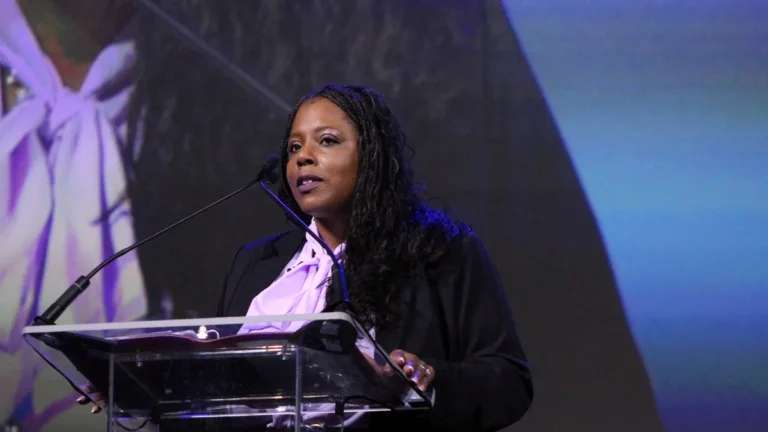
The U.S. Food and Drug Administration (FDA), an agency historically defined by its rigorous scientific standards and institutional stability, finds itself at a precarious juncture. Following a period of profound internal turbulence during the second Trump administration—marked by mass layoffs, high-level resignations, and a perceived atmosphere of erratic decision-making—Health and Human Services (HHS) Secretary Robert F. Kennedy Jr. has announced the nomination of Dr. Heidi Overton to lead the agency.
As the industry grapples with the fallout from the tenure of previous leadership, including the controversial oversight of Dr. Marty Makary, the nomination of Dr. Overton has sent shockwaves through the pharmaceutical and biotech sectors. Investors and industry executives, weary of unpredictability, are now forced to weigh the credentials of a candidate whose background leans heavily into political strategy rather than traditional regulatory medicine.
The Institutional Context: A Turbulent Era for the FDA
To understand the weight of Dr. Overton’s potential appointment, one must first examine the state of the agency she is poised to inherit. Over the past several years, the FDA has been hollowed out by a series of aggressive restructuring efforts, significant budget-related layoffs, and the departure of career scientists who previously served as the bedrock of drug approval integrity.
A Pattern of Instability
Under the guidance of previous leadership, the FDA became synonymous with policy whiplash. Industry stakeholders have frequently cited "unpredictable shifts" in regulatory expectations, which have complicated long-term R&D planning and created an environment of skepticism among global investors. The agency’s reputation for being a "steady hand" in global medicine has been challenged by controversial rulings that many experts felt were untethered from the usual consultative processes between the agency and the pharmaceutical industry.
Recent months have seen a modest cooling of these tensions, with figures such as current acting leadership providing a "stabilizing force," according to RBC Capital Markets analyst Brian Abrahams. However, the prospect of an Overton-led FDA introduces a new set of variables that have left Wall Street analysts hesitant to commit to a bullish outlook for the agency’s near-term regulatory philosophy.
Chronology: The Rise of Dr. Heidi Overton
Dr. Heidi Overton’s trajectory is as unconventional as the era in which she is ascending to power. Her career path offers a window into the current administration’s focus on ideological alignment over traditional administrative experience.
- 2015: Overton graduates from the University of New Mexico School of Medicine. During this period, she is noted for her leadership, serving as a student regent and earning accolades for her early work in public health.
- 2015–2019: Overton pursues a surgical residency, with initial aspirations toward a career in oncology surgery. During this time, she also secures a Ph.D. in clinical investigation from Johns Hopkins University.
- 2019: In a significant pivot, Overton transitions from clinical practice into the political arena, joining the White House staff.
- 2021–2025: As a key figure at the America First Policy Institute, Overton establishes herself as a vocal advocate for conservative health policy. Her work during this period focuses on issues such as hospital price transparency, the opioid crisis, and vocal opposition to abortion access.
- 2026: Serving as the deputy director of the White House Domestic Policy Council, Overton works closely with Secretary Robert F. Kennedy Jr. to advance the "Make America Healthy Again" (MAHA) agenda.
- August 2026: Secretary Kennedy officially nominates Overton to lead the FDA, signaling a desire to install a loyalist capable of implementing the administration’s systemic overhaul of federal health agencies.
Supporting Data and Professional Profile
Dr. Overton’s academic credentials are robust by traditional measures, yet her lack of experience in the complex machinery of drug regulation remains the primary point of concern for industry observers.
Academic and Clinical Qualifications
- Board Certification: Public Health and General Preventive Medicine.
- Advanced Degree: Ph.D. in Clinical Investigation, Johns Hopkins University.
- Medical Degree: M.D., University of New Mexico.
While these credentials verify a high level of medical training, they do not inherently qualify a candidate for the gargantuan task of managing the FDA’s Center for Drug Evaluation and Research (CDER) or the Center for Biologics Evaluation and Research (CBER). Analysts note that her relative silence on specific drug-approval protocols suggests she may function more as an ideological steward for HHS than as a hands-on regulatory scientist.
Political Positioning
Overton’s tenure at the America First Policy Institute was marked by a combative approach to political discourse. Her co-authorship of an op-ed with former Governor Bobby Jindal, which used inflammatory language regarding Minnesota’s healthcare policies, demonstrates a willingness to engage in partisan warfare—a trait that could complicate the FDA’s ability to maintain its image as a non-partisan, science-first entity.

Official Responses and Industry Outlook
The pharmaceutical industry’s reaction to the nomination has been characterized by a blend of caution and apprehension. Because the FDA relies on a delicate balance of trust with drug manufacturers, the uncertainty surrounding Overton’s policy priorities is being priced into market volatility.
The Investor Perspective
RBC Capital Markets analyst Brian Abrahams summarized the prevailing sentiment in a recent note to clients: "Her impact to biopharma and new drug review flexibility is uncertain. She would likely depend heavily on direction from the White House and HHS Secretary Kennedy."
The consensus among analysts is that the industry is not necessarily looking for a specific ideological shift, but rather for a return to predictability. If Overton proves to be a conduit for Kennedy’s broader MAHA agenda, the industry may see a significant shift in which therapies receive expedited review and which face increased scrutiny.
Internal Dynamics at the White House
While supporters within the administration praise Overton for her diligence, The Atlantic has reported a more nuanced reality. Some factions of the MAHA movement have expressed frustration that Overton has, at times, acted as a "brake" on the more radical impulses of the department. White House officials argue that this is a sign of competence, suggesting that she is taking the time to ensure that policies are implemented with the necessary legal and administrative rigor.
Implications: What an Overton-Led FDA Means for the Future
The appointment of Dr. Overton is not merely a personnel change; it is a signal of the administration’s intent to permanently reshape the FDA’s role in American society.
1. Regulatory Flexibility vs. Oversight
The most critical question for drug developers is whether the agency will move toward a more permissive approval environment or a more restrictive one. If Overton adheres to the populist skepticism of "Big Pharma" often voiced by Secretary Kennedy, we may see a crackdown on specific drug classes or, conversely, a bypassing of traditional clinical trial hurdles for experimental treatments favored by the administration.
2. The Erosion of Institutional Knowledge
With the FDA already suffering from the loss of seasoned officials, the arrival of a political appointee with minimal regulatory experience could exacerbate the brain drain. If career scientists feel their expertise is consistently sidelined in favor of political directives, the agency risks losing the institutional memory required to evaluate the safety and efficacy of increasingly complex biologics and gene therapies.
3. The "MAHA" Integration
Overton’s primary mandate will likely be the integration of the MAHA agenda into the FDA’s mission. This could involve a pivot toward preventative health, dietary regulation, and a broader re-evaluation of the agency’s relationship with the pharmaceutical industry. For a sector that relies on the current regulatory framework to justify billions in R&D investment, this represents an existential challenge.
Conclusion
As Dr. Overton moves toward her confirmation, the eyes of the global medical community remain fixed on her every word. The FDA has survived periods of crisis before, but the current combination of structural instability and ideological transition is unique. Whether Dr. Overton will prove to be the "stabilizing force" the industry craves or the catalyst for a further shift toward politicized medicine remains the central question of the coming year. For now, the pharmaceutical world waits—not for a revolution, but for the clarity that only a predictable, science-driven regulatory body can provide.