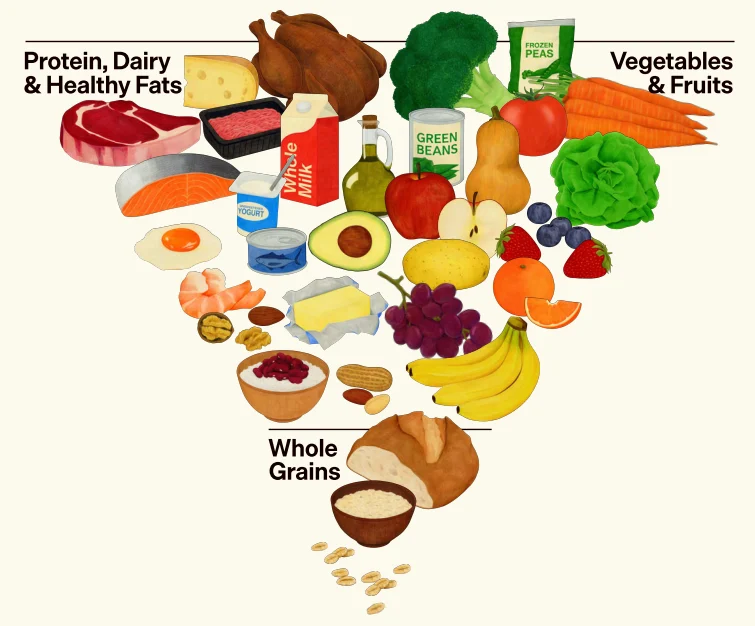
The release of the 2025–2030 Dietary Guidelines for Americans (DGAs) was met with immediate intrigue and skepticism from the nutritional science community. While the federal government’s latest roadmap for public health arrives with the catchy, simplified tagline of "eat real food" and a welcome, long-overdue crackdown on added sugars and ultra-processed snacks, the accompanying visual—a "New Food Pyramid"—has ignited a firestorm of controversy.
By flipping the traditional pyramid on its head, the new graphic places high-saturated-fat staples like steak, full-fat dairy, and butter in a position of prominence. This visual pivot has created a jarring disconnect between the document’s written technical advice and its public-facing imagery, leading experts to warn that the new guidelines may inadvertently undermine the very cardiovascular health they aim to protect.
The Evolution of the Guidelines: A Chronology of Change
To understand the current tension, one must look at the evolution of federal nutrition policy. For decades, the DGAs have served as the cornerstone for school lunches, military meals, and public health initiatives. Every five years, the U.S. Departments of Agriculture (USDA) and Health and Human Services (HHS) synthesize current research to update these recommendations.
Historically, this process involved an independent Dietary Guidelines Advisory Committee (DGAC), a panel of experts tasked with reviewing thousands of pages of peer-reviewed literature. However, the 2025–2030 cycle deviated sharply from this established protocol. After the initial Advisory Committee submitted its rigorous scientific report, it was rejected by the administration. In an unprecedented move, the government turned to a supplemental scientific analysis conducted by a group of contractors rather than the original, vetted committee.
This shift in methodology has raised significant alarms regarding transparency. Critics, including former committee members, have noted that the lack of public disclosure regarding the methodology, the selection of authors, and the rationale for "relitigating" previously settled scientific topics marks a departure from the high standards of replicability and objectivity that defined previous editions.
Decoding the "New Food Pyramid": A Visual Contradiction
The most striking element of the 2025–2030 edition is the "New Food Pyramid." Visually, the graphic prioritizes calorie-dense, animal-based foods. While the DGAs maintain the longstanding scientific consensus that saturated fat should be capped at 10% of total daily calories, the graphic’s layout suggests a different hierarchy of health.
The Saturated Fat Trap
If a consumer follows the visual cues of the new pyramid, they are likely to exceed their daily saturated fat limits by breakfast. Consider a 2,000-calorie diet, which allows for approximately 22 grams of saturated fat per day. A standard day featuring three servings of dairy—as suggested by the guidelines—can easily lead to an intake of 17 grams of saturated fat if full-fat options are chosen. Once a tablespoon of butter or beef tallow is added for cooking, the consumer has effectively exhausted their daily allowance before consuming a single piece of protein or whole grain.
Dr. Frank Hu, chair of the Department of Nutrition at the Harvard T.H. Chan School of Public Health, argues that this creates a dangerous "mixed message." By failing to differentiate between heart-healthy unsaturated fats—such as olive oil or plant-based fats—and saturated animal fats, the guidelines provide a blueprint for potential long-term cardiovascular risk.
The War on "Highly Processed" Foods
Despite the controversy surrounding the pyramid, the written text of the 2025–2030 DGAs makes significant strides in addressing the "standard American diet." For the first time, the guidelines explicitly call out "highly processed foods" as a category to avoid.
This includes a strong recommendation against sugar-sweetened beverages and ready-to-eat, nutrient-poor snacks. The focus on shifting from refined, white-flour carbohydrates to fiber-rich whole grains represents a victory for nutritionists who have long argued that the quality of carbohydrates—not just the quantity—is the primary driver of metabolic health.
The Sugar Standard
The guidelines have also taken a stricter stance on added sugars. The new recommendation suggests that no amount of added sugar is beneficial, advising that no single meal should contain more than 10 grams of added sugar. Furthermore, the guidelines have expanded the recommendation for children, suggesting they avoid all added sugars until age 10, a significant increase from the previous threshold of age 2. While the intent is laudable, critics point out that the document lacks a practical framework for how families can track these metrics in a real-world, fast-paced food environment.
Protein: Quantity vs. Quality
The new DGAs suggest an increase in protein intake, recommending 1.2 to 1.6 grams per kilogram of body weight. This is a 50–100% increase over previous minimum intake recommendations. While protein is essential for muscle maintenance and satiety, nutrition experts warn that the guidelines fail to emphasize the "protein package."
"Substantially raising overall protein intake without distinguishing between different protein sources may have unintended long-term health implications," says Dr. Hu. When we consume protein, we are also consuming everything that comes with it—sodium, cholesterol, and various types of fats. The current guidelines do not sufficiently differentiate between the health benefits of plant-based proteins (legumes, nuts, seeds) and the risks associated with excessive consumption of red and processed meats.
The Missing Link: Environmental and Socioeconomic Factors
A notable omission in the 2025–2030 guidelines is the lack of consideration for environmental sustainability. As the global climate crisis continues to intersect with food security, many international health organizations have begun to integrate "planetary health" into their dietary recommendations. The U.S. government’s refusal to account for the carbon footprint of certain food groups, such as beef production, represents a missed opportunity to align national nutrition policy with broader global environmental goals.
Furthermore, the guidelines struggle to address the "food environment"—the socioeconomic barriers that make healthy eating difficult for low-income populations. Without addressing the systemic issues of food deserts and the affordability of fresh produce, these guidelines risk becoming a document of aspiration rather than a roadmap for real-world application.
Official Responses and Industry Ties
The shift in the development process for the 2025–2030 guidelines has drawn scrutiny from the scientific community. Reports have surfaced highlighting financial ties between some of the supplemental reviewers and the beef and dairy industries. While these conflicts of interest were disclosed in the final documentation, their presence in a document that places these exact industries at the center of the "New Food Pyramid" has fueled public distrust.
Proponents of the new guidelines argue that the document is "consumer-friendly" and designed to be more accessible than the dense, academic reports of the past. They point to the interactive website and the shorter, punchier text as evidence that the USDA and HHS are trying to reach a broader, less technically-inclined audience.
Implications for Public Health
The ultimate test of any dietary guideline is whether it influences public health in a positive direction. Historically, data from the CDC indicates that most Americans do not follow the dietary guidelines, largely due to convenience, cost, and the overwhelming influence of marketing for ultra-processed foods.
The 2025–2030 guidelines present a paradox. They contain the most aggressive language to date regarding the dangers of processed sugar and refined grains—a move that aligns with modern nutritional science. Yet, by pairing this advice with a visual pyramid that promotes high-saturated-fat animal products and a process that lacks the transparency of previous cycles, the federal government may have undermined its own authority.
For the average consumer, the message is effectively scrambled. On one hand, they are told to cut out sugar and "eat real food"; on the other, they are provided with a visual map that directs them toward high-cholesterol food choices.
Conclusion: A Call for Personalized Nutrition
As the 2025–2030 guidelines enter the public consciousness, the consensus among independent experts is clear: proceed with caution. While the general advice to avoid ultra-processed items and prioritize whole foods is sound, the specific recommendations regarding saturated fats and protein quantity should be scrutinized.
If you find yourself confused by the conflicting messages, the best path forward remains rooted in proven, evidence-based tools. Resources like the Harvard Healthy Eating Plate provide a more nuanced and accurate framework for a balanced diet. Ultimately, nutrition is highly personal; the most effective way to navigate these new guidelines is to consult with a registered dietitian who can provide a personalized plan, rather than relying on a "one-size-fits-all" pyramid that may prioritize industry interests over long-term human health.