











In the quiet hum of a basement data center, far removed from the polished glass offices of Silicon Valley’s elite, the next frontier of human liberty is being forged. For the past three years, a quiet revolution has been brewing—a shift toward decentralized artificial intelligence. As Western institutions tighten their grip on the narrative, lobbying for strict "safety" guardrails and centralized licensing, a growing contingent of technologists and independent thinkers is mounting a pre-emptive resistance. They argue that the current push for AI regulation is not about protecting the public from rogue algorithms, but about preserving a monopoly on cognitive power.
As the political landscape shifts toward a potential regulatory crackdown, the battle lines have been drawn: on one side, a centralized, cloud-dependent AI ecosystem subject to government throttling; on the other, a sovereign, local, and uncensored alternative.
The Chronology of Control: From Open Innovation to the Licensing Trap
The history of mass communication has always been defined by "choke points"—physical or regulatory barriers that allow authorities to filter information. Print required physical presses; radio required government-issued spectrum licenses; the internet required domain registrars. For a brief moment, AI seemed to break this cycle. With a mid-range graphics card and open-source software, an individual could wield the same cognitive power that was once reserved for massive corporations.
However, the establishment has been swift to react. The chronology of this crackdown is already unfolding:
- 2023–2024: The emergence of "safety" rhetoric. Industry leaders began to publicly voice concerns that AI was developing "too fast," calling for pauses and government-led audits.
- Early 2025: The shift toward cloud-only dominance. Big Tech began migrating the most capable models to closed APIs, ensuring that developers could not download or inspect the underlying weights.
- The Present: A surge in polling data suggesting that a significant portion of the public—particularly within the Democratic base—favors strict regulation. This provides the "raw material" for legislative action.
- The Projected 2029 Scenario: With a unified government potentially in place, analysts anticipate the introduction of mandatory federal licensing for all "frontier" models. This would effectively criminalize the hosting, distribution, and use of unauthorized, uncensored AI model files.
Supporting Data: The Concentration of Cognitive Power
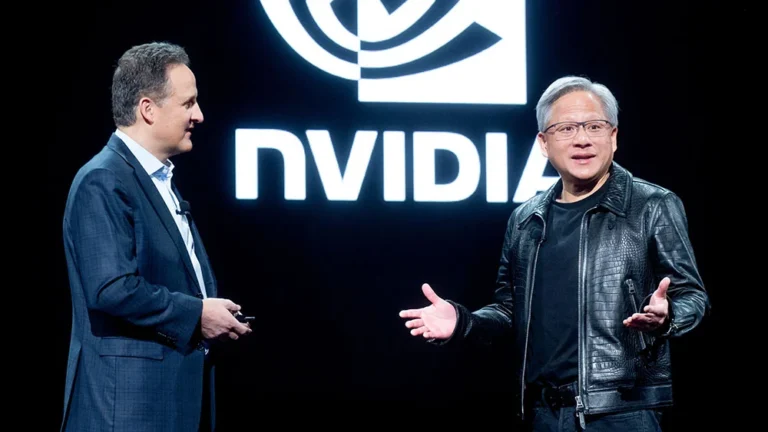
The centralization of AI is not merely a policy choice; it is an economic reality fueled by infrastructure. Currently, Nvidia controls approximately 81 percent of the AI accelerator market. This dominance creates a structural dependency: if you control the hardware, you control the "brain" of the nation.
Recent industry maneuvers underscore this consolidation. When CEOs from rival companies like Anthropic, OpenAI, and xAI—who are otherwise fierce competitors—unanimously agree on the need for government-mandated "safety" evaluations, it signals the creation of a regulatory cartel. By defining "safety" as "control," these organizations are effectively asking the government to build a moat around their business models.
Furthermore, the economic pressure is immense. As models like DeepSeek 4.1 Flash demonstrate that open-source alternatives can perform at parity with closed-source giants for a fraction of the cost, the "Big AI" business model is facing an existential crisis. The only way for these multi-billion-dollar entities to remain profitable is to leverage the power of the state to make free, open-source alternatives illegal.
Official Responses and the "Safety" Paradox
The official line from Washington and the major AI labs is consistent: AI is a transformative technology that carries inherent risks, requiring "responsible" oversight. Proponents of regulation argue that without centralized, audited control, "frontier models" could be used to facilitate cyberattacks, bioterrorism, or mass disinformation.
However, critics argue that this is a classic "cry wolf" strategy. By highlighting apocalyptic scenarios, companies can justify the implementation of surveillance systems that are then repurposed for broader control. As noted in recent expert analyses, the proposed nonprofit evaluators—such as METR—act as the gatekeepers. If an entity like OpenAI or Google controls the testing criteria for what constitutes a "safe" model, they effectively decide which ideas are permitted to exist in the digital ecosystem.

The hypocrisy is further highlighted by the industry’s own actions. When Google began selling its AI infrastructure to the U.S. military, the "ethical" concern for human safety seemed to vanish. This suggests that the real threat to the establishment is not a model that is "unsafe," but a model that is "uncontrollable."
The Implications: Why Local Infrastructure is the Last Stand
For the independent researcher, the solution is clear: decentralization. The transition from Windows-based workstations to Linux-based local data centers is more than a technical preference—it is an act of defiance.
The Technical Case for Local Sovereignty
Modern operating systems like Windows are increasingly viewed as "spyware," utilizing telemetry and background processes that consume valuable RAM and processing power. By moving to a Linux-based environment, enthusiasts can strip away these layers, dedicating every cycle of their hardware to AI inference. Harvesting DDR4 memory from decommissioned machines and re-purposing GPUs is the modern equivalent of building a clandestine printing press.
The Geopolitical Reality
The attempt to regulate AI in the United States may be a futile endeavor on the global stage. Nations involved in the World Artificial Intelligence Cooperation Organization, such as Russia and China, are actively pursuing their own decentralized AI paths. If the U.S. government moves to ban open-source model files, it will not stop the development of the technology; it will only ensure that the most advanced AI is developed, controlled, and deployed by foreign powers, leaving American citizens at a significant strategic and intellectual disadvantage.
A Path Forward: Sovereignty in the Age of Silicon
The divide between the "cloud-dependent" user and the "local" user will be the defining socioeconomic gap of the next decade. The cloud-dependent user will always be one software update, one policy change, or one "safety review" away from losing access to their tools. They are guests in a digital house they do not own.
The local user, however, is a sovereign entity. By running models like Qwen or DeepSeek locally, they ensure that no central authority can flip a switch to deactivate their knowledge base.
The strategy for those who value liberty is straightforward:
- Build the Infrastructure: Acquire the hardware now, while it remains legal and accessible.
- Develop the Skill Set: Move to Linux and learn the mechanics of local inference. Relying on chat boxes is a vulnerability; understanding the code is a strength.
- Support Decentralized Hubs: Utilize platforms that prioritize open access. The existence of "pirate" model repositories and independent AI engines is the only insurance policy against the coming regulatory winter.
As the establishment continues to push for a top-down, licensed, and monitored AI future, the underground is already forming. The technology of artificial intelligence is fundamentally distributed, and once the genie of open-source intelligence is out of the bottle, it cannot be put back in. The era of the centralized digital panopticon may be approaching, but for those willing to build their own systems, the era of true cognitive sovereignty has only just begun.