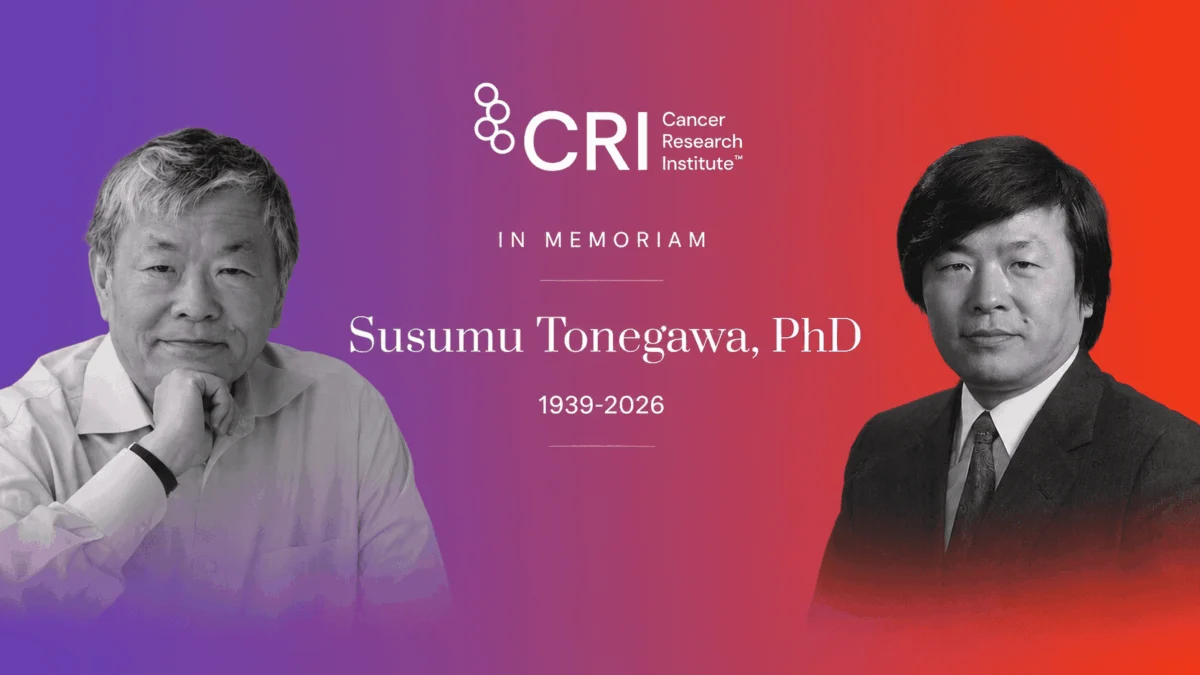
The global scientific community is in mourning following the passing of Dr. Susumu Tonegawa, a visionary molecular biologist whose intellectual curiosity unlocked one of the greatest enigmas in human biology. A Nobel laureate and a stalwart of the Cancer Research Institute’s (CRI) Scientific Advisory Council, Dr. Tonegawa passed away on July 11, 2026, at the age of 86. His death marks the end of an era for both immunology and neuroscience, two fields he fundamentally redefined through his relentless pursuit of the mechanisms governing life.
Dr. Tonegawa’s life was defined by a rare ability to peer into the complexities of the genome and extract answers that transformed our understanding of how the body survives in a hostile environment. From the intricate shuffling of DNA in B cells to the synaptic pathways of the human brain, his work has left an indelible mark on the history of medicine.
The Genetic Breakthrough: Solving the Antibody Puzzle
In the 1970s, the scientific world faced a biological paradox. It was well known that the human immune system could produce millions of different antibodies to recognize a vast array of pathogens, yet the human genome did not appear to contain enough genes to encode each one individually. For years, this "antibody diversity problem" remained one of the most stubborn mysteries in biology.
Dr. Tonegawa, working at the Basel Institute for Immunology, shattered this impasse. Through elegant and rigorous experimentation, he demonstrated that immune cells do not inherit a fixed set of antibody genes. Instead, they perform a sophisticated "cut-and-paste" operation on their own DNA as they mature. By rearranging and recombining specific gene segments, immune cells generate an almost infinite variety of receptors.
This mechanism, known as V(D)J recombination, was not merely a technical discovery; it was a conceptual revolution. It proved that the genome is not a static blueprint but a dynamic, modular system capable of self-modification. In 1987, the Nobel Assembly at the Karolinska Institute recognized the gravity of this work, awarding Dr. Tonegawa the Nobel Prize in Physiology or Medicine. His discovery provided the molecular foundation for adaptive immunity, explaining how our bodies can distinguish between the "self" and an endless array of foreign invaders.
Chronology of a Scientific Journey
Dr. Tonegawa’s path to the Nobel Prize and beyond was marked by an unrelenting commitment to inquiry and an interdisciplinary approach that challenged the traditional silos of academic research.
- 1939: Born in Nagoya, Japan.
- 1963: Graduated from Kyoto University, where he began his initial training in chemistry.
- 1968: Earned his PhD from the University of California, San Diego, where his focus shifted toward molecular biology.
- 1971–1981: Served as a researcher at the Basel Institute for Immunology, where he conducted the landmark experiments that would earn him the Nobel Prize.
- 1981: Joined the faculty at the Massachusetts Institute of Technology (MIT), where he would spend the remainder of his illustrious career.
- 1987: Awarded the Nobel Prize in Physiology or Medicine for his discovery of the genetic principle for generation of antibody diversity.
- 1994: Established the Picower Institute for Learning and Memory at MIT, marking his full-scale transition into the complex field of neuroscience.
- 2000s–2026: Continued to serve as a distinguished member of the Cancer Research Institute’s Scientific Advisory Council, mentoring the next generation of immunotherapy pioneers.
The Bridge Between Immunology and Cancer Therapy
While Dr. Tonegawa is best known for his work in genetics, the clinical implications of his discoveries have been, and continue to be, the bedrock of modern cancer immunotherapy. By understanding the mechanisms by which the immune system recognizes foreign targets, scientists have been able to develop therapies that "train" the body to recognize malignant cells.
Modern breakthroughs—such as CAR T-cell therapy and checkpoint inhibitors—owe a direct debt to Tonegawa’s fundamental research. Because he revealed how the immune system generates diversity to find pathogens, he paved the way for oncologists to harness that same diversity to find cancer.
As Dr. Alicia Zhou, CEO of the Cancer Research Institute, noted, "The history of cancer immunotherapy rests on a handful of discoveries that fundamentally changed how we think about the immune system. Dr. Tonegawa’s discovery of the genetic mechanism that creates antibody diversity is one of them."
His role at the CRI was particularly influential. As a member of the Scientific Advisory Council, he was not a passive figurehead; he was an active guide, pushing for high-risk, high-reward research that conventional wisdom often dismissed. He understood that the most transformative cures for cancer would not come from incremental steps, but from the same type of bold, paradigm-shifting science he practiced throughout his career.
A Second Act: The Neuroscience Frontier
Perhaps the most remarkable aspect of Dr. Tonegawa’s career was his decision to pivot at the height of his fame. After securing his place in the annals of immunology, he turned his analytical gaze toward the brain. He sought to understand the molecular basis of learning and memory, applying the same rigor he used on B cells to the neurons of the hippocampus.
At MIT, he helped pioneer the use of optogenetics and other advanced tools to map memory traces (engrams) in the brain. He showed that memories are not merely abstract concepts, but physical manifestations of neuronal activity that could be activated or suppressed. This shift illustrated his defining philosophy: that biology is a unified discipline and that the techniques used to solve one mystery should be boldly applied to the next.
Supporting Data: The Impact of V(D)J Recombination
The significance of Tonegawa’s work can be quantified by its omnipresence in modern medicine. The genetic diversity he described allows for:
- Adaptive Immunity: A repertoire of approximately $10^15$ different potential antibodies, allowing the human body to counter almost any pathogen encountered in an environment.
- Therapeutic Design: The ability to engineer monoclonal antibodies, which now form the basis of a multibillion-dollar industry treating everything from rheumatoid arthritis to metastatic melanoma.
- Genomic Flexibility: Insights into the mechanisms of DNA repair and rearrangement that have informed the study of chromosomal translocations and their roles in the development of leukemias and lymphomas.
Reflections on Creativity and the Scientific Spirit
In his later years, Dr. Tonegawa was often asked how he maintained such a prolific output across two distinct fields. In interviews, he emphasized that science is not just about data, but about the "art of the question." He defined creativity through three primary pillars: the need for an open mind, the courage to challenge established dogma, and the necessity of cross-disciplinary collaboration.
He frequently spoke of the "danger of expertise"—the tendency for established scientists to become trapped by the very knowledge that made them successful. He encouraged his students and peers to remain perpetual beginners, never afraid to pivot, never afraid to be wrong, and always eager to investigate the unexpected.
Official Responses and Lasting Legacy
The global scientific community has responded to his passing with an outpouring of grief and gratitude.
"Dr. Tonegawa was a titan," said a spokesperson from MIT. "His influence was not restricted to his publications; it was felt in the hallways, in the lab meetings, and in the way he challenged his colleagues to think beyond the limits of their own expertise. He showed us that the boundaries of science are only as rigid as we choose to make them."
The Cancer Research Institute highlighted his role as a mentor. "He was a beacon of intellectual honesty," said a representative from the CRI. "He guided our mission with a rigor that demanded excellence and a curiosity that demanded innovation. He leaves behind not just his papers and his Nobel, but a legacy of scientists who now lead their own labs, carrying his commitment to discovery into the future."
Conclusion: An Unfinished Symphony
The death of Dr. Susumu Tonegawa is a profound loss, but his work remains a vibrant, living part of medical science. Every time a patient receives a life-saving immunotherapy, every time a neuroscientist triggers a memory in a laboratory setting, and every time a student reads about the elegance of genetic recombination, Dr. Tonegawa’s intellect continues to shape the world.
He reminded us that science is a human endeavor—driven by wonder, tempered by logic, and ultimately dedicated to the alleviation of suffering. As we look toward the future of oncology and neuroscience, the principles he established will serve as our guide. Dr. Tonegawa’s journey, from the molecular mechanics of the immune system to the engrams of the mind, remains one of the most brilliant examples of what the human intellect can achieve when it refuses to accept the impossible.
We extend our deepest condolences to his family, his friends, and the generations of researchers who were privileged to work alongside him. He taught us how to see the invisible and how to unlock the secrets of our own biology; in doing so, he made the world a more hopeful place for patients and scientists alike.