In the high-stakes world of professional bodybuilding, few stories resonate as profoundly as the comeback of an athlete who refused to be sidelined by biology. Patrick Moore, a staple of the IFBB Pro League, has officially punched his ticket to the 2026 Mr. Olympia after a triumphant victory at the Texas Pro. His journey, however, is not merely a tale of a single win; it is a narrative of redemption, technical refinement, and the mental fortitude required to navigate the grueling landscape of elite physique sports.
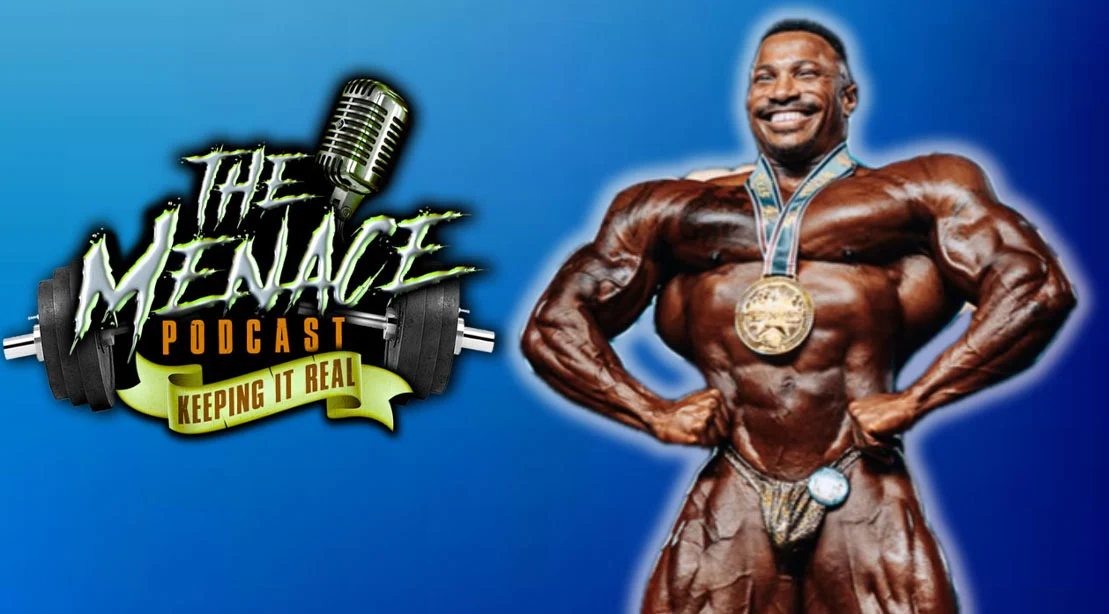
During Episode 299 of The Menace Podcast, hosted by legendary bodybuilder Dennis James, Moore sat down with industry veterans Milos Sarcev and Jose Raymond to dissect the long, arduous road that led him back to the sport’s most prestigious stage.
The Road to Redemption: A Chronology of Perseverance
For Patrick Moore, the 2026 qualification was far from an overnight success. Reflecting on his victory, Moore dubbed it his "ninth show luck," a testament to the sheer volume of competition he endured to secure his spot.
The Setbacks and the Strategy
Moore’s recent campaign was defined by patience rather than urgency. Following a disappointing fourth-place finish in Atlanta earlier this season, many observers questioned whether Moore still possessed the "wow factor" that had made him a fan favorite in 2019. However, Moore’s internal metrics were different. He was not chasing a trophy; he was chasing a specific physiological aesthetic.
"This season was focused on not just winning a show," Moore explained to the Menace Podcast panel. "It was about getting the process of nailing the look that I’m capable of."
This pursuit of perfection is a direct response to his inconsistent history. In 2019, Moore burst onto the scene by winning the California Pro, which earned him his first Olympia qualification and a respectable 10th-place finish. By 2021, he returned to the Olympia stage, but dropped to 14th. The fluctuation in his placings became a focal point for critics, but Moore notes that his path has been anything but linear.
The Achilles Injury: A Turning Point
Perhaps the most significant chapter in Moore’s recent history is his 2022 injury. While playing basketball, Moore suffered a complete rupture of his Achilles tendon—an injury that often signals the end of a career for heavy-weight athletes who rely on lower-body stability for training.
"The injury was a big setback," Moore admitted. Beyond the physical pain, the recovery required him to fundamentally relearn how to balance and move heavy loads. The process of rehabilitating the tendon forced a shift in his training methodology, prioritizing longevity and structural integrity over the "train-to-failure" intensity that had defined his earlier years. The Texas Pro victory, therefore, represents the successful completion of a two-year recovery project.
Supporting Data: The Anatomy of a Comeback
To understand the magnitude of Moore’s qualification, one must analyze the competitive field of the 2026 season. The IFBB Pro League has seen an influx of new, high-density talent, making the "top ten" at the Mr. Olympia more competitive than at any point in the last decade.
Technical Evolution
Moore’s "look" has undergone a subtle evolution. In his earlier years, his aesthetic was praised for its classic lines and vacuum-pose capabilities. However, in an era of "mass monsters," Moore had to reconcile his classic proportions with the requirement for greater density. His success in Texas proved that he has successfully navigated this balance, maintaining his trademark flow while adding the necessary muscle maturity to stand alongside current top-tier competitors.
The Mental Game
The discipline required to push through nine shows—many of which did not result in the desired outcome—speaks to a shift in Moore’s professional maturity. In the past, the pressure of competition often led to "over-dieting" or "flat" appearances. The 2026 season saw a more calculated approach, where Moore prioritized metabolic health and consistent conditioning over last-minute, risky adjustments.
Expert Analysis: The "Menace" Evaluation
During the podcast, Dennis James facilitated a "predictive exercise," asking Moore to evaluate his standing against the current 2026 Olympia roster. This segment provided a rare, unfiltered look into how an elite athlete assesses his peers.
The Roadblock List
Moore was refreshingly honest about the current hierarchy of the division. When presented with the name of the current Mr. Olympia, Derek Lunsford, Moore conceded, "I haven’t beat him yet, so I’d have to say no."
His assessment continued with a similar level of humility regarding Hadi Choopan and Andrew Jacked. These athletes represent the "Gold Standard" of the current era, possessing a combination of conditioning and mass that Moore acknowledges is currently out of his reach.
The Competitive Threshold
The conversation became particularly interesting when discussing names like Michal Krizanek, Tonio Burton, and Martin Fitzwater. Moore identified these athletes as "beatable," assuming he brings his best package to the stage. When it came to Nick Walker and Samson Dauda, Moore’s appraisal was more cautious, acknowledging their current momentum and physical dominance.
Dennis James, calculating the "yes" and "no" responses, suggested that based on this, Moore is currently positioning himself for a top-eight finish. "Okay," Moore replied, "That’s top eight."
Implications for the 2026 Mr. Olympia
What does Patrick Moore’s return mean for the sport of bodybuilding?
A Validation of "Classic" Aesthetics
Moore represents a bridge between the classic era and the modern mass era. His success suggests that judges are still looking for, and rewarding, structural elegance. For the fans who have grown tired of the "distended midsection" look that has plagued the sport, Moore is a beacon of hope. His ability to hit a vacuum pose while remaining competitive with the modern giants is a stylistic win for the sport.
The Role of Resilience
The broader implication of Moore’s journey is the validation of the long-term professional approach. In a social media era where athletes are often judged on a week-to-week basis, Moore’s two-year comeback from an Achilles rupture serves as a case study in athletic perseverance. It demonstrates that with the right medical guidance and a disciplined training pivot, career-ending injuries can be managed.
The "Wild Card" Factor
As Moore noted during the podcast, "That’s why I love bodybuilding." The final result on the Olympia stage is never guaranteed. It is subject to the variables of the day: water retention, carbohydrate loading, stage lighting, and the subjective preference of the judging panel. Moore’s qualification adds a "wild card" to the lineup. He is an experienced veteran who knows how to peak, and in a sport where the difference between 6th and 10th place is often a matter of minor muscle separation, his experience could be his greatest weapon.
Conclusion: A Stage Set for Drama
As the 2026 Mr. Olympia approaches, the narrative surrounding Patrick Moore is one of quiet confidence. He has survived the physical trauma of a major injury, the mental fatigue of a nine-show qualification road, and the scrutiny of the industry’s most critical voices.
Whether he manages to crack the top six, as Dennis James suggested, remains to be seen. However, his presence at the event is a victory in itself. It is a reminder that in bodybuilding, the most compelling stories are not always those of the undefeated champions, but those of the men who fall, rise, and return to the stage better than they were before.
The bodybuilding community will be watching closely as the 2026 season unfolds, keeping a keen eye on whether Moore can translate his current momentum into a career-defining performance on the world’s biggest stage. As he continues his preparation, the lessons from The Menace Podcast serve as a blueprint: stay the course, trust the process, and never underestimate the power of a veteran who has finally found his rhythm.