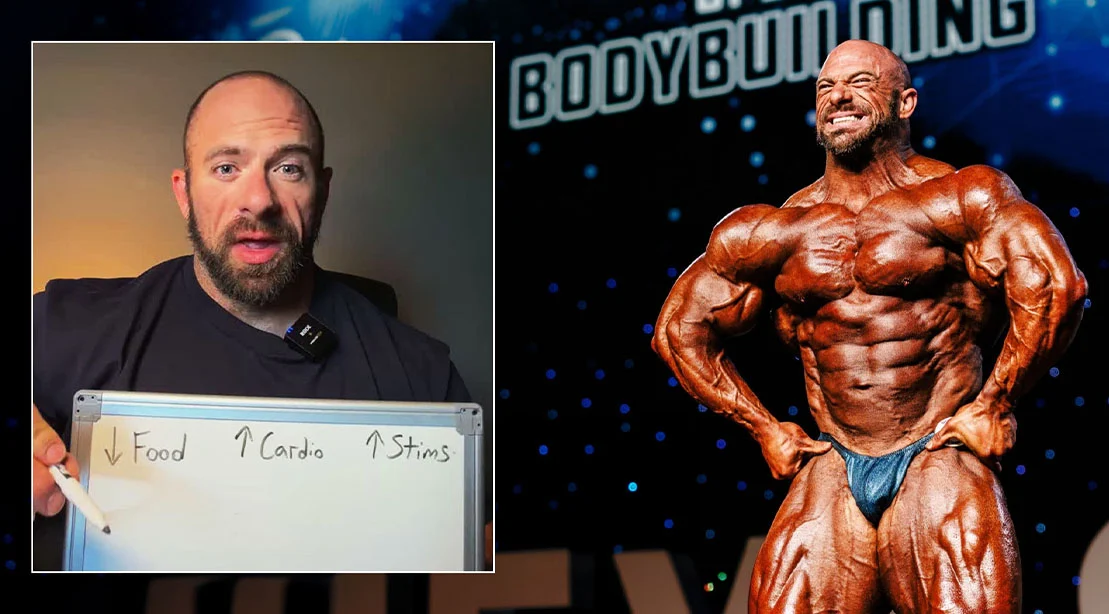
The final weeks leading up to a bodybuilding show represent the most grueling crucible an athlete can endure. It is a period defined by the paradox of performance: the competitor must shed body fat to reach near-translucent levels of leanness while simultaneously providing enough nutritional fuel to sustain the intense, hypertrophic stimulus required to maintain muscle fullness.
For many, this phase devolves into a desperate, chaotic scramble—a "kitchen sink" approach where athletes aggressively slash calories, double down on cardiovascular training, and push stimulant intake to dangerous levels. However, John Jewett, an Olympia finalist and highly respected IFBB Pro coach, argues that this indiscriminate approach is the primary reason many competitors arrive on stage looking "flat," depleted, or entirely burned out.
Jewett advocates for a measured, surgical approach to body composition. By understanding the metabolic and recovery costs of every adjustment, he suggests that athletes can reach their peak conditioning without sacrificing the very muscle mass they’ve spent years constructing.
The Fallacy of the "All-at-Once" Approach
In the world of competitive bodybuilding, the drive to see the scale drop or the skin thin often leads to poor decision-making. The three primary levers available to a coach or athlete are caloric reduction, cardiovascular expenditure, and thermogenic/stimulant supplementation.
When a plateau hits—as it inevitably does during a long prep—the instinctual reaction is to pull all three levers simultaneously. The logic is simple: more energy out, less energy in, and a metabolic boost to bridge the gap. But according to Jewett, this is a recipe for disaster.
"It’s about choosing the strategy that creates the least fatigue while preserving recovery," Jewett explains. When an athlete pulls every lever at once, they often bypass their body’s recovery capacity. The central nervous system (CNS) becomes taxed, cortisol levels skyrocket, and the body enters a defensive state of catabolism, where it begins to shed muscle tissue—the exact opposite of the desired outcome.
By treating the body as a system of interconnected variables rather than a machine to be broken, Jewett argues that competitors can sustain their prep for the duration required to reach the stage with their physique intact.
The Anatomy of a Prep: A Chronological Strategy
The journey to the stage is not a linear sprint; it is a marathon that requires phase-dependent adjustments. Successful preps are characterized by a chronological progression that respects the body’s adaptation to stress.
Phase 1: The Foundation (16–12 Weeks Out)
During the early stages, the focus is on establishing a baseline. Calories are usually high enough to support heavy lifting, and cardio is kept at a maintenance level. This is the "observation phase," where a coach monitors how the athlete responds to a slight caloric deficit. No drastic changes are made here because the goal is to prolong the use of the most effective tools for as long as possible.
Phase 2: The Calibration (12–8 Weeks Out)
As the body begins to resist fat loss, the first subtle adjustments are made. This is where the decision-making process outlined by Jewett becomes critical. Instead of massive cuts, adjustments are incremental. If the athlete is still recovering well and training hard, the focus remains on fine-tuning diet or adding small amounts of cardio.
Phase 3: The Refinement (8–4 Weeks Out)
This is where the "least evil" principle comes into play. The athlete is now deeper into a deficit. Fatigue begins to accumulate, and sleep quality may start to decline. Jewett emphasizes that this is not the time to introduce high-intensity protocols, but rather to manage the existing variables to prevent a crash.
Phase 4: The Peak (4 Weeks–Show Day)
The final weeks are not for aggressive weight loss; they are for metabolic stabilization and peaking. By this point, the athlete should have reached their target leanness. If they haven’t, "pulling levers" now will only result in a flat, stringy look on stage. The focus shifts to maintaining the hard-earned muscle through careful management of sodium, water, and carbohydrate intake, ensuring the muscles remain full while the skin stays tight.
The Jewett Methodology: Three Rules for Adjustment
To demystify the process of adjusting a contest prep, Jewett has formalized three essential rules. These rules serve as a diagnostic tool for athletes to determine which "lever" to pull when fat loss stalls.
1. The Rule of Nutritional Integrity
"If you are hungry and struggling with your diet, do not reduce food," Jewett advises. This is the most counterintuitive piece of advice for the average dieter, but for a bodybuilder, it is paramount. If an athlete is mentally and physically struggling with a caloric deficit, further restriction will lead to an inevitable binge or a total psychological breakdown. In this scenario, calories should be maintained, and the fat-loss deficit should be created through increased activity or lifestyle management.
2. The Rule of Cardiovascular Conservation
"If you already have heavy legs, and you’re not hungry, then don’t reduce cardio." This rule addresses the physiological strain of training. If an athlete is already performing excessive cardiovascular work, adding more will impede their ability to perform in the weight room. If the athlete feels energized and their food is sufficient, cardio is the safer variable to increase, as it doesn’t carry the same catabolic risk as extreme caloric restriction.
3. The Rule of Nervous System Preservation
"If you’re already using stimulants, and have low sleep, then don’t increase stimulants." This is perhaps the most overlooked aspect of modern prep. Stimulants mask fatigue, but they do not eliminate it. By suppressing the appetite and spiking heart rates, stimulants can keep an athlete moving, but they wreak havoc on sleep quality. Because sleep is the primary driver of recovery, sacrificing it for a thermogenic boost is a net negative for the physique.
Supporting Data: Why Fatigue is the Enemy of Muscle
The physiology of bodybuilding is governed by the balance between anabolic and catabolic signals. Research in sports nutrition consistently demonstrates that excessive cortisol—the stress hormone—is the primary antagonist to muscle protein synthesis.
When a bodybuilder enters a severe deficit while maintaining high-intensity training, they are essentially fighting against their own physiology. If the body perceives a survival threat, it prioritizes the breakdown of muscle tissue to provide energy, a process known as gluconeogenesis.
Jewett’s approach mitigates this by keeping the "stress load" manageable. By analyzing whether the athlete is struggling with hunger (diet), fatigue (cardio), or sleep/anxiety (stimulants), the coach can make an adjustment that targets the weak link without compromising the entire system.
Implications for the Modern Competitor
The implications of Jewett’s philosophy are profound for the bodybuilding community. We are currently in an era of "extreme" prep, where social media influencers often showcase unsustainable methods. Jewett’s stance acts as a necessary corrective, emphasizing long-term health and structural integrity over short-term, unsustainable weight loss.
For the aspiring amateur, the lesson is clear: Prep is a science of measurement, not a contest of suffering. The athlete who makes the smallest change necessary to move the needle is the one who will survive the prep. Those who opt for the "all-levers" approach may see the scale drop, but they will likely pay the price in muscle fullness and overall shape.
The "Least Evil" Decision Matrix
When an athlete finds themselves at a crossroads, they must perform an audit of their current state:
- If Diet is stable but fat loss is slow: Increase cardio or NEAT (non-exercise activity thermogenesis).
- If Cardio is already maximal but fat loss is slow: Re-evaluate the diet, ensuring nutrient timing is optimized before dropping total calories.
- If both are failing: Look at the stimulant profile and sleep quality. Sometimes, the body needs a "refeed" or a reduction in systemic stress to jumpstart the metabolism again.
Conclusion: The Path to the Stage
Getting "stage lean" is not an act of brute force; it is a test of discipline, patience, and self-awareness. John Jewett’s message is a reminder that the best physique on stage belongs to the athlete who managed their variables with the most intelligence, not the one who pushed themselves the hardest into the ground.
By listening to the body’s signals—hunger, recovery, and sleep—and choosing the path of the "least evil," a competitor can arrive at the venue not just lean, but full, hard, and ready to compete at the highest level. The final prep is a test of one’s ability to manipulate the body’s composition without destroying the structure underneath. As Jewett concludes, it is about staying the course, making calculated adjustments, and trusting that the process, when managed correctly, will reveal the physique you have worked so tirelessly to build.
For more insights into professional bodybuilding training and contest prep, you can follow John Jewett on his official Instagram channel at instagram.com/johnjewett3/.