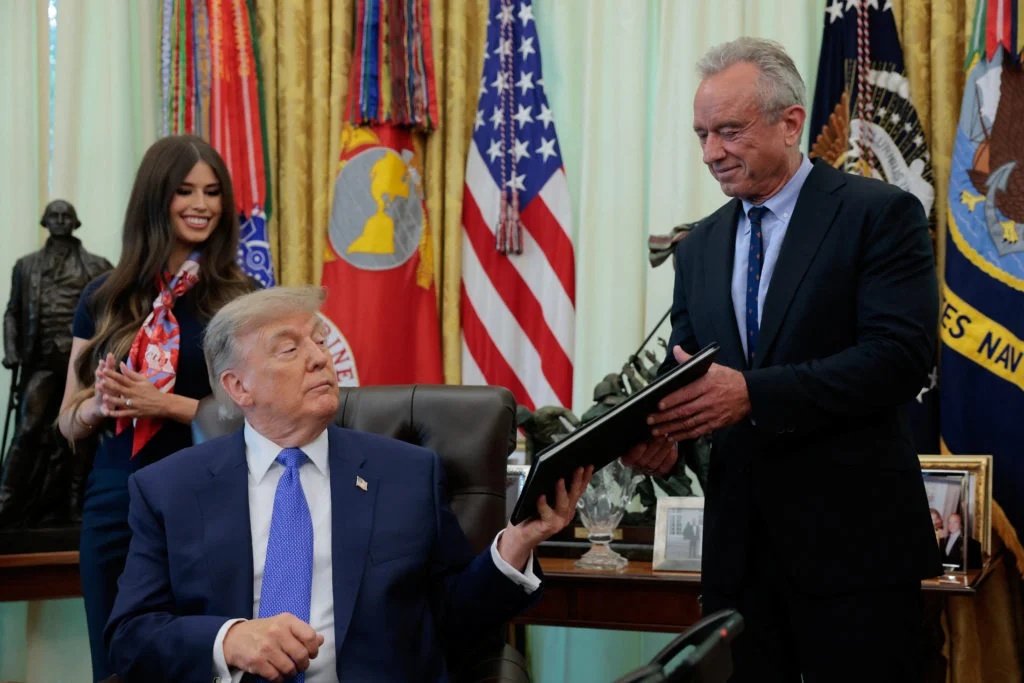
WASHINGTON — In a move that has sent shockwaves through the global public health community, President Donald Trump has issued a sweeping executive order aimed at restructuring the American childhood immunization schedule. The directive, which mandates that federal health agencies develop a plan to "unbundle" combination vaccines—specifically targeting the measles, mumps, and rubella (MMR) shot—into separate, spaced-out injections, has met with immediate and fierce resistance from medical experts.
While the administration frames the policy as an effort to offer parents more flexibility and control over their children’s medical care, the reality of implementation presents an unprecedented series of financial, logistical, and scientific hurdles. Experts warn that the order ignores decades of established medical consensus, potentially jeopardizing the health of a generation of children by undermining the efficiency and safety standards of the current U.S. vaccination program.
The Core Mandate: Deconstructing the Standard of Care
The executive order, announced on Monday, instructs federal officials to formulate a strategy within 90 days to transition the U.S. toward a system of individual, standalone vaccines. For nearly half a century, the MMR combination shot has served as the bedrock of pediatric preventative care in the United States. This "three-in-one" approach is designed to provide robust immunity against three highly contagious and potentially devastating diseases with minimal discomfort to the child.
The Trump administration’s order argues that by spacing out these injections, parents might be more inclined to vaccinate their children, thereby increasing overall coverage. However, the order lacks a foundation in current clinical data, and the logistical roadmap required to achieve this shift is fraught with complexity. To execute this, the U.S. would essentially need to reinvent its vaccine manufacturing infrastructure, as the industry has long since moved away from individual doses for these specific viruses.
Chronology of the Policy Shift
The origins of this directive can be traced back over a decade to the President’s personal skepticism regarding the standard vaccine schedule.
- 2010s–2023: Donald Trump repeatedly expressed, through social media and public forums, his belief that children receive "too many vaccines" and that they should be administered in smaller, more widely spaced doses.
- 2024: Following his election, the President signaled his intent to overhaul federal health policy. He appointed Robert F. Kennedy Jr. as Secretary of Health and Human Services (HHS), tasking him with evaluating the safety and efficacy of the current immunization schedule.
- Early 2025: The administration began reviewing data from other countries, such as Denmark, which utilize slightly different vaccination schedules. Proponents within the administration argued these models provided a blueprint for reducing the volume of vaccines administered in a single visit.
- Monday, September 2025: President Trump officially signs the executive order, mandating that the FDA and other agencies draft a plan within 90 days to decouple combination shots.
The Manufacturing Overhaul: An Industrial Mirage
To move from combination shots to individual injections, the pharmaceutical industry would face an existential manufacturing challenge. Currently, no standalone vaccines for measles, mumps, or rubella are produced or widely distributed in the United States.
The Scientific and Industrial Burden
Pharmaceutical scientists emphasize that "unbundling" is not a simple administrative task; it is a profound scientific and industrial undertaking.
- Regulatory Approval: The FDA would be required to review and license each individual component of the MMR vaccine separately. Because the current versions are only approved as a combined unit, the path to re-licensing individual components is unclear and lacks modern precedent.
- Clinical Trials: Former FDA officials, including Dr. Jesse Goodman of Georgetown University, note that companies would likely be forced to conduct new, large-scale clinical trials. These studies would need to prove that the individual shots provide an immune response comparable to the combination vaccine, a process that would require millions of dollars in investment and years of data collection.
- Facility Construction: The U.S. lacks the manufacturing plants necessary to produce these individual doses at scale. Industry experts estimate that designing, building, and securing federal safety certification for new vaccine manufacturing facilities typically takes roughly five years—a timeline that stands in stark contrast to the administration’s 90-day planning window.
Supporting Data: Why Combination Vaccines Prevail
Public health data consistently demonstrates that combination vaccines are a cornerstone of modern disease control.
- Compliance Rates: Studies from the Centers for Disease Control and Prevention (CDC) and international health bodies show that the fewer the doctor’s visits required, the higher the compliance rate. The MMR combination vaccine allows for a full series of protection with two primary visits. Splitting these into individual shots could force parents to return to the clinic up to six times or more, increasing the likelihood of missed appointments and incomplete protection.
- Disease Prevalence: Before the implementation of the combined MMR vaccine, measles, mumps, and rubella outbreaks were a constant threat to American school children. The current schedule has maintained high levels of herd immunity, preventing thousands of hospitalizations and deaths annually.
- Global Comparisons: While some lower-income countries use individual shots, this is largely a function of cost and supply chain limitations rather than a superior health strategy. Experts argue that the U.S. should strive to maintain the "gold standard" of immunization rather than regressing to methods necessitated by resource scarcity.
Official Responses and Medical Condemnation
The medical community has been nearly unanimous in its criticism of the order, viewing it as a move that prioritizes political ideology over evidence-based science.
The Pharmaceutical Industry
Major manufacturers, including Merck and GSK, have issued statements affirming their commitment to the existing MMR vaccine. Merck explicitly noted, "To date, there has been no published scientific evidence that shows any benefit in separating the combination MMR vaccine into three individual shots." Both companies have remained silent on any plans to pivot their production, citing a lack of scientific justification and the prohibitive costs associated with developing redundant, less-effective products.
Academic and Clinical Experts
Dr. Anna Durbin of the Johns Hopkins Bloomberg School of Public Health stated, "We do things that are less convenient and more expensive if there’s a good reason to do it. There is no good justification for this. I think it’s very bad public health policy."
Dr. Paul Offit, a researcher at the Children’s Hospital of Philadelphia, highlighted the practical futility of the order: "They’d be competing against themselves, and there’s no reason to do that. I think states will ignore this. The bottom line is that we don’t need to look to Donald Trump for our medical advice."
The Administration’s Defense
White House spokesman Kush Desai defended the order, stating that the initiative "will give parents more options on timing and frequency for their children, which ultimately will increase vaccination rates for all three diseases." The administration maintains that by providing alternatives, they are addressing the concerns of parents who may be hesitant about the current schedule.
Implications: A Fragmented Future
The implications of this executive order extend far beyond the laboratory. If implemented, the policy could result in a significant strain on the pediatric healthcare system. Pediatricians, who already operate under tight schedules and narrow margins, would be tasked with managing a significantly higher volume of appointments. The increase in the number of syringes, vials, and clinical hours required would lead to higher costs for clinics and patients alike.
Furthermore, the legal authority of the federal government to enforce such a change is limited. Only state governments possess the legal mandate to dictate school-entry vaccination requirements. Unless states choose to align their public health laws with the federal directive—a move many health experts consider unlikely given the lack of scientific support—the executive order may function as a symbolic, yet highly disruptive, gesture.
As the 90-day deadline for the federal agencies approaches, the nation stands at a crossroads. The conflict pits the current administration’s desire to reshape health policy against the entrenched, data-driven consensus of the global medical establishment. Whether this directive leads to a fundamental shift in American medicine or remains an unenforceable policy aspiration, it has already ignited a fierce national debate over the role of political leadership in clinical science.