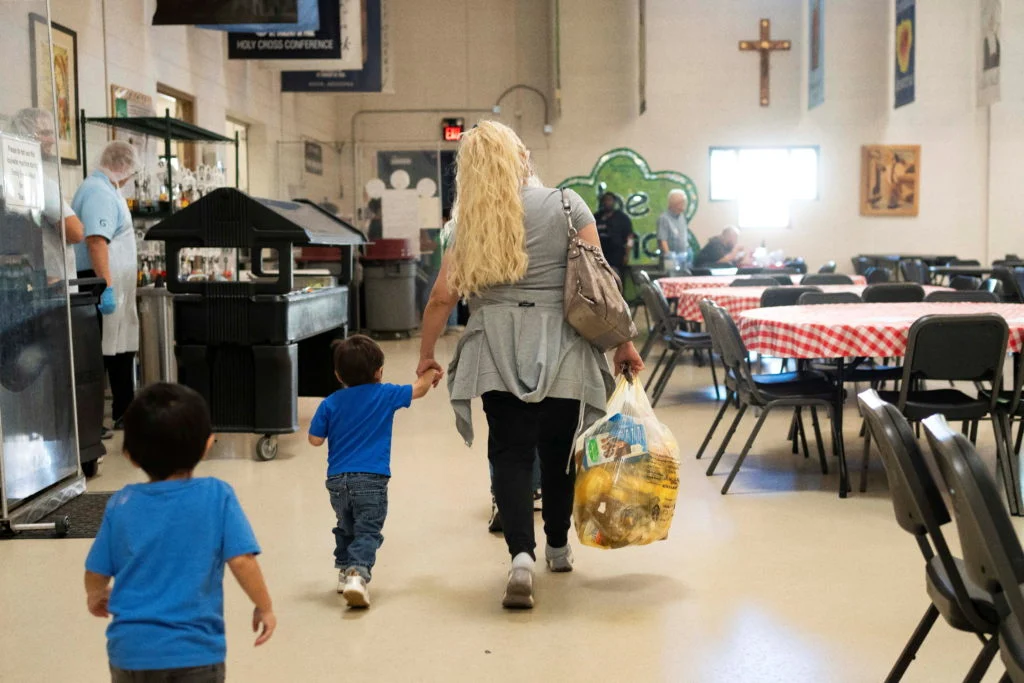
PHOENIX — The landscape of American social safety nets is undergoing its most significant transformation in decades. New federal data reveals that enrollment in the Supplemental Nutrition Assistance Program (SNAP)—the nation’s primary defense against food insecurity—has plummeted by more than 13% over the past year. This sharp contraction, which saw the number of beneficiaries drop from 42.2 million in May 2025 to 36.6 million by May 2026, has outpaced even the most aggressive projections from the Congressional Budget Office (CBO).
The decline is the direct, albeit controversial, consequence of President Donald Trump’s "one big beautiful bill," a sweeping legislative package that combined tax cuts with a rigorous overhaul of social welfare programs. As stricter work requirements and complex administrative hurdles take root, millions of Americans are finding themselves disqualified or unable to navigate the new bureaucratic labyrinth, leaving anti-hunger advocates scrambling to address a burgeoning crisis.
A Rapid Contraction: The Chronology of Change
The downward trend in SNAP participation did not happen in a vacuum. After reaching a pandemic-era peak of 43.3 million in October 2024, the rolls began to thin. However, the pace of the decline accelerated dramatically following the implementation of the new legislative framework.
For much of the last decade, SNAP enrollment had remained remarkably stable, with beneficiaries hovering near or above 40 million. Since 2010, the rolls had dipped below that threshold only twice—during the relatively stable economic windows of 2019 and 2020. The current trajectory suggests a fundamental shift in how the federal government approaches nutrition assistance.
The new law introduced a significant expansion of work requirements. While adults 54 and younger without minor children have historically been subject to these mandates, the new provisions cast a much wider net. The requirements now extend to individuals aged 55 to 64 and parents with children aged 14 to 17. Furthermore, exemptions that previously protected vulnerable populations, such as the homeless, have been stripped away. To maintain eligibility, most recipients must now prove they are working, volunteering, or enrolled in an educational program.
Supporting Data: A National Trend with Regional Extremes
The impact of these policies has been unevenly distributed, with some states experiencing catastrophic drops in coverage. Arizona leads the nation in this trend, witnessing a staggering 55% decline in SNAP enrollment between April 2025 and April 2026. This equates to more than 400,000 residents losing access to food assistance in a single year.
Other states have seen similar, if less severe, contractions. Georgia, Louisiana, Nevada, and Florida have all reported enrollment drops exceeding 20%. In Florida, the Department of Children and Families has framed this reduction as a success, stating that the decline "is reflective of the state’s strong focus on advancing opportunities for Floridians and their families to achieve economic self-sufficiency."
However, the raw data paints a more complex picture. While some proponents argue that the reduction in rolls indicates people are moving into the workforce and exiting the need for welfare, others suggest the numbers reflect an administrative breakdown. According to the CBO, while enrollment was expected to decline over the next decade, the current speed of the drop is unprecedented. By May 2026, the nation had reached participation levels that were not forecast to occur until 2030, suggesting that administrative friction—rather than just economic improvement—is a primary driver.
The Human Cost: Bureaucratic Barriers and Administrative Overload
For many families, the barrier to food access is not a lack of need or a refusal to work, but a mountain of paperwork. State agencies, tasked with implementing the complex federal mandates, have been overwhelmed.
"A lot of it is administrative paperwork," says Tia Fields, a social safety net analyst at the advocacy group Invest in Louisiana. "We are seeing people who qualify for help being rejected simply because they miss a deadline, lose a piece of documentation, or cannot navigate the updated, more rigid verification processes."
In Phoenix, the story of LaDiamond Lopez serves as a microcosm of the national crisis. After being cut from the program in January, Lopez spent months fighting to prove her eligibility. Despite providing documentation from former employers and updating her lease to reflect her dependents, she has faced repeated delays. "I was approved at the end of May, but now they’re asking me for more documents," Lopez said. "It’s a panic." Like many others, she has resorted to skipping meals and deferring bill payments to ensure her children have enough to eat.
State officials acknowledge the struggle. Brett Bezio, a spokesman for the Arizona Department of Economic Security, admitted that the state’s implementation of the new requirements triggered "unprecedented call volumes and administrative hurdles." While the state has since increased staffing and digitized document submission, the damage to the enrollment rolls has already been profound.
Divergent Perspectives: Fraud vs. Safety Net
The ideological divide regarding SNAP remains as sharp as ever. Proponents of the legislation, including the Heritage Foundation, view the enrollment decline as a long-overdue correction of a system they argue was rife with fraud and dependency.
"If there are people that are leaving the welfare rolls because they’re working and they’re moving forward, that would be a step forward," says Rachel Sheffield, a research fellow at the Heritage Foundation. The argument is that by tightening the criteria, the government is incentivizing personal responsibility and ensuring that resources are reserved for the most "deserving" or truly destitute populations.
Conversely, anti-hunger advocates and policy experts warn that the erosion of SNAP will have long-term consequences for public health and economic stability. They point out that SNAP acts as a "gateway" for other essential services. When a household loses SNAP benefits, children often lose automatic enrollment in free school lunch programs and the WIC (Women, Infants, and Children) program.
"What happens when that child can’t pay for lunch?" asks Fields. "We are creating a ripple effect of instability that will inevitably cost the state more in the long run through increased healthcare needs and diminished educational outcomes."
Implications for the Future: A Strain on Private Charity
As the federal government retracts its support, the burden of food security is shifting toward an already strained private sector. Food banks across the country report rising demand that they cannot possibly meet.
"We’re very worried about it because we know that no other organization or program can replicate the scale and success of SNAP," says Carolyn Vega, a policy analyst at Share Our Strength. "We know that schools can’t fill this gap. We know that food banks can’t fill this gap."
The future of the program remains uncertain. With impending cost-sharing requirements—where states will be penalized financially if their payment error rates exceed 6%—advocates fear that states may become even more restrictive in their approval processes to avoid potential federal fines. While Congress has considered delaying these cost-sharing mandates until 2027, the current environment remains one of extreme uncertainty.
Furthermore, additional factors are contributing to the decline. In states like Florida, community leaders like Paco Velez, CEO of Feeding South Florida, have noted that immigrant communities are increasingly shying away from government assistance programs. Even those in the U.S. legally are reporting a "chilling effect," fearing that utilizing public benefits could make them targets of the current administration’s aggressive immigration enforcement policies.
As the dust settles on the first year of these sweeping reforms, one thing is clear: the American social safety net is being fundamentally redefined. Whether this represents a move toward a more efficient, work-focused economy or a dismantling of a critical public health infrastructure remains the central debate in American domestic policy. For now, millions of Americans are left to navigate a thinner, more demanding system, hoping that the promise of economic self-sufficiency will eventually replace the security of the table they once shared.