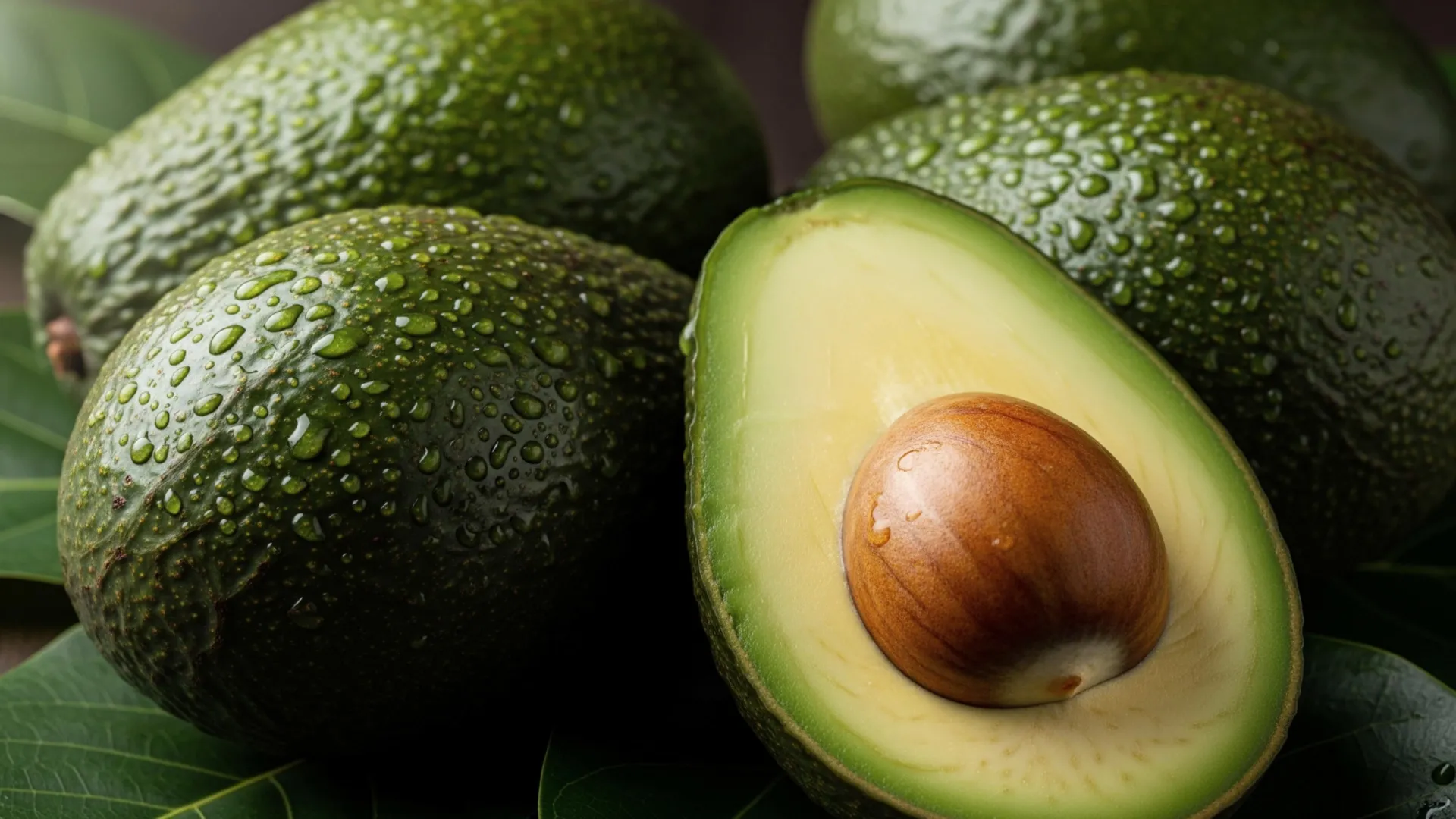
In the quest for better cardiovascular health, dietary advice often centers on radical overhauls: cutting out entire food groups, strictly counting calories, or adopting rigorous, often unsustainable, eating patterns. However, new research from the Pennsylvania State University suggests that a more manageable, incremental approach—adding a single avocado to one’s daily routine—may offer a significant, measurable benefit for those struggling with obesity.
According to a study recently published in the Journal of Clinical Lipidology, daily avocado consumption is linked to a reduction in the concentration of low-density lipoprotein (LDL) particles in the blood. For adults living with obesity, this simple dietary adjustment could be the key to lowering the risk of heart disease, even without making sweeping changes to the rest of their diet.
The Core Findings: A Modest but Meaningful Shift
The research, led by the Penn State Department of Nutritional Sciences, focused on the nuance of cardiovascular health, moving beyond the standard measurements of "bad cholesterol." By analyzing data from 786 participants, scientists discovered that eating one avocado per day for six months led to a decrease in LDL particle concentration by approximately 49 nanomoles per liter.
While a 4% reduction in heart disease risk may appear modest compared to the 14–29% improvement typically seen with a total diet overhaul, the researchers emphasize the clinical significance of this finding. In the landscape of nutrition science, where long-term adherence to strict diets is notoriously difficult, the avocado represents a "low-barrier" intervention that yields consistent, positive cardiovascular results across diverse demographic groups.
Chronology: The Evolution of the Habitual Diet and Avocado Trial
The current study is the latest milestone in a long-standing research initiative known as the Habitual Diet and Avocado Trial. The journey to these findings spanned several years and involved rigorous clinical protocols to ensure the data was applicable to real-world scenarios.
Phase 1: The Controlled Environment
Several years ago, Penn State researchers conducted a highly controlled experiment where every meal consumed by participants was regulated by the research team. This initial study proved that avocado consumption could indeed reduce both LDL cholesterol and the number of LDL particles in the blood. While scientifically robust, critics noted that these results were achieved in a "laboratory bubble" that did not reflect how people actually eat in their day-to-day lives.
Phase 2: The Real-World Analysis
To bridge the gap between clinical theory and real-world application, the team launched the large-scale trial involving 786 adults. Participants were 25 years or older and met specific criteria for abdominal obesity (a waist circumference of over 40 inches for men and 35 inches for women).
The trial was divided into two groups:
- The Control Group: Participants maintained their habitual diets and existing physical activity levels without modification.
- The Intervention Group: Participants continued their normal routines but were instructed to consume one whole avocado daily for six months.
By analyzing blood samples from the beginning and end of the six-month period, researchers were able to isolate the effect of the avocado, confirming that even when the rest of the diet remains inconsistent or unchanged, the fruit provides a consistent protective benefit.
Understanding the "Hidden" Risk: LDL Particles vs. LDL Cholesterol
To understand why this finding is so important, one must distinguish between the common cholesterol test and the more nuanced measurement of LDL particle concentration. Most standard health checkups measure LDL cholesterol—the total amount of cholesterol carried by particles in the blood. However, this number can be misleading.
The Particle Count Paradox
LDL cholesterol cannot travel through the bloodstream on its own; it requires protein carriers. The researchers used a compelling analogy to explain the risk: Imagine two individuals with identical levels of LDL cholesterol.
- Person A carries their cholesterol in a few, large, fluffy LDL particles.
- Person B carries the same total amount of cholesterol, but it is packed into many small, dense LDL particles.
Even though their "cholesterol numbers" are the same, Person B is at a significantly higher risk for heart disease. These smaller, more numerous particles are more adept at infiltrating the walls of the arteries, leading to plaque buildup. This plaque, in turn, narrows the blood vessels, reduces their flexibility, and places extreme strain on the cardiovascular system. When the heart is forced to work harder—due to stress, exercise, or heat—these stiffened, plaque-filled vessels cannot accommodate increased blood flow, which can trigger a cardiac event such as a heart attack.
Official Perspectives and Expert Commentary
The research team behind the study highlights that while the avocado is a "superfood," it is not a panacea.
Janhavi Damani, a postdoctoral scholar at Penn State and the study’s first author, notes the psychology of diet change: "If people want to improve the quality of their diet, making one small change might be a more feasible strategy than attempting to change their entire diet. For people with obesity, including avocados in their daily diet might be a good starting place."
Dr. Kristina Petersen, associate professor of nutritional sciences and the senior author of the study, emphasized the "real-world" implications of their work. "In the course of people’s normal lives, avocado consumption still contributes to a healthier diet," she noted. "This study demonstrated benefits in the real world, where people’s diets are much less predictable."
The researchers were also quick to point out that the benefit was consistent regardless of the participants’ sex, race, ethnicity, age, or body mass index. This suggests that the heart-health benefits of the avocado are universal, rather than specific to a certain subgroup. However, they stop short of recommending "avocado-only" diets, urging individuals to consult with a registered dietitian or physician to ensure that adding an avocado fits within their overall caloric and nutritional needs.
Implications for Public Health and Future Research
The implications of this study are far-reaching. Obesity remains a primary risk factor for cardiovascular disease globally, and the difficulty of long-term weight management often leaves patients discouraged. By validating a strategy that does not require the immediate stress of total dietary restriction, the researchers have provided a new tool for clinicians.
Why This Matters for Obesity
While the trial confirmed that daily avocado consumption did not lead to significant weight loss or a reduction in waist circumference, it successfully mitigated one of the most dangerous side effects of obesity: the increased concentration of high-risk LDL particles. For a population often told they must lose weight to see health improvements, the ability to improve cardiovascular biomarkers independent of weight loss is a significant psychological and physiological win.
A Path Toward Simpler Interventions
The success of this trial suggests that public health initiatives should perhaps pivot toward "additive" dietary advice rather than "subtractive" advice. Instead of telling people what to stop eating, which often triggers feelings of deprivation and leads to diet failure, advising them on what to add—in this case, nutrient-dense, fiber-rich, and healthy-fat-containing avocados—may result in higher long-term compliance.
The Road Ahead
While the Avocado Nutrition Center supported this research, the scientific rigor of the Penn State team remains the bedrock of these findings. Future research will likely focus on whether these improvements in LDL particle count translate into a decrease in clinical heart attacks and strokes over a longer timeframe, perhaps spanning years rather than months.
Conclusion
The latest Penn State study provides a compelling case for the power of small, consistent dietary choices. By incorporating a single avocado into their daily regimen, adults living with obesity can make a measurable dent in their risk profile for cardiovascular disease.
In a world filled with complex, often contradictory health advice, the simplicity of this recommendation is refreshing. It does not require a total lifestyle upheaval, nor does it demand the exclusion of favorite foods. Instead, it offers a scientifically backed path to better heart health—one delicious, green, and heart-healthy slice at a time. As always, the researchers advise that while the avocado is a powerful tool, it should be part of a broader conversation with medical professionals to ensure it complements a holistic approach to wellness.