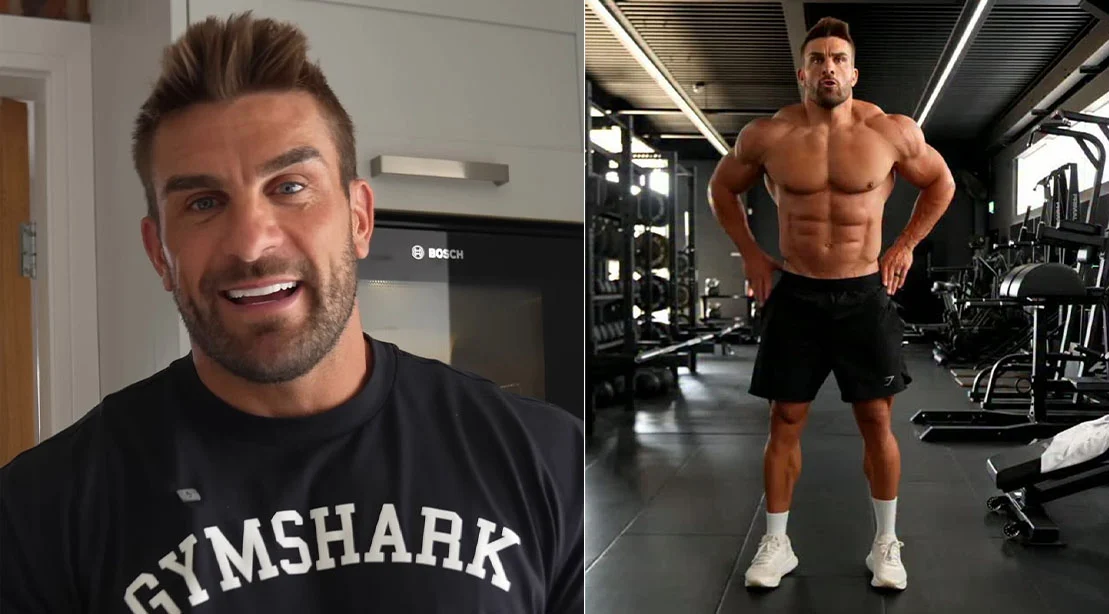
As the neon lights of Las Vegas begin to hum in anticipation of the 2026 Olympia, one man stands at the epicenter of the Men’s Physique division with a target on his back and a new philosophy in his heart. Ryan Terry, the British powerhouse and defending champion, is just weeks away from the most prestigious stage in the sport. While his physical preparation remains as rigorous and meticulous as ever, the narrative surrounding his 2026 campaign has taken a radical, introspective turn.
For years, the gold standard of bodybuilding preparation was synonymous with “suffering”—a grueling, often dark descent into caloric restriction and mental isolation. Terry, however, is rewriting that playbook. By trading the volatility of grudge-fueled motivation for a sustainable, joy-centered approach, the champion believes he has unlocked a superior version of himself.
The Architecture of the 2026 Campaign: Core Facts
At 37 years old, Ryan Terry is not just competing against the world’s elite; he is competing against the relentless ticking of the clock. His goal is a fourth Men’s Physique Olympia title, a feat that would further cement his status as an all-time great.
Unlike previous years, where the intensity was often fueled by external friction, the 2026 prep is defined by internal harmony. Terry’s training regimen—often highlighted by his signature high-intensity, five-move abdominal protocols—remains the backbone of his physique. Yet, the atmosphere inside his RT-Fit gym has shifted. The focus has moved from "winning at all costs" to "optimizing the human experience," a subtle but profound change that is paying dividends in both his metabolic health and his aesthetic conditioning.
A Decade of Grit: The Chronology of a Champion
To understand the significance of Terry’s shift, one must look at the decade-long journey that brought him to this juncture. For over ten years, Terry’s path to the top was paved with stoic perseverance. He was the ultimate professional: disciplined, quiet, and fiercely consistent.
However, 2025 marked an inflection point. The Men’s Physique division saw an influx of aggressive challengers, most notably Ali Bilal. A two-time Arnold Classic champion and perennial Olympia runner-up, Bilal employed a strategy of psychological warfare, publicly questioning the legitimacy of Terry’s physique and intimating that the Brit had reached his ceiling.
For the first time in his career, the typically composed Terry broke character. During the pre-Olympia press conference, he engaged in a rare war of words, firing back at Bilal. While the exchange fueled the sport’s media cycle, it left a mark on Terry. When the dust settled, Terry secured his crown, but he did so at a psychological cost. He later admitted to Bob Cicherillo that the negativity had acted as a "double-edged sword"—it pushed him to a new level of intensity, but it robbed him of the love for the process.
The Cost of Negativity: An Honest Assessment
In a candid video shared via his official Instagram channel, Terry provided a rare window into the mental toll of the 2025 season.
"If you followed me last year, you’ll see that my motivation was very different to years before," Terry reflected. "It came from a negative place. I let other people’s energy in, and I absorbed it."
Terry’s admission highlights a critical, often overlooked aspect of elite bodybuilding: the "burnout cycle." By obsessing over his rivals’ taunts, Terry found himself trapped in a mental cage for the final ten weeks of his prep. He describes that period not as a professional victory, but as a period of significant personal struggle. For a sport that demands 365-day commitment, this cycle is unsustainable. Terry’s realization is simple yet profound: to have a long, healthy career, the journey must be as enjoyable as the victory.
Supporting Data: Why "Happy" Means "Heavier" (and Leaner)
The most compelling evidence for Terry’s new approach lies in his body’s physiological response. In the past, the stress of a "negative" prep often led to plateaus. The body, under extreme cortisol-induced stress, often resists fat loss, creating a "sticking point" that requires even more aggressive—and potentially dangerous—dietary adjustments.
This year, however, the results have been markedly different. Terry reports that the fat loss is occurring "nicely and easier" compared to last year. By integrating his family into his daily routine and lowering his systemic stress levels, he has optimized his hormonal environment.
The Physiological Benefits of Positive Prep:
- Cortisol Regulation: By reducing the "chip on his shoulder," Terry is likely maintaining lower cortisol levels, which prevents water retention and aids in fat mobilization.
- Metabolic Flexibility: A relaxed mind allows for better adherence to dietary protocols without the "binge-restrict" triggers associated with extreme mental fatigue.
- Training Intensity: With a clear, happy mind, Terry reports having more "energy," allowing him to push harder in the gym than he could when he was emotionally drained.
Official Responses and the "Nice Guy" Paradox
The bodybuilding community has long held a cynical view: "Nice guys finish last." However, the evidence from Terry’s 2026 prep suggests the opposite. By focusing on his own progress and the joy of training, Terry is defying the narrative that a champion must be a tortured soul.
"I’ve vowed to go back to the love of the sport," Terry stated in his update. By involving his children and family in his life outside the gym, he has created a buffer against the pressures of the stage. This shift has not gone unnoticed by his peers and fans. Instead of the frantic, high-stress energy of last year, observers note a more confident, composed athlete.
Terry’s experience echoes a broader trend in high-performance athletics: the movement toward "sustainable excellence." By treating his body with care rather than as an adversary to be conquered, he is finding a higher gear at age 37.
The Implications for the 2026 Olympia
As the Olympia approaches, the implications of Terry’s shift are clear. He is no longer just fighting for a trophy; he is fighting for the longevity of his craft.
What to Expect in Las Vegas:
- A Sharper Physique: With his body responding more efficiently to his prep, we can expect a conditioning level that may even surpass his 2025 showing.
- Psychological Immunity: By refusing to engage in the "mind games" of his rivals, Terry effectively renders those tactics useless. If the challenger tries to provoke him, they will find a champion who is too happy and too focused on his own legacy to notice.
- The "Elder Statesman" Standard: Terry is setting a blueprint for the next generation. He is demonstrating that bodybuilding does not have to be a short, explosive career ended by burnout.
Ryan Terry is currently midway through his journey, and his confidence is palpable. He is not just looking to defend his title; he is looking to prove that wisdom, balance, and a positive mindset are the ultimate performance enhancers. As he prepares to step on the Olympia stage, the message to the young upstarts is clear: they aren’t just competing against a champion; they are competing against a man who has finally mastered the art of being himself.
Whether he secures his fourth title or not, Ryan Terry has already achieved a victory that matters far more than a gold medal. He has reclaimed the joy of his craft, and in doing so, he has guaranteed that his influence on the sport will be felt long after he eventually hangs up his posing trunks.
For those looking to follow the final stages of his journey, the champion continues to provide updates on his official Instagram account, offering a rare, transparent look at what it truly takes to be a champion at the pinnacle of the sport.