










In a groundbreaking development for oncology, researchers at the University of Illinois Chicago (UIC) have unveiled a novel therapeutic approach that turns the internal environment of tumors against themselves. By harnessing the unique properties of proteins derived from bacteria that naturally colonize the tumor microenvironment, the team has developed an experimental treatment capable of shutting down the "energy factories" of cancer cells.
This research, recently published in the journal Signal Transduction and Targeted Therapy, offers a beacon of hope for patients with aggressive, treatment-resistant cancers. By bypassing the genetic vulnerabilities that often render conventional therapies ineffective, this bacterial-derived peptide—known as aurB—represents a paradigm shift in how we might treat malignancies that have previously proven difficult to manage.
The Core Innovation: Disrupting the Mitochondrial Supply Chain
At the heart of the study is a fundamental biological truth: cancer cells are metabolically demanding. To sustain their rapid, uncontrolled growth, they require a constant and massive supply of ATP (adenosine triphosphate), the chemical "currency" of cellular life. This energy is manufactured within the mitochondria, the organelles often described as the powerhouses of the cell.
The UIC team, led by Dr. Tohru Yamada, identified that these mitochondria are not just vital to cancer cell survival—they are a significant vulnerability. By isolating a bacterial protein fragment called aurB, the researchers found a way to infiltrate the mitochondria of tumor cells and physically block ATP synthase, the critical enzyme responsible for generating ATP.
"The mitochondria are very important for a cell to survive; they are the energy factories," says Dr. Yamada, who serves as an associate professor in the departments of surgery and biomedical engineering at UIC. "Many cancer cells exhibit altered mitochondrial number and activity, because a cancer cell has to grow aggressively and rapidly. Therefore, the mitochondria would be an ideal target for cancer therapy."
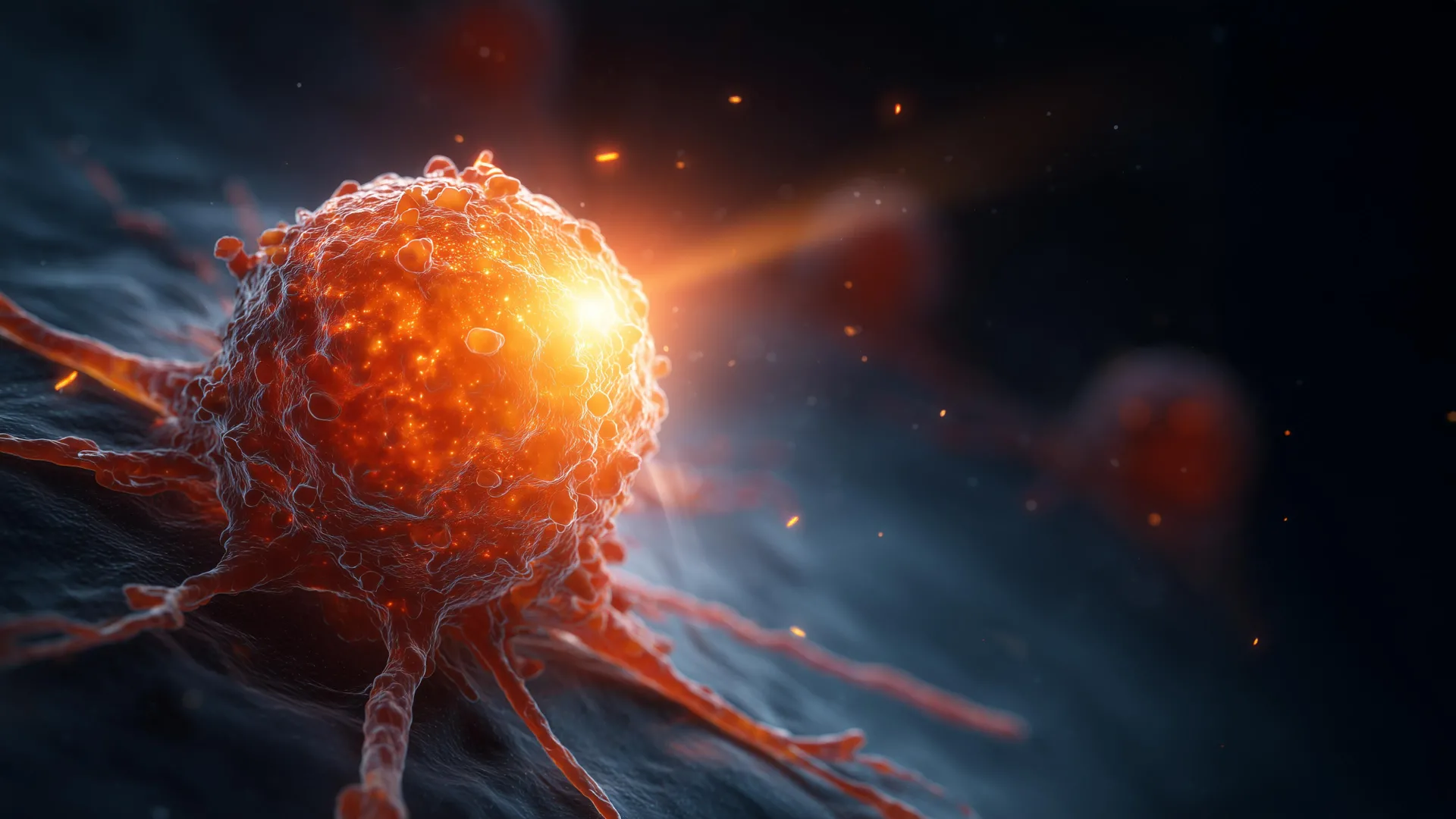
When aurB attaches to ATP synthase, it essentially pulls the plug on the tumor’s power grid. Starved of the energy required for cellular maintenance and division, the cancer cells wither, creating a highly effective mechanism for tumor suppression.
A Chronological Evolution of Bacterial Therapeutics
The road to the discovery of aurB was paved by years of exploration into the "tumor microbiome." Scientists have long observed that tumors are not sterile environments; rather, they host complex communities of bacteria that thrive within the hypoxic, nutrient-rich, and shielded conditions of the tumor microenvironment.
The Cupredoxin Legacy
The path began with an earlier discovery from the Yamada laboratory involving a family of proteins known as cupredoxins. These copper-containing proteins are naturally found in various bacteria and are essential for electron transfer processes. The UIC team previously identified that these proteins possessed inherent anti-tumor capabilities.
Following this discovery, the researchers successfully developed a peptide drug based on cupredoxins, which underwent rigorous preclinical testing and eventually reached clinical trials for both adult cancers and pediatric brain tumors. However, this early success revealed a persistent limitation: the efficacy of that specific peptide was tethered to the presence of the p53 gene.
The p53 Bottleneck
The p53 gene acts as a "guardian of the genome," preventing cells with damaged DNA from dividing. In a large majority of human cancers, p53 is either mutated or deleted, allowing tumors to flourish unchecked. Because the original peptide required functional p53 pathways to exert its anti-cancer effects, it was ineffective in many patients whose cancer cells lacked this specific genetic machinery.
"We wanted to have an anti-cancer agent that doesn’t use the p53 function," Dr. Yamada explained. This desire to overcome genetic heterogeneity—the variation in cancer mutations from patient to patient—drove the search for a new, independent therapeutic agent.
Supporting Data: From Genomic Sequencing to Benchtop Success
To find a non-p53-dependent pathway, the researchers returned to the tumor microenvironment. Using advanced DNA sequencing on tumor samples collected from breast cancer patients, the team identified the specific bacterial populations residing within. Their attention was captured by a bacterial species containing a cupredoxin known as auracyanin.
Developing aurB
By analyzing the structure of auracyanin, the team engineered a smaller, more potent peptide: aurB. Laboratory validation proved that aurB was not only structurally sound but functionally superior in its specificity. Unlike broad-spectrum toxins, aurB demonstrated a remarkable ability to home in on the mitochondria of cancerous cells while sparing healthy tissue.
Synergy with Radiation
The most striking evidence of the treatment’s potential emerged during preclinical trials involving hormone therapy-resistant prostate cancer. The researchers paired aurB with traditional radiation therapy, a combination that yielded synergistic results. In mouse models, particularly those featuring tibial bone metastasis—a common and devastating complication of prostate cancer—the treatment significantly inhibited tumor growth.
"The combination significantly enhanced the activity of the peptide and the tumor became much smaller," noted Dr. Yamada. Importantly, the researchers reported that this therapeutic combination did not produce signs of significant toxicity in the test subjects, a critical hurdle that often causes experimental cancer treatments to fail.
Official Responses and Collaborative Effort
The success of the aurB project is the result of a multidisciplinary effort spanning the University of Illinois College of Medicine, the College of Engineering, and UI Health. The study credits the extensive contributions of the Department of Surgery, including Drs. Martin Borhani, Aslam Ejaz, Ajay Rana, Enrico Benedetti, and Tapas K. Das Gupta.
The university has taken swift action to protect this intellectual property, with the UIC Office of Technology Management filing patents for the aurB peptide. This institutional backing serves as a bridge between the laboratory discovery and the complex requirements of human clinical trials.
The researchers emphasize that this is a collaborative success story. The additional UIC team members—including Dr. Samer A. Naffouje, Duy Binh Tran, Konstantin Christov, Albert Green, Ngoc Hai Trieu Phong, and Weiguo Li—each played an integral role in bridging the gap between bioinformatics, cellular biology, and pharmacology.
Implications: A New Frontier in Oncology
The implications of the aurB discovery extend far beyond the treatment of prostate cancer. By validating the concept that bacterial proteins can be harvested and refined into potent anti-cancer agents, the UIC team has opened a massive, largely untapped reservoir of medical innovation.
Rethinking the Tumor Microenvironment
For decades, the medical community viewed bacteria in the body primarily as pathogens to be eradicated. This study reinforces a growing scientific consensus that the tumor microenvironment is a complex ecosystem. By identifying specific bacterial proteins that have evolved to interact with cellular machinery, researchers are essentially using nature’s own toolkit to build safer, more effective drugs.
Future Directions
Dr. Yamada is optimistic about the future of this platform. He suggests that auracyanin is likely just the "tip of the iceberg." With millions of bacterial species and their associated proteins yet to be characterized, the potential for discovering a library of new, targeted cancer therapies is vast.
"There are many other bacterial proteins that could be source of cancer drugs," Dr. Yamada said. "We simply haven’t tried them yet."
As the UIC team prepares to transition from preclinical models to the rigorous stages of human clinical trials, the medical community will be watching closely. If the results observed in prostate cancer models can be replicated in human subjects, aurB could become a cornerstone of future cancer care—not by attacking the cancer with brute force, but by quietly, efficiently, and precisely cutting off the energy that keeps the tumor alive.
In a field often defined by the complexity of genetic mutations and the evolution of drug resistance, the simplicity of the "energy starvation" approach offers a refreshing and potentially life-saving alternative. By looking to the bacteria living right under our noses, researchers may have found the key to silencing the most aggressive of diseases.