Executive Summary: Strengthening the Aerial Backbone
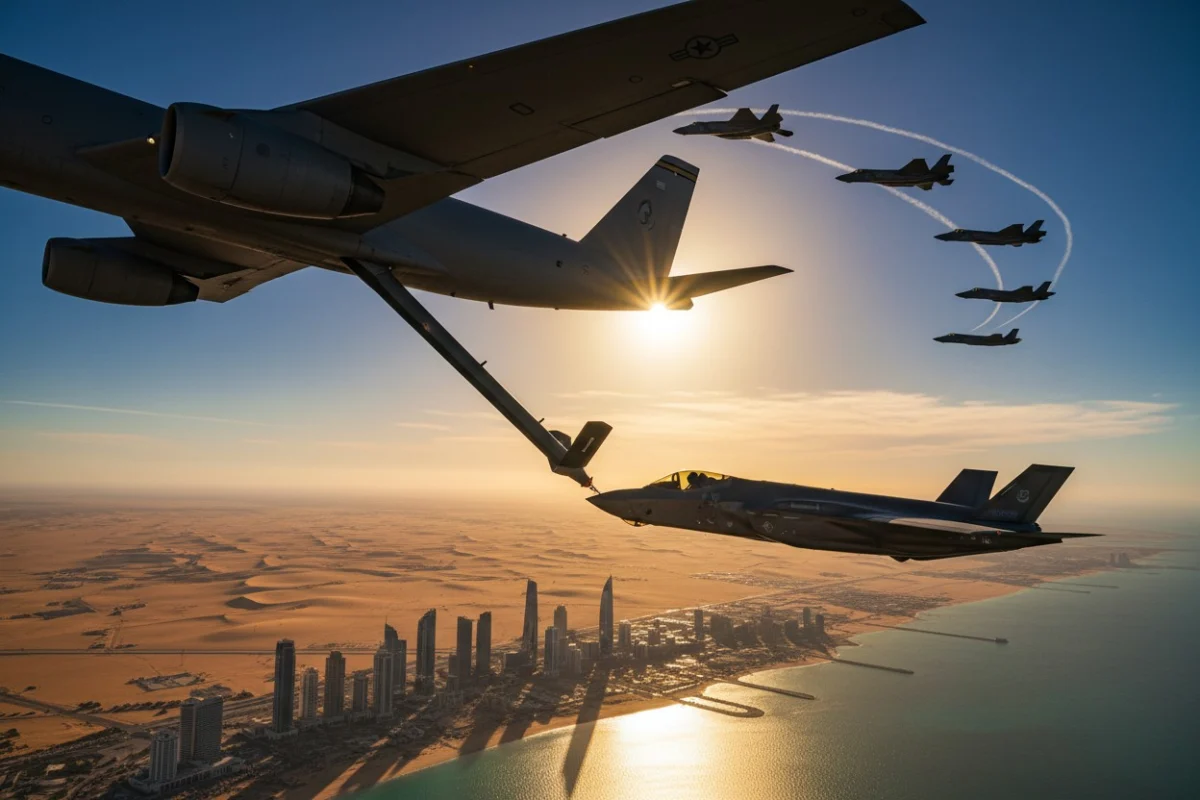
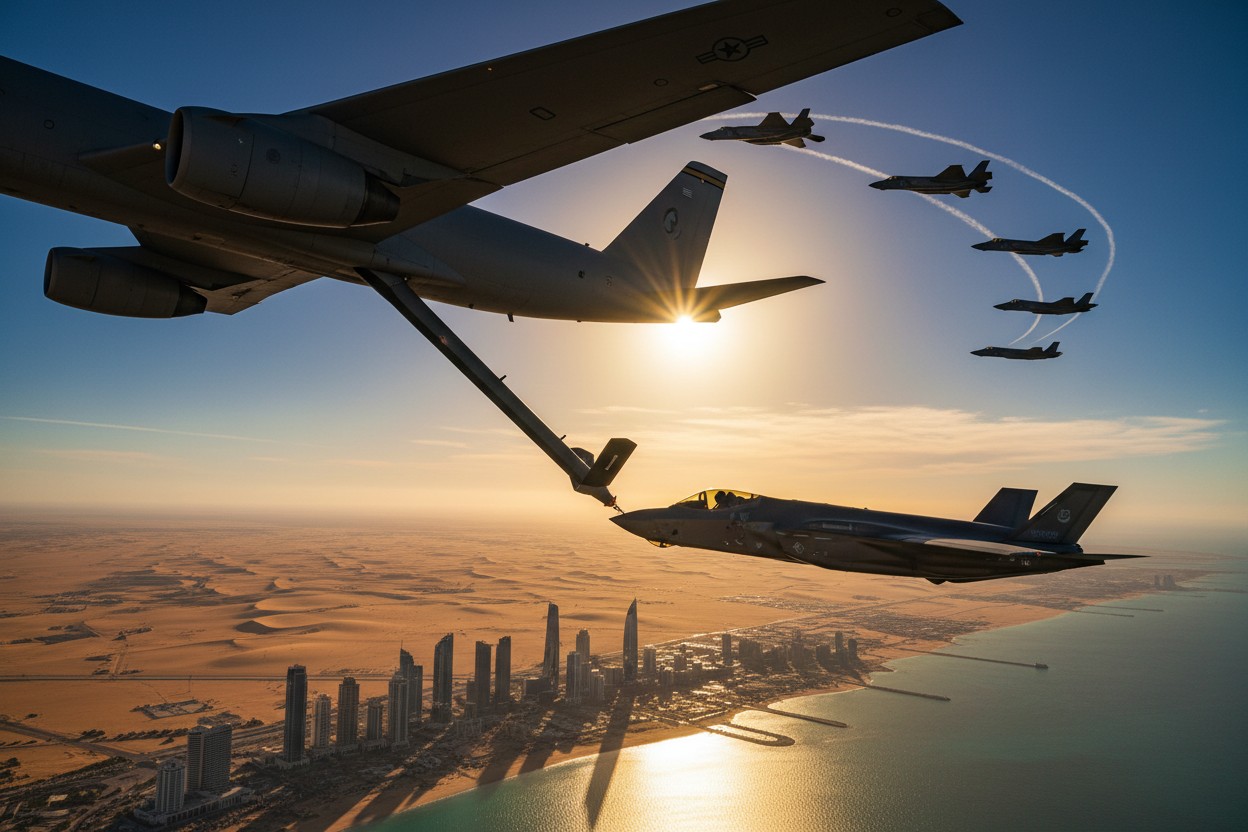
In a significant development for Middle Eastern defense architecture, the U.S. Department of State announced on August 20 its approval of a potential Foreign Military Sale (FMS) to the State of Qatar. The proposed package, valued at an estimated $4.50 billion, centers on the acquisition of up to four KC-46A Pegasus aerial refueling aircraft. This move is designed to bolster the Qatar Emiri Air Force’s (QEAF) operational reach, defensive capabilities, and interoperability with U.S. and coalition forces.
The notification, issued by the Bureau of Political-Military Affairs, underscores a commitment to regional stability at a time when the Gulf Cooperation Council (GCC) states face unprecedented security challenges. While the sale remains subject to final contract negotiations and a mandatory Congressional review period, it represents a pivotal shift in the strategic partnership between Washington and Doha, particularly as the ongoing conflict between the United States, Israel, and Iran reshapes the geopolitical landscape of the Persian Gulf.
Chronology: A Region Under Fire
The timing of this proposal is far from coincidental. Since the eruption of "major combat operations" between Washington and Tehran in late February, the Gulf region has been thrust into a state of high-intensity kinetic warfare.
- Late February 2026: The United States, operating alongside Israeli forces, initiates sustained combat operations against Iranian military infrastructure.
- March 2026: The conflict claims the lives of six U.S. service members in Iraq following a catastrophic crash of a refueling tanker, highlighting the lethal dangers associated with aerial support missions in contested airspace.
- July 2026: Escalation reaches the Qatari peninsula. The Islamic Revolutionary Guard Corps (IRGC) claims responsibility for a ballistic missile strike against the Al Udeid Air Base, specifically targeting critical command-and-control centers and fighter aircraft maintenance facilities.
- August 20, 2026: The U.S. State Department formally notifies Congress of the intent to sell the KC-46A Pegasus fleet to Qatar, framing it as an essential enhancement to regional defense.
Throughout this period, BBC Verify satellite imagery has documented systemic Iranian strikes across eight nations, causing substantial attrition to regional air defense networks, radars, and logistics hubs.
Technical Specifications and Capability Package
The KC-46A Pegasus is the cornerstone of modern aerial logistics. By providing high-capacity refueling, the aircraft extends the "legs" of combat fleets, allowing for longer loiter times and deeper strikes. According to the State Department’s release, the $4.5 billion package is comprehensive, ensuring that the Qatari fleet is not merely a collection of airframes, but a fully integrated combat support system.
Core Components
The proposed sale includes a sophisticated suite of defensive and operational hardware:
- Advanced Sensor Suites: Integrated missile warning sensors designed to detect incoming ballistic and cruise missile threats.
- Electronic Warfare (EW): Database support and electronic countermeasures to navigate increasingly sophisticated integrated air defense systems (IADS) currently deployed by adversaries.
- Secure Communications: KIV-77 crypto modules and KY-100M terminals to ensure interoperability with secure NATO and U.S. command networks.
- Operational Infrastructure: Control interface units, cartridge-actuated devices, and comprehensive logistics support, including spare parts, training simulators, and mission planning systems.
Key Industrial Partners
The execution of this sale involves a "who’s who" of the American defense industrial base. The principal contractors include:
- The Boeing Corporation: The primary manufacturer of the KC-46A platform.
- Pratt & Whitney Military Engines: Responsible for the high-bypass turbofan engines.
- RTX Corporation: Providing advanced radar, sensor, and communications technology.
- Northrop Grumman Corporation: Contributing to the aircraft’s mission systems and electronic protection capabilities.
Official Responses and Strategic Rationale
The U.S. government maintains that the sale is a defensive necessity. "The proposed sale will increase Qatar’s capability to meet current and future threats by enhancing its defense capabilities and interoperability with U.S. and allied forces," the State Department noted.
Conversely, Tehran has expressed visceral opposition. Maj. Gen. Ali Abdollahi, chief of staff of the Iranian Armed Forces, has issued thinly veiled threats against regional hosts of U.S. military assets. In statements reported by the Mehr News Agency, Abdollahi suggested that countries providing "assistance or facilitation" to U.S. operations are de facto participants in the conflict. The Iranian leadership has explicitly questioned the presence of large-scale refueling assets in Qatar, viewing them as force multipliers that enable offensive sorties against Iranian territory.
Despite this pressure, the State Department remains firm, asserting that the sale "will not alter the basic military balance in the region" and that Qatar is fully prepared to integrate these advanced platforms into its existing armed forces without requiring additional U.S. personnel on the ground.
Implications: The Future of Gulf Security
The proposed acquisition of the KC-46A Pegasus by Qatar carries profound implications for the future of power projection in the Middle East.
The Strategic Value of Aerial Refueling
Aerial refueling is the "force multiplier" that defines global air power. Without the ability to refuel mid-air, a fighter jet’s operational radius is severely constrained by its internal fuel capacity. By acquiring the Pegasus, Qatar significantly enhances its capacity to patrol its sovereign airspace and support coalition operations. Historically, as seen during the development of the Air Transport Command in the 1940s, the ability to move and sustain assets has been the difference between localized defense and regional dominance.
The Aerospace Competition
This sale also occurs against a backdrop of global aerospace tension. Beyond the immediate theater of war, the United States continues to utilize its dominance in aerospace technology as a lever of statecraft. As seen in the restrictions on carbon-fiber composites—used to stifle Russia’s MC-21 airliner program—Washington is increasingly tying defense exports to broader geopolitical objectives. The KC-46A sale to Qatar serves as a signal that the U.S. remains the primary security guarantor in the Gulf, offering capabilities that rivals like Russia or China struggle to replicate in terms of integration and reliability.
The Congressional Hurdle
While the State Department has issued the notification, the deal is not yet law. Congress retains the authority to block or modify the sale. During the upcoming review period, lawmakers are expected to weigh the immediate defensive needs of Qatar against the broader risks of escalating regional tensions. Proponents of the sale will likely argue that denying the sale would leave a key ally vulnerable to the IRGC’s ballistic missile capabilities, while skeptics may fear that the hardware could provoke further Iranian retaliation.
Conclusion: A New Chapter in U.S.-Qatar Relations
The $4.5 billion KC-46A deal represents more than just a procurement contract; it is a declaration of strategic alignment. As the Middle East grapples with the fallout of a widening conflict, the necessity for a resilient, interoperable, and well-supplied coalition has never been higher.
Should the deal proceed, the Qatar Emiri Air Force will possess a level of operational flexibility previously reserved for top-tier military powers. For Doha, the Pegasus is an insurance policy against regional instability. For Washington, it is a mechanism to secure the Gulf’s critical infrastructure, protect oil supplies, and maintain a credible deterrent against aggression. As the international community watches, the outcome of this sale will serve as a bellwether for the future of the U.S. security umbrella in a rapidly shifting world.
Notes and Data Sources
- Data derived from U.S. State Department Bureau of Political-Military Affairs notifications, Aug 20, 2026.
- Conflict assessments based on BBC Verify analysis of regional satellite imagery.
- Historical context regarding Air Transport Command derived from USAF logistical records.
- Industrial analysis provided by defense procurement tracking services.