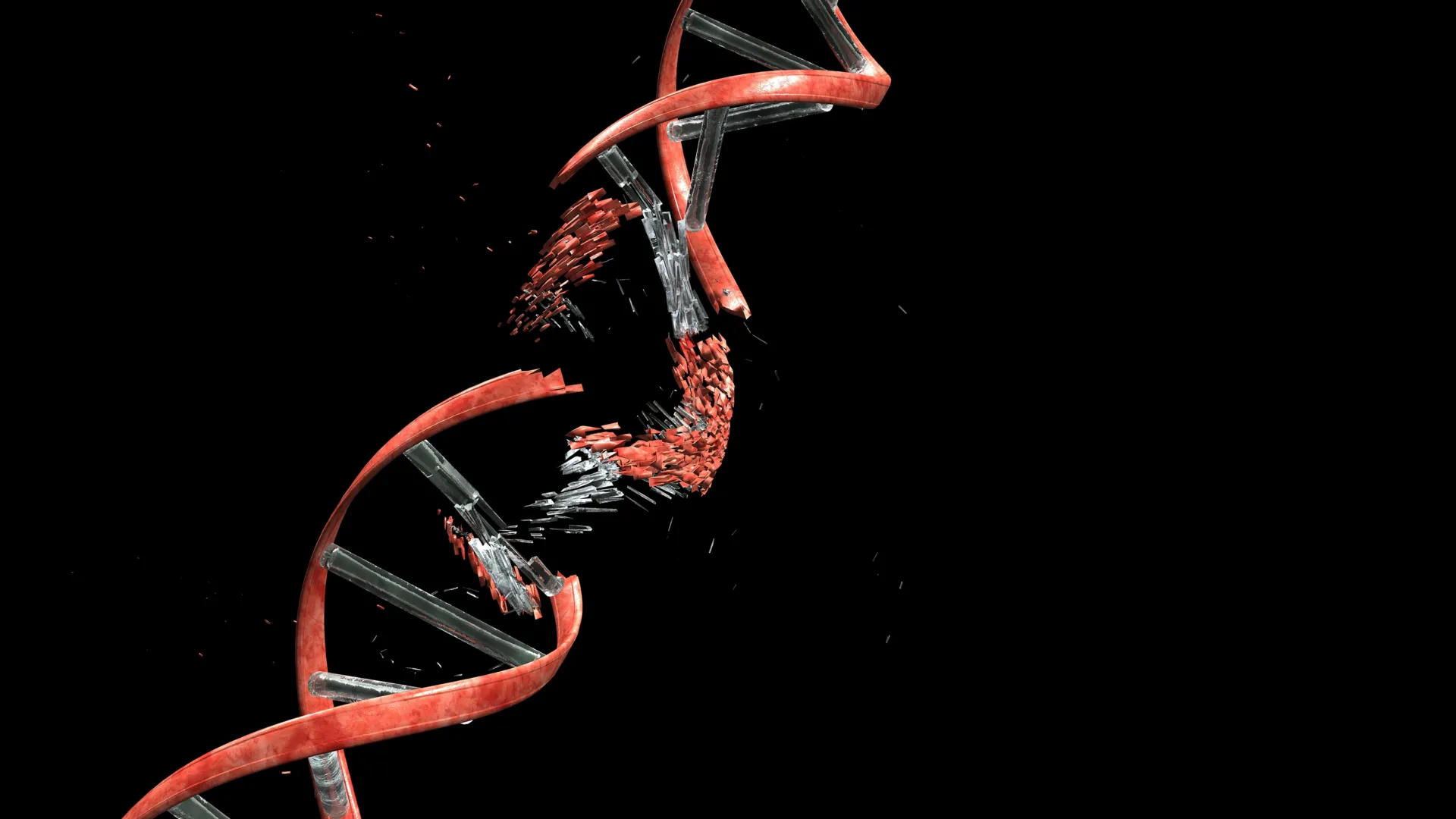
In the relentless pursuit of survival and rapid expansion, cancer cells employ a sophisticated biological strategy: they hijack the genome’s control centers to force growth-promoting genes into overdrive. However, new research suggests that this hyper-activity comes at a lethal cost. A study published in Science Advances reveals that the very mechanisms cancer cells use to fuel their growth are simultaneously tearing their own genetic blueprint apart, creating a cycle of damage and repair that may ultimately be the tumor’s greatest vulnerability.
Led by PhD student Osama Hidmi and Professor Rami Aqeilan of the Hebrew University of Jerusalem, the study uncovers a direct link between "super-enhancers"—highly active DNA control regions—and the frequent, double-strand breaks that destabilize a cancer cell’s genome. This discovery challenges the traditional view that genetic instability is merely a random byproduct of malignancy, suggesting instead that it is a systemic consequence of the tumor’s own hyper-metabolic state.
The Mechanics of Malignancy: A Chronology of Discovery
The journey toward this discovery began with a fundamental question regarding the nature of genomic instability. For decades, oncologists have observed that cancer cells exhibit high mutation rates, which allow them to evolve, metastasize, and develop resistance to chemotherapy. Traditionally, this was attributed to external environmental factors or a general failure in DNA repair mechanisms.
However, the team at the Hebrew University sought to look deeper into the physical topography of the cancer genome. By employing high-resolution genome-mapping techniques, the researchers began by observing the correlation between gene expression and DNA integrity.
- The Identification Phase: Initially, the team identified that double-strand breaks—the most catastrophic form of DNA damage—were not distributed randomly across the genome. They noticed a distinct pattern: these fractures were consistently clustered within specific genomic neighborhoods.
- Mapping the Control Centers: By overlaying their damage maps with data on transcriptional activity, they discovered that these "hotspots" of damage perfectly aligned with super-enhancers. These are large clusters of transcriptional enhancers that drive the massive expression of genes critical to cell identity and proliferation.
- Observing the Stress Cycle: The researchers then monitored the "alarm" signals that mark the presence of DNA damage. They observed a continuous cycle: as the cell pushed these growth genes to maximum capacity, the resulting physical tension on the DNA helix led to structural failure. The cell would then deploy repair machinery to patch the break, only for the cycle to repeat as the gene was once again forced into high-gear expression.
Supporting Data: When Growth Becomes a Burden
The data generated by the Hebrew University team provides a stark visual of the internal "arms race" occurring within a tumor. The use of highly sensitive genome-mapping methods allowed the researchers to identify these double-strand breaks with unprecedented precision.
The findings indicate that the physical architecture of DNA—the double helix—is not equipped to handle the extreme transcriptional demands placed upon it by the cancer cell’s "oncogenic program." As the transcriptional machinery (the enzymes that read DNA to create proteins) surges through these super-enhancer-regulated regions, the physical force exerted on the DNA leads to what the researchers describe as "transcriptional-replicative conflict."
This conflict occurs when the machinery of gene expression clashes with the machinery of DNA replication. In healthy cells, these processes are carefully coordinated. In cancer cells, the sheer volume of activity forced by super-enhancers overrides these safeguards. The result is a persistent state of genomic trauma.
Official Perspectives: Decoding the "Double-Edged Sword"
The implications of these findings have resonated throughout the oncology community, as they reframe the relationship between a tumor’s strength and its structural integrity.
"Cancer cells rely on super-enhancers to keep growth genes running at high speed," Professor Rami Aqeilan explained in a statement following the publication. "What we found is that this same high-output activity can put real strain on the DNA, creating break hotspots that the cell has to repair again and again. That cycle may help tumors survive in the short term, but it also increases the risk of mutations that can fuel cancer’s evolution."
For the researchers, this is a profound revelation of a biological paradox. The very traits that make a cancer aggressive—the ability to grow quickly and adapt to changing environments—are the same traits that create a persistent state of fragility.
Osama Hidmi, who spearheaded the experimental work, emphasized the clinical potential of these findings. "What is especially exciting," Hidmi noted, "is that because cancer cells depend on these high-stress DNA regions to keep their growth programs active, they are essentially ‘locked in’ to a vulnerable state. They cannot dial back the activity without slowing their growth, but they cannot maintain the activity without incurring damage. This opens the door to treatments that target the very processes tumors rely on to survive."
Implications for Future Cancer Therapeutics
The discovery of these "break hotspots" provides a roadmap for a new generation of precision medicine. If cancer cells are systematically damaging their own DNA to stay alive, then therapies that inhibit the repair of these specific breaks—or that exacerbate the transcriptional stress—could be devastating to the tumor while potentially sparing healthy cells.
Potential Therapeutic Pathways
- Synthetic Lethality: Researchers could develop drugs that specifically target the proteins responsible for repairing DNA in super-enhancer regions. By blocking these repair pathways, clinicians could force the cancer cell into a state of "genomic collapse," where the accumulated DNA damage becomes too severe for the cell to survive.
- Transcriptional Interference: New classes of inhibitors could be designed to modulate super-enhancer activity. By gently "turning down the volume" on these super-enhancers, researchers might be able to reduce the physical stress on the DNA, thereby stopping the rapid growth without causing the catastrophic mutations that often lead to drug resistance.
- Exploiting the Mutation Burden: Because these regions are hotspots for mutations, they may also serve as sites for neoantigen production. Understanding where these mutations occur most frequently could help immunotherapists design more effective vaccines or checkpoint inhibitors that recognize the specific "molecular signatures" of these unstable regions.
Conclusion: Turning the Tumor’s Strength Against Itself
The research from the Hebrew University of Jerusalem represents a paradigm shift in our understanding of tumor biology. For years, the scientific consensus focused on cancer’s ability to "break the rules" of cellular regulation. This study suggests that, in doing so, cancer is forced to play by a different, much more precarious set of rules.
The findings indicate that genetic instability is not just a side effect of cancer—it is a fundamental requirement of the tumor’s aggressive phenotype. By forcing genes to operate at extreme levels, the cancer cell pushes the physical limits of its own genome. This creates a reliance on constant repair, a "Achilles’ heel" that scientists are only now beginning to map with accuracy.
As we move toward a future of personalized oncology, the ability to identify these hyper-active super-enhancers and their associated hotspots could lead to treatments that are not only more effective but also more targeted. By understanding that a tumor’s rapid growth is inextricably linked to its own structural fragility, researchers may finally be able to turn the cancer’s greatest advantage into its ultimate downfall. The cycle of break-and-repair, which once allowed the tumor to evolve and escape, may soon become the very mechanism by which we bring it to a halt.