With the countdown to the 2026 Mr. Olympia officially at the six-week mark, the bodybuilding world is reaching a fever pitch of anticipation. As the sport’s elite prepare to descend upon Las Vegas to battle for the coveted Sandow trophy, a recent broadcast provided a rare, behind-the-scenes look at the mental fortitude required to reach the pinnacle of the sport.
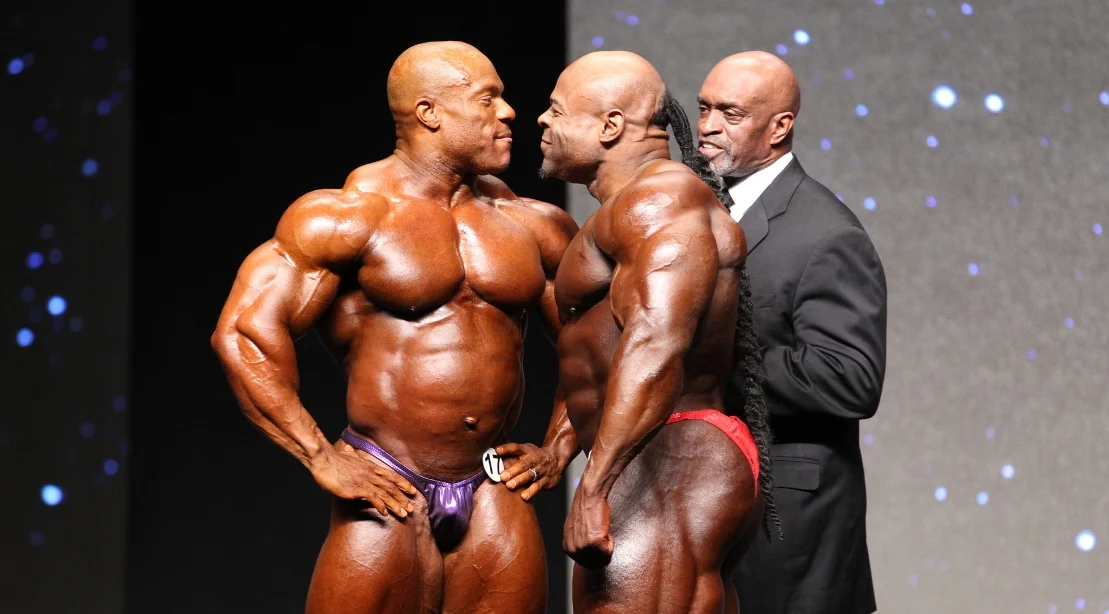
"The Olympia Prep Show," hosted by industry veteran Frank Sepe, served as a bridge between the sport’s legendary past and its competitive future. In a move that surprised many long-time enthusiasts, the premiere episode featured two of the most iconic figures in modern bodybuilding history: seven-time Mr. Olympia Phil "The Gift" Heath and three-time Arnold Classic champion Kai "The Predator" Greene. While their names were once synonymous with the most heated rivalry in the history of the sport, the broadcast showcased a newfound mutual respect—a dialogue centered not on hostility, but on the profound competitive psychology required to achieve greatness.
The Evolution of a Rivalry: From War to Wisdom
For years, the bodybuilding community was divided into two distinct camps. Between 2012 and 2014, the rivalry between Phil Heath and Kai Greene defined the sport. Their stage battles were not merely physical contests; they were psychological warfare. During this era, Heath successfully held off Greene’s relentless surges, forcing "The Predator" into the runner-up position at the Mr. Olympia three consecutive times.
However, the history between these two giants extends beyond the Olympia stage. Greene famously defeated Heath at the 2010 Arnold Classic, a victory that cemented his status as a legitimate threat to Heath’s dominance. For years, the narrative of their relationship was built on the tension of the stage, the near-misses, and the palpable animosity that seemed to boil over at pre-show press conferences.
The skepticism surrounding their appearance together on "The Olympia Prep Show" was immense. Host Frank Sepe admitted that his direct messages were flooded with fan anxiety. "People were literally asking, ‘Are they going to fight?’” Sepe noted during the broadcast.
Heath, however, dismissed the notion of lingering animosity with a pragmatic perspective. "Why would we?" Heath asked. "We collectively have boosted the Olympia. I’m glad to have Kai be a part of this." The shift in tone highlights a maturity often seen in aging legends of the sport—a transition from viewing one another as obstacles to viewing one another as peers who shared the burden of greatness.
Chronology of Excellence: Defining the Modern Era
To understand the weight of this reunion, one must look at the timeline of their competitive intersection:
- 2010: Kai Greene establishes himself as a tier-one threat by defeating Phil Heath at the Arnold Classic, signaling a rivalry that would dominate the decade.
- 2011: Heath claims his first Mr. Olympia title, beginning his reign.
- 2012–2014: The "Golden Era" of the Heath-Greene rivalry. During these three years, Greene pushed Heath to his absolute physical limit, resulting in three consecutive silver-medal finishes for Greene. This period is often cited as the most competitive era of the post-Coleman/Cutler landscape.
- 2015–Present: Following his final loss to Heath, Greene stepped away from the Olympia stage to pursue business ventures, acting, and artistic endeavors. Heath went on to secure seven titles, tying the legendary Arnold Schwarzenegger.
- 2026: The return of the Olympia to the Orleans in Las Vegas brings the discussion back to its roots. Heath noted the significance of the venue, stating, "With the Olympia going back to the Orleans, man, that’s pretty awesome because that’s where Kai and I used to have a lot of battles."
Inside the Gym Warfare: The Psychology of the "Mind Game"
The core of the discussion during "The Olympia Prep Show" centered on the internal landscape of a champion. Heath, known for his analytical and often clinical approach to training, provided a fascinating look at how his rivalry with Greene influenced his daily habits.
"I feel that Kai and I were some of the most competitive bodybuilders ever," Heath reflected. "Not just great bodybuilders. I think to be an awesome bodybuilder, you have to be competitive."
Heath recounted a specific instance that highlights the obsessive nature of elite preparation. While training under the guidance of the legendary Hany Rambod, Heath found himself locked in a psychological stalemate with Greene.
"I was training very, very hard," Heath shared. "I remember when we were getting ready for a show and Kai was on the step mill. I’m over here training, and I’m thinking, ‘He’s on this step mill all freaking night!’"
This observation transformed into a game of attrition. The question was never just about who had the better physique; it was about who had the greater capacity for suffering. "Who’s going to leave the gym first?" became the silent mantra of their training sessions. This level of intensity—where the presence of a rival in the same gym forces one to extend a cardio session or add an extra set—is the "gym warfare" that creates champions.
The Predator’s Perspective: From Fan to Phenom
Kai Greene, known for his philosophical approach to the sport, offered a different, yet equally compelling, perspective on his development. When asked about his competitive fire, Greene reflected on his journey from a fan of the sport to its main stage.
"I was a teenager standing there watching you on the stage dominating and destroying," Greene said, addressing the history of the sport and those who paved the way. He spoke of idols like Frank Sepe and others who, through their physical presence, inspired him to pursue his own path.
Greene’s realization was that he had to transcend his fandom to become a competitor. "I think the sport helped me to discover and realize myself," he remarked. For Greene, the bodybuilding stage was a canvas. His obsession with detail, symmetry, and muscle maturity was a manifestation of his internal identity. By the time he reached the Olympia stage, he was no longer looking up at his heroes; he was competing against them, and by extension, competing against the limitations of his own biology.
Implications for the Future of Bodybuilding
The reunion of Heath and Greene serves as a reminder of what makes the Mr. Olympia contest the "Super Bowl" of the fitness world. As the 2026 Olympia approaches (scheduled for September 24-27), the industry is seeing a shift in how athletes engage with one another.
The transparency provided by "The Olympia Prep Show" suggests a new era of professional athlete interaction. Rather than hiding behind PR-managed silence, legends are beginning to open up about the mental exhaustion and the intense discipline required to maintain a championship physique.
For the current crop of competitors, the message from Heath and Greene is clear: talent is the baseline, but competitiveness is the differentiator. Whether it is the battle for the top spot or the struggle to improve one’s own physique year-over-year, the mental component remains the most under-discussed aspect of the sport.
As fans look forward to the 2026 event, the conversation has moved beyond "who is the biggest" and toward "who has the right mindset." The presence of both Heath and Greene, talking openly about the days they pushed each other to the brink, adds a layer of historical context to the upcoming show. It reminds the audience that the athletes they see on stage are not just machines—they are human beings driven by a singular, obsessive purpose.
The upcoming Olympia in Las Vegas is set to be a spectacle of the highest order, but thanks to the candid dialogue between two of its greatest stars, it is now also a lesson in the psychology of excellence. As the next generation of bodybuilders prepares to make their mark, they would do well to heed the words of "The Gift" and "The Predator": in this sport, the most important battle is the one fought in the quiet, empty hours of the gym, long before the lights go up and the crowd begins to roar.