
As we navigate the decades, the shoulders—our most mobile joints—often become the silent casualties of daily wear and tear. For individuals over 60, the ability to reach for a high shelf, lift a heavy grocery bag, or simply push oneself up from a chair becomes a benchmark of functional independence. Jarrod Nobbe, a Certified Strength and Conditioning Specialist (CSCS), argues that maintaining shoulder health isn’t about heavy bench pressing; it is about cultivating "shoulder intelligence"—the ability to move the joint with precision, stability, and grace.
With just a light resistance band and a single dumbbell, you can transform your living room into a high-performance training studio. By focusing on the synergy between the shoulder blades, the thoracic spine, and the core, you can unlock a new level of daily comfort and physical capability.
The Philosophy of Movement: Assessing Before Loading
Before reaching for external weight, it is vital to conduct a "movement audit." For the aging athlete or the active senior, the priority is not how much you can lift, but how well you can move.
"When I work with clients over 60, I’m looking for a specific quality of movement," Nobbe explains. "I want to see if the arm can reach overhead without the ribs flaring, which indicates a compensation from the lower back. I want to see if the shoulder blade, or scapula, glides smoothly across the rib cage."
The Limitation of Gym Machines
While commercial gym equipment offers a guided, stable path, it often isolates muscles in a way that doesn’t mimic the chaos of real-world movement. At home, using free weights and bands forces the smaller stabilizing muscles—the rotator cuff and serratus anterior—to work in concert with the larger prime movers. This "connected" approach creates functional strength that translates directly into everyday tasks like putting away dishes or lifting a suitcase.
Chronology of a Shoulder Session
To build long-term shoulder resilience, follow this intentional progression. This routine is designed to be performed three to four days a week.
1. Band Pull-Aparts: The Foundation of Posture
The rear deltoids and upper back muscles are often neglected in a sedentary lifestyle, leading to a forward-rounded posture. Band pull-aparts are the antidote.
- The Science: By strengthening the posterior chain of the shoulder, you create a "shelf" that allows the shoulder joint to sit correctly in its socket. This prevents the "impingement" sensation often felt during overhead movements.
- Execution: Hold a light band with both hands, arms extended in front of you at shoulder height. With a slight bend in your elbows, pull the band apart by squeezing your shoulder blades together.
- Volume: 2 to 3 sets of 12–15 reps.
- Pro Tip: If you feel your traps shrugging toward your ears, the resistance is too high. Keep the neck long and relaxed.
2. The Half-Kneeling Shoulder Press: Core-Integrated Stability
The half-kneeling position is a game-changer for anyone who struggles with lower back pain during overhead presses. By placing one knee on the floor, you effectively "lock" your pelvis, forcing your core to stabilize your spine rather than relying on an arch in the lower back.
- The Science: This exercise demands vertical stability. It forces the shoulder to work through a full range of motion while the core maintains an upright posture.
- Execution: Kneel on one knee, holding a dumbbell in the opposite hand. Press the weight toward the ceiling, keeping your ribs tucked and your core braced throughout the ascent and descent.
- Volume: 2 to 3 sets of 8–10 reps per side.
3. Down Dog to Cobra: Fluid Mobility
Mobility is not just about stretching; it is about strength through a range of motion. This flow mimics the natural movement of the spine and shoulders.
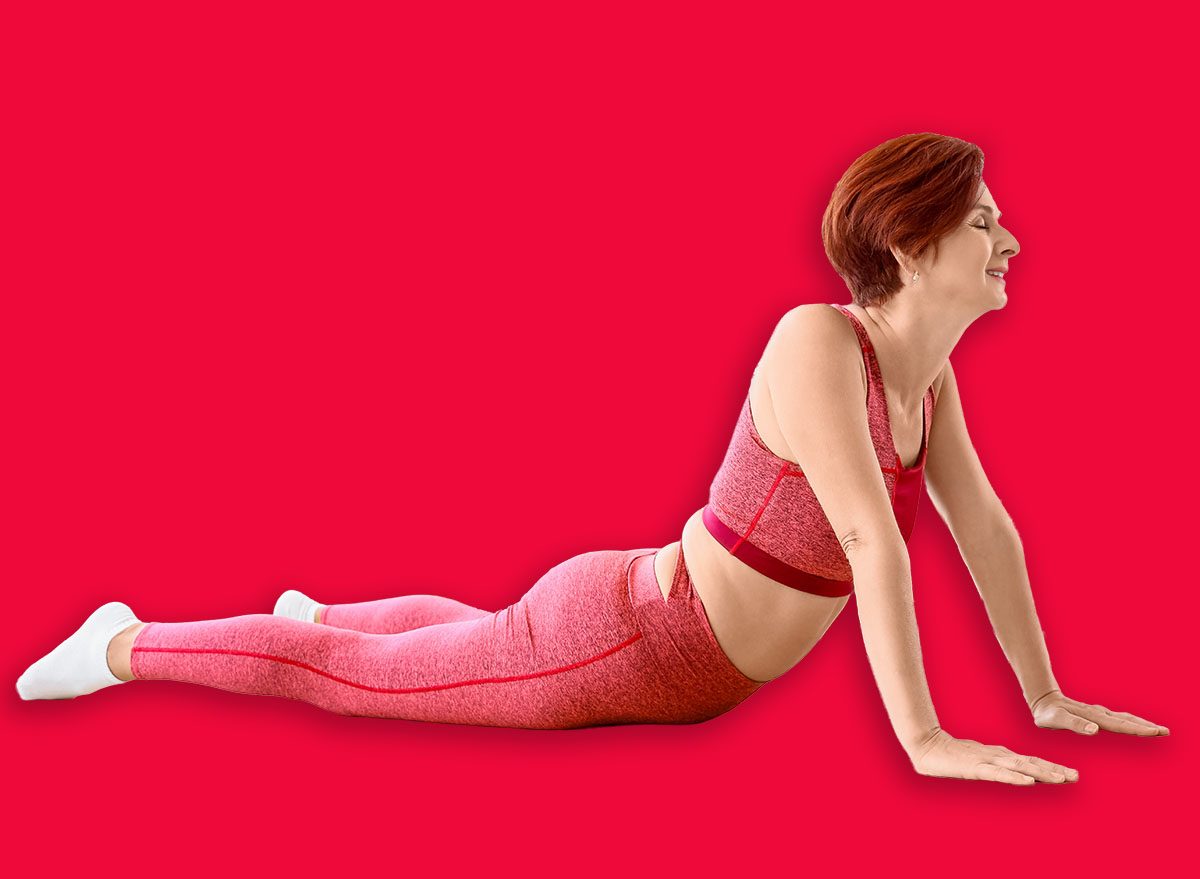
- The Science: This transition helps "grease the groove" of the shoulder blades. It requires the shoulders to support body weight in an overhead position, followed by a controlled transition that opens the chest and anterior shoulder capsule.
- Execution: Start in a plank position, push your hips back into a "downward dog," then move forward into a "cobra" position, dropping your hips while keeping your chest proud and shoulders pulled back.
- Volume: 2 to 3 sets of 6–8 reps.
4. The Shoulder Halo: Dynamic Joint Control
The "halo" is perhaps the most effective movement for overall shoulder longevity. It trains the joint to navigate complex paths while maintaining tension.
- The Science: By moving a weight in a controlled circle around the head, you challenge the rotator cuff to stabilize the joint in multiple planes of motion.
- Execution: Hold a light dumbbell by the head (the "bell" part) at chest level. Circle the weight around your head, keeping it as close to your skull as possible. Reverse the direction for each rep.
- Volume: 2 to 3 sets of 5–8 reps in each direction.
Supporting Data: Why "Light and Controlled" Wins
Research published in journals such as the PMC (PubMed Central) consistently indicates that high-repetition, low-load training is superior for tendon health and joint lubrication in older populations. Unlike high-intensity powerlifting, which can exacerbate existing micro-tears in the rotator cuff, the protocol outlined here focuses on "Time Under Tension" (TUT).
By increasing the time the muscle spends working, we improve blood flow to the connective tissues, which are typically slower to heal and strengthen than muscle tissue. This approach reduces the inflammatory response while promoting the structural integrity of the joint capsule.
Official Perspectives: The Professional Consensus
According to experts in sports performance, the "use it or lose it" mantra is literal when it comes to the glenohumeral joint (the shoulder). A sedentary lifestyle leads to "adhesive capsulitis" or general stiffness.
"The goal is to maintain the ability to reach overhead without pain," says Nobbe. "When we stop lifting our arms above our heads, the body slowly begins to limit that range of motion to protect us. By performing these four moves, you are signaling to your nervous system that you still need that range of motion, and the body will fight to maintain it."
Implications for Daily Life: Beyond the Gym
The beauty of this routine lies in its real-world application. Consider the mechanical demands of common chores:
- Reaching: The strength gained from band pull-aparts ensures your shoulder blades are set, protecting the joint when you reach for a heavy box on a top shelf.
- Lifting: The core integration from the half-kneeling press translates to picking up a grandchild or a bag of groceries without straining the lumbar spine.
- Carrying: The rotator cuff stability built by the "halo" prevents shoulder fatigue during long walks or travel.
Long-Term Maintenance
To ensure long-term success, follow these three rules:
- Consistency Over Intensity: It is better to perform these movements three times a week with focus than to do an "intense" workout once every two weeks.
- Monitor the "Click": If you feel sharp, pinching pain, stop immediately. Move through a smaller range of motion until the tissue adapts.
- Progressive Overload: Once 15 reps feel easy, do not jump to a 50-pound dumbbell. Increase the weight slightly or slow the tempo of the movement to make it more difficult.
By treating your shoulders with the same respect you would a high-performance machine, you aren’t just training for the gym—you are training for a future of movement, confidence, and independence. The journey to a pain-free life after 60 starts with a single band, a single dumbbell, and the willingness to move with intention.