











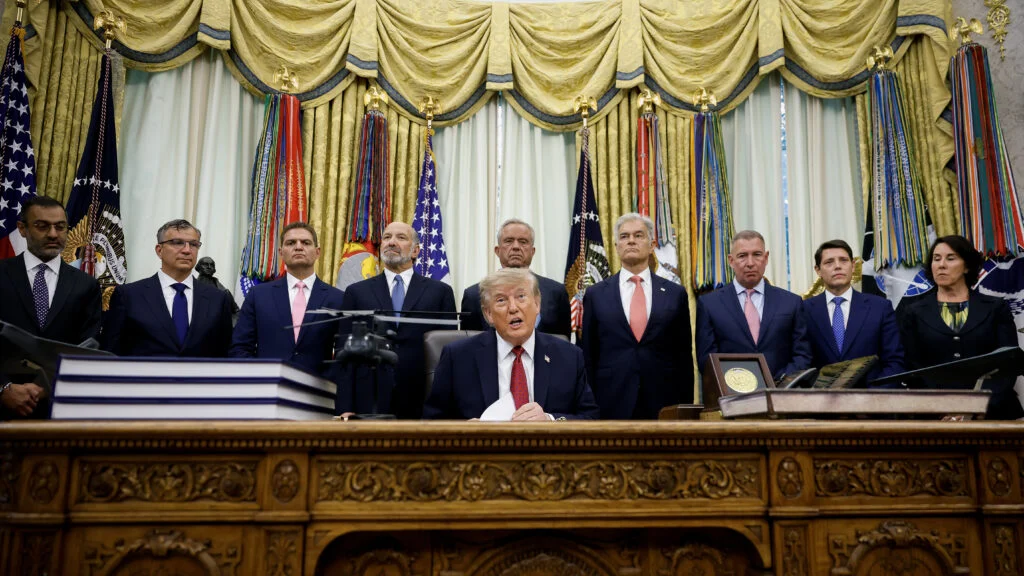
WASHINGTON — In a calculated move aimed at sustaining momentum on one of his administration’s most high-profile policy initiatives, President Donald J. Trump announced on Monday a new series of voluntary drug pricing agreements. This latest expansion of the "Most-Favored-Nation" (MFN) framework targets midsize biotechnology companies, signaling the White House’s intent to keep pharmaceutical costs at the forefront of the national conversation as the midterm election cycle intensifies.
While the administration frames these agreements as a pivotal victory for American consumers, the underlying mechanics of the deals have drawn sharp scrutiny from industry analysts and healthcare economists. Critics argue that the voluntary nature of the agreements, coupled with their restricted scope, may render them more symbolic than substantive in the near term.
The Core Facts: A Strategy of Voluntary Compliance
The administration’s "Most-Favored-Nation" model is rooted in the principle that the United States should not pay significantly higher prices for pharmaceutical products than other developed nations. By benchmarking domestic prices against an international index of peer countries, the White House seeks to curb the escalating costs that have long burdened the U.S. healthcare system.
The latest round of negotiations, which secured commitments from nine additional pharmaceutical manufacturers, focuses specifically on midsize firms—a segment of the industry often characterized by high-innovation, high-cost specialty drugs. Under these agreements, these companies have pledged to adjust their pricing structures to align more closely with the international reference points envisioned by the administration.
However, the legal architecture of these deals contains a significant caveat. The price reductions are set to apply primarily to the Medicaid program. By statute, Medicaid already commands the lowest prices of any major payer in the U.S. market. By focusing these voluntary reductions on a segment already protected by federal price floors, the agreements effectively exempt participating companies from the more rigorous, mandatory price reductions that would otherwise apply to Medicare—the primary driver of federal drug spending.
Chronology: A Multi-Year Push for Reform
The evolution of the MFN policy reflects a long-term, iterative effort by the Trump administration to dismantle the traditional pricing autonomy held by the pharmaceutical industry.
- Initial Conceptualization (2020-2021): The concept of an international price index was first introduced as an executive priority, aimed at curbing the "global freeloading" that the President argued allowed foreign nations to benefit from American research and development while U.S. citizens bore the brunt of high costs.
- Legal Challenges and Legislative Friction: Throughout the early years of the implementation, the administration faced a wall of litigation from industry trade groups. Pharmaceutical lobbyists argued that the MFN model constituted an illegal overreach of executive authority, leading to years of courtroom battles that stalled initial rollout efforts.
- Pivot to "Voluntary" Models (2025): Recognizing the difficulty of enforcing a universal mandate, the White House began shifting its strategy toward voluntary participation. By incentivizing midsize and smaller firms to "opt-in," the administration hoped to create a public-facing coalition that would pressure larger legacy manufacturers to follow suit.
- The Midterm Surge (August 2026): With midterm elections approaching, the White House accelerated negotiations, culminating in the August 31 announcement. This move serves to reinforce the administration’s narrative that it is "doing something" about drug prices, providing a potent talking point for GOP candidates navigating voter frustration over inflation and healthcare costs.
Supporting Data: The Medicaid/Medicare Divide
To understand the skepticism surrounding the current announcement, one must examine the divergent cost structures of the two largest federal programs.
Medicaid vs. Medicare Pricing
Medicaid operates under the Medicaid Drug Rebate Program (MDRP), which mandates that manufacturers provide the "best price" to state programs. Because of this, the pharmaceutical industry’s margins in Medicaid are already the thinnest in the domestic market. By channeling the new "Most-Favored-Nation" discounts into this specific bucket, manufacturers are essentially offering concessions in an area where they already operate at a discount.
Conversely, Medicare Part D—which accounts for the vast majority of federal drug spending—is largely insulated from these specific voluntary deals. Analysts point out that if the administration truly sought to lower national health expenditures, the focus would need to shift to Medicare, where the government has historically had limited leverage to negotiate prices directly.
The "Innovation" Argument
Biotech advocates argue that the MFN approach risks chilling investment. According to a report from the Biotechnology Innovation Organization (BIO), midsize firms rely heavily on the high margins of their early-stage drug launches to recoup the billions of dollars invested in R&D. While lower prices are a boon for the patient, analysts warn that a "race to the bottom" regarding international price alignment could lead to a decline in the number of new molecular entities entering the pipeline by the end of the decade.

Official Responses: A Tale of Two Perspectives
The reaction to the announcement has been predictably polarized.
The White House Position:
Administration officials, including the Secretary of Health and Human Services, have defended the agreements as a triumph of negotiation over regulation. "We are proving that companies are willing to be partners in lowering the cost of care," an administration spokesperson stated. They maintain that these nine agreements are merely the first of many, and that the "momentum of the market" will eventually force the rest of the industry to adopt the MFN standard.
Industry and Analyst Critique:
Conversely, industry analysts suggest that the White House is prioritizing optics over systemic reform. "What we are seeing is a strategic move to secure headlines before the elections," said a senior policy fellow at a D.C.-based healthcare think tank. "By focusing on midsize firms and the Medicaid program, they’ve managed to generate a ‘win’ that doesn’t actually threaten the bottom line of the major pharmaceutical conglomerates that control the bulk of the market."
Furthermore, patient advocacy groups remain cautious. While they welcome any reduction in drug prices, many are concerned that these voluntary measures act as a "regulatory shield," potentially preventing the government from pursuing more aggressive, mandatory price-capping legislation in the future.
Implications: What This Means for the Future
The long-term implications of this policy shift are twofold: political and economic.
The Political Calculus
For the Republican Party, the drug pricing issue is a strategic necessity. By positioning themselves as the party that finally brought pharmaceutical companies to the table, the White House hopes to neutralize a traditional Democratic advantage on healthcare. The optics of a "deal" allow candidates to claim they are fighting for the common consumer without having to engage in the contentious, industry-shaking debates that would accompany a full-scale overhaul of the pharmaceutical market.
The Economic Trajectory
Economically, the impact remains to be seen. If the MFN model gains widespread adoption, it could fundamentally alter the way global pharmaceutical companies launch products. Some predict a "two-tier" pricing system, where the U.S. market is no longer the primary engine for global R&D funding. If this happens, the industry may shift its R&D focus toward lower-cost, iterative innovations rather than the "moonshot" biologics that have characterized the last two decades.
Moreover, the exclusion of Medicare from these specific deals creates a fragmented regulatory environment. As the midterms conclude, the next Congress will face immense pressure to resolve this discrepancy. Legislators will likely be forced to choose between extending the MFN model to Medicare—a move that would trigger intense lobbying and potential supply-chain disruptions—or allowing the current voluntary framework to persist as a modest, if largely symbolic, gesture.
Conclusion: A Tenuous Balance
The administration’s announcement on Monday is a masterful display of political stagecraft, balancing the urgent need for voter-friendly policy with the delicate reality of a powerful, entrenched industry. Whether this marks the beginning of a systemic shift in American drug pricing or merely a short-term campaign tactic remains the defining question for the life sciences sector. As the industry digests the details of these new agreements, the focus shifts to Capitol Hill, where the real battle over the future of pharmaceutical regulation is only just beginning to take shape.
For now, patients, investors, and policymakers remain in a holding pattern, waiting to see if these nine midsize companies will be the vanguard of a new, lower-cost era, or if the "Most-Favored-Nation" promise will fade into the background once the election ballots are cast.