For decades, the clinical narrative surrounding hypermobile Ehlers-Danlos syndrome (hEDS) has been dominated by the musculoskeletal system. Patients have been told that their chronic pain, widespread sensitivity, and internal instability are primarily the result of joint hypermobility and tissue laxity. Yet, for many, this explanation has never quite captured the reality of their experience—the burning nerve pain, the debilitating dizziness, the digestive dysfunction, and the feeling that their entire body is "misbehaving."
Often, when these patients undergo standard neurological evaluations, the results return as "normal," leaving them with a diagnosis that fails to account for their most distressing symptoms. However, a landmark study recently published in Scientific Reports is fundamentally shifting this perspective. The research suggests that the pain and systemic dysfunction in hEDS are not merely secondary effects of loose ligaments, but rather the result of distinct, measurable damage to the nervous system.
Main Facts: Redefining hEDS as a Neurological Condition
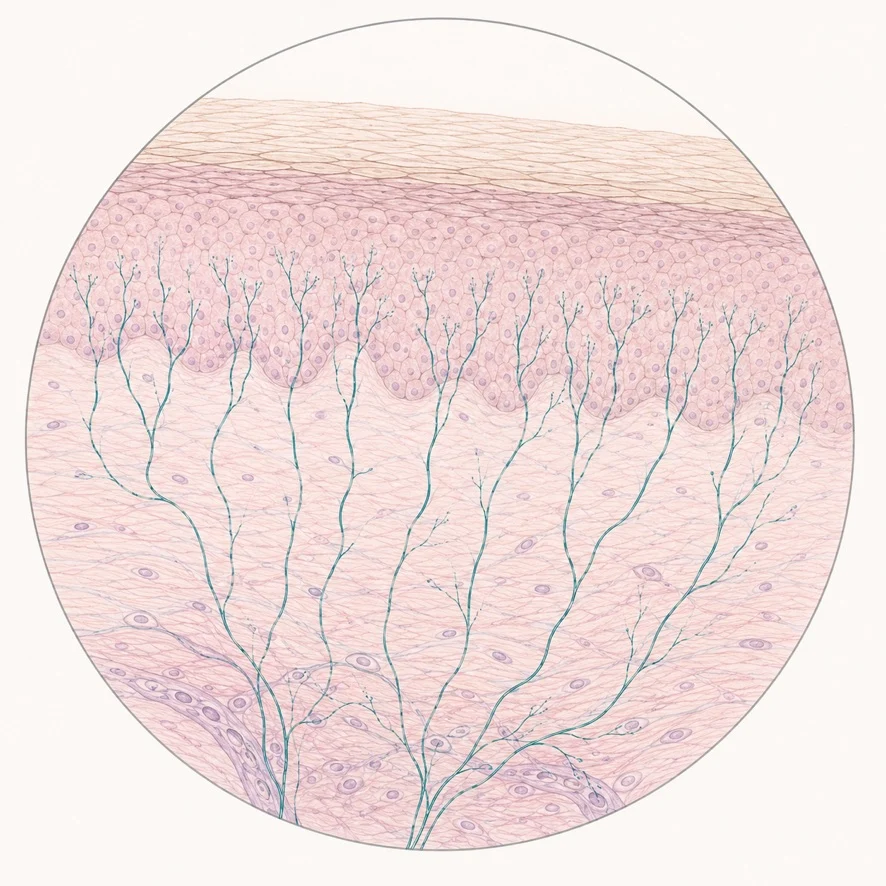
The study, conducted by a team of researchers in Italy, provides compelling evidence that small fiber neuropathy (SFN) is a hallmark feature of hEDS. Small fiber neuropathy occurs when the small nerve fibers responsible for sensing pain, temperature, and regulating autonomic functions—such as heart rate, digestion, and sweat production—are damaged or lost.
While SFN is known to occur in various conditions, this study marks the first time researchers have systematically compared the profile of SFN in hEDS patients against "idiopathic" SFN (iSFN), which has no known underlying cause. The findings indicate that the nerve damage in hEDS follows a unique pattern, characterized by an earlier onset, more severe autonomic impairment, and a distinct cycle of nerve fiber degeneration and attempted regeneration.
Crucially, the study provides a biological "missing link" for the chronic pain and autonomic dysregulation that have long been dismissed as psychosomatic or purely structural. By proving that the nerves themselves are compromised, the study provides long-overdue clinical validation for the hEDS community.
Chronology: A History of Unseen Symptoms
To understand the significance of these findings, one must look at the timeline of the patient experience. The research highlights a striking discrepancy in the age of symptom onset between hEDS/SFN patients and those with idiopathic SFN.
- The Early Onset Gap: On average, patients with hEDS/SFN reported the onset of their neurological symptoms at approximately age 19. In contrast, those with idiopathic SFN did not typically experience symptoms until age 35. This 16-year gap suggests that many individuals with hEDS are living with sub-clinical or unrecognized neurological involvement from a very young age.
- The Diagnostic Delay: Because standard neurological tests often fail to detect small fiber damage—which requires specific diagnostic tools like skin punch biopsies—many patients spend decades without a clear answer. The prolonged duration of disease by the time of diagnosis indicates a systemic failure in current medical screening protocols for connective tissue disorders.
- The Path of Progression: The biopsy findings revealed an unusual pattern of alternating nerve fiber loss and clusters of regrowth. This indicates that the neuropathy in hEDS is not a static event, but a chronic, slow-progressing cycle where the body is in a constant, ultimately unsuccessful battle to repair its own nervous system.
Supporting Data: The Biological Evidence
The study utilized a cohort of 35 patients meeting the 2017 criteria for hEDS and 38 patients with idiopathic SFN. The comprehensive data collection—ranging from sensory testing to microscopic skin biopsies—revealed significant physiological differences.
The Autonomic Disparity
The most dramatic differences between the two groups appeared in the autonomic nervous system.
- POTS Prevalence: Perhaps the most alarming statistic is that 51.5% of the hEDS/SFN group met the criteria for Postural Orthostatic Tachycardia Syndrome (POTS), compared to 0% in the iSFN group. This suggests that in hEDS, POTS may be driven by the degradation of peripheral autonomic nerve fibers, rather than just the elasticity of the blood vessels.
- Sweat Gland Dysfunction: The biopsy results confirmed that hEDS/SFN patients suffered from a significantly greater loss of autonomic nerve fibers involved in sweating. Reduced sweat output is a key indicator of autonomic failure and helps explain the widespread reports of heat intolerance and exercise-induced fatigue among the hEDS population.
- Widespread Pain: While both groups reported burning and pinprick sensations, the hEDS group experienced them across broader areas of the body. Notably, 34% of hEDS/SFN patients reported pain in the perineal region—a symptom entirely absent in the idiopathic group. Researchers hypothesize that this may be due to nerve displacement caused by the tissue laxity inherent in hEDS, which can compress or stretch nerves in ways not seen in the general population.
Official Responses and Clinical Implications
The medical community is beginning to take note of these findings. By moving the conversation from "joint pain" to "nerve damage," the study invites a fundamental shift in how hEDS is managed in clinical practice.
Redefining the Standard of Care
The authors of the study argue that autonomic assessment should no longer be an elective or "afterthought" component of hEDS care. Instead, it should be integrated into the primary diagnostic framework. If a patient presents with the constellation of symptoms associated with hEDS, physicians should be encouraged to look for the "neurological footprint" of the condition early on.
The Role of Skin Biopsy
The study underscores the necessity of skin punch biopsies—a minimally invasive procedure where small samples of skin are taken to count nerve fiber density under a microscope. While currently underutilized, this tool provides the objective evidence needed to move beyond subjective patient reporting. For the patient, a positive biopsy for SFN can be the difference between being told their pain is "all in their head" and receiving a diagnosis that opens the door to specialized neurological treatments.
The Broader Implications for Patients
For the hEDS community, this research is more than just a collection of data points; it is a turning point in the quest for legitimacy.
- Validation of Invisible Pain: The confirmation that nerve fiber density is measurably reduced in hEDS patients provides an objective, biological basis for the pain that has been historically dismissed.
- Targeted Management: Understanding that the nervous system is actively trying to regenerate (as evidenced by the biopsy) suggests that treatments aimed at supporting nerve health, rather than just masking pain, could be a new frontier in therapy.
- Holistic Treatment: By linking POTS, GI dysfunction, and chronic pain to a single underlying neurological mechanism, the research encourages a multi-disciplinary approach. It moves the needle away from treating symptoms in isolation and toward a model of care that addresses the systemic, neurological nature of the condition.
As we look toward the future, the integration of these findings into clinical practice will be essential. It is clear that the "pain that feels impossible to explain" finally has an explanation. The challenge now lies in ensuring that healthcare providers are educated on these markers and that patients are granted access to the diagnostic tools necessary to prove what they have known all along: their pain is real, their nerves are affected, and their condition requires a much deeper level of care than previously thought.
Study Reference:
Scientific Reports, 2026: "Small fiber neuropathy in hypermobile Ehlers-Danlos syndrome: A comparative study of sensory and autonomic manifestations."
Link to full study
Author: Jacqueline Moltzau Anderson, PhD, University of California, August 2026.