









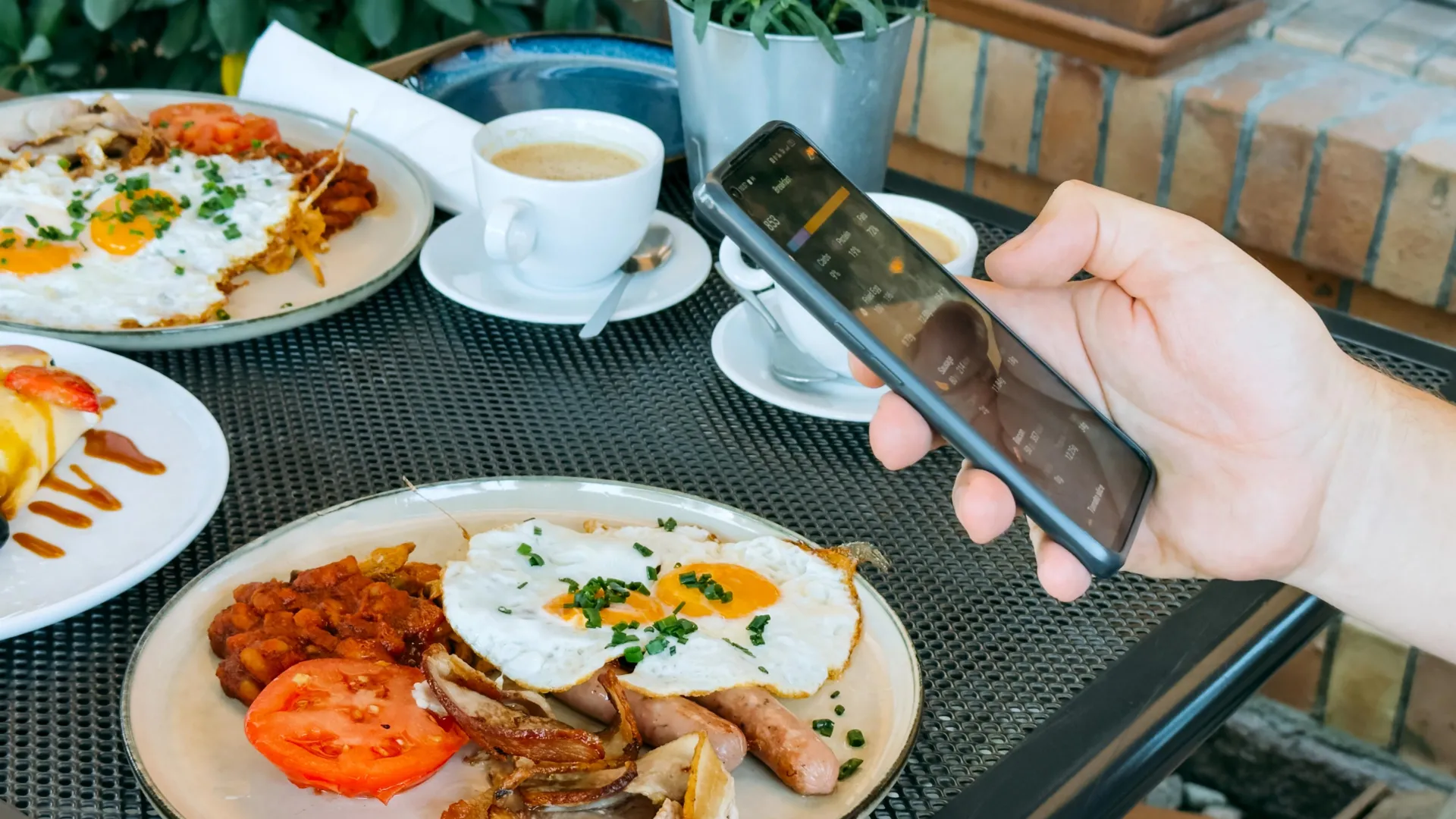
In the age of digital wellness, the quest for the "quantified self" has turned smartphones into personal nutritionists. For millions of health-conscious individuals, the tedious task of manual calorie logging—searching through databases and weighing ingredients—has been replaced by the frictionless convenience of Artificial Intelligence. Simply snap a photo of your plate, and an app ostensibly provides a breakdown of calories, fats, and macronutrients.
However, a sobering new study presented at NUTRITION 2026 suggests that while this technology offers unparalleled speed, it may come at the cost of significant accuracy. Research conducted by the National Institute of Diabetes and Digestive and Kidney Diseases (NIDDK), part of the National Institutes of Health (NIH), reveals that AI-powered image recognition software consistently underestimates caloric and fat content, potentially misleading users who rely on these metrics for weight management or metabolic health.
The Core Findings: A Significant Margin of Error
The research, presented by Olivia Charles, a postbaccalaureate intramural research training fellow at the NIDDK, highlights a recurring discrepancy in how AI interprets the contents of a plate. Across a rigorous test of four popular photo-based tracking applications—MyFitnessPal, LoseIt!, CalAI, and Appediet—researchers discovered that the software tended to provide estimates that were, on average, one-third lower than the actual nutritional content.
In practical terms, this error is not merely a rounding issue. On average, the apps underestimated caloric intake by 250 to 345 calories per meal. Furthermore, the underestimation of fat content was even more pronounced, with apps missing approximately 30 grams of fat per meal. For an individual attempting to adhere to a strict caloric deficit for weight loss, a discrepancy of 300 calories per meal—potentially nearly 1,000 calories per day—could entirely negate a calorie-restricted diet plan.
Chronology of the Investigation
The study was born out of a broader initiative at the NIH Clinical Center, which is currently investigating the physiological impacts of various dietary patterns, specifically comparing low-carbohydrate (ketogenic) diets against standard dietary protocols.
Phase One: Establishing the Baseline
To ensure the integrity of the data, the research team utilized the NIH’s highly controlled metabolic kitchen. Unlike home kitchens, where portion sizes are estimated by eye, the metabolic kitchen employs industrial-grade precision. Ingredients for 102 standardized meals were weighed to the nearest 0.1 gram. This provided the "ground truth" necessary to judge the AI’s performance.
The photographs of these 102 meals were then fed into the four chosen apps. The goal was to see if the AI, which relies on visual recognition patterns and pre-existing nutritional databases, could reconcile the image with the known, laboratory-measured content.
Phase Two: The Expanded Analysis
Following the initial findings, the researchers expanded their scope to analyze more than 200 additional meals. This second phase was designed to determine if specific dietary compositions—such as the high-fat profile of a ketogenic meal—created specific "blind spots" for the AI algorithms. The results reinforced the initial findings, suggesting that as the fat density of a meal increases, the accuracy of the AI decreases proportionally.
How AI Interprets the Plate
Understanding why these apps fail requires a look at the "black box" of image recognition technology. These apps function through a multi-step process:
- Image Recognition: The AI uses neural networks trained on millions of images to identify food items on a plate. It attempts to distinguish, for example, a piece of chicken from a piece of tofu.
- Volumetric Estimation: The software attempts to estimate the size and depth of the food items. This is notoriously difficult, as the angle of the photo, the depth of the plate, and the overlap of ingredients can drastically alter the AI’s perception of volume.
- Database Mapping: Once the AI identifies the item and estimates the volume, it queries a nutritional database to assign a calorie count.
The failure points, according to the NIDDK team, likely occur at the estimation and volume stages. AI struggles to "see" what is hidden under a sauce or beneath a garnish, and it often fails to account for the hidden fats—such as oils used in cooking—that are not immediately visible to a camera lens.
Official Perspectives and Expert Insight
"Photo-based calorie tracking apps are very popular, especially for people trying to manage their health or lose weight," said Aaron Hengist, a postdoctoral visiting fellow with the NIDDK. "However, the accuracy of many of these apps has not been thoroughly evaluated. Our study helps address this question by looking at whether these apps can reliably estimate calories."
The study, presented at the American Society for Nutrition’s annual meeting in National Harbor, Maryland, serves as a wake-up call for the health tech industry. Hengist emphasized that while the technology is convenient, it is not currently a substitute for precision.
"People using a photo-based tracking app without adjusting the portions or entering the amounts of food should take the results with a grain of salt," Hengist added. "These apps tend to underestimate calories, especially from fats, so what they actually ate is likely higher than what the app shows."
The Keto Conundrum: Why Some Diets are Harder to Track
One of the most compelling insights from the secondary phase of the study concerns the difficulty AI faces with ketogenic diets. Because ketogenic meals rely heavily on fats—which are calorie-dense but often visually subtle—the AI consistently struggled to identify the energy density of the meal.
For instance, a tablespoon of butter or a drizzle of olive oil may appear negligible to a camera sensor, but it carries a massive caloric payload. Because the AI is optimized to recognize identifiable "objects" (like a broccoli floret or a piece of steak), it frequently misses the "invisible" ingredients that constitute the bulk of the calories in high-fat dietary models. This indicates that while AI is becoming proficient at identifying the type of food, it is nowhere near capable of calculating the density of energy within that food.
Implications for Public Health and Personal Wellness
The findings from the NIDDK research carry significant weight for public health. As digital health interventions become a first-line recommendation for addressing obesity and metabolic syndrome, the reliance on potentially inaccurate tools could lead to frustration and diet failure for millions of users.
1. The False Sense of Security
When a user sees a low calorie count on an app, they may feel "authorized" to consume more food later in the day. If the app is underestimating by 300 calories per meal, a user could inadvertently be consuming an extra 900 calories daily, effectively wiping out the progress of a moderate calorie-restricted diet.
2. The Need for "Hybrid" Tracking
The research team suggests that users should not abandon these apps entirely but should instead transition to a "hybrid" model. By using the app to identify the items but manually correcting the portion sizes and adding known hidden ingredients (like cooking oils or dressings), users can leverage the convenience of the technology while maintaining the accuracy of manual tracking.
3. A Call for Transparency
The study also highlights the need for developers to be more transparent about the limitations of their algorithms. As these tools move closer to being considered "medical devices" in the digital space, their error margins become a matter of clinical concern.
A Note on Preliminary Results
While the research presented at NUTRITION 2026 is robust, it is important to contextualize the findings. The abstracts were reviewed and selected by a committee of experts, but they have not yet undergone the full, rigorous peer-review process required for publication in a major scientific journal. As such, these results should be viewed as preliminary.
Nonetheless, the data provided by the NIDDK provides a necessary, data-driven check on the hype surrounding AI in nutrition. It serves as a reminder that while technology can assist us in the journey toward health, it is not yet a replacement for the human eye and a basic understanding of nutritional density. For now, the most accurate tool in your kitchen remains the food scale—a humble, analog device that, unlike the latest AI, cannot be fooled by a deceptive camera angle or a hidden drizzle of oil.