






Published September 15, 2026 | By Wellness Editorial Desk
In an era defined by sedentary desk work, prolonged digital engagement, and the silent accumulation of psychological stress, the human body has become a repository for chronic tension. Muscle tightness is rarely just a physical ailment; it is a complex manifestation of how we carry our stress, our posture, and our daily habits. Whether born from hours spent hunched over a laptop or a restless, uncomfortable night’s sleep, the resulting stiffness acts as a physical barrier to wellbeing.
For those seeking a non-invasive, accessible intervention, movement-based therapy—specifically a slow-moving, intuitive yoga flow—offers a profound remedy. By integrating breath with intentional movement, individuals can recalibrate their physical state and find much-needed clarity in their mental headspace.
The Science and Philosophy of Intentional Movement
Modern physical therapy and sports medicine increasingly emphasize the importance of "micro-movements" and mobility work to combat the stagnation of modern life. When muscles are held in a static, contracted state, blood flow is restricted, and fascia—the connective tissue surrounding muscles—can lose its elasticity.
The 15-minute sequence detailed below is designed to be a "living" practice. Unlike rigid workout regimens, this flow encourages curiosity. Practitioners are invited to listen to their bodies, letting intuition dictate the depth and duration of each stretch. By moving playfully and slowly, the nervous system is encouraged to shift from a sympathetic (fight-or-flight) state to a parasympathetic (rest-and-digest) state, facilitating genuine release rather than forced flexibility.
Essential Preparation: A Low-Barrier Approach
One of the primary deterrents to daily movement is the perceived need for specialized equipment. This practice intentionally strips away the barriers to entry. All that is required is a standard yoga mat, a small amount of floor space, and a commitment to showing up for oneself. By eliminating the need for blocks, straps, or bolsters, the practice becomes portable and immediately actionable, regardless of one’s location or environment.
The 15-Minute Sequence: A Chronological Guide
Phase 1: The Foundation of Fluidity (Cat-Cow)
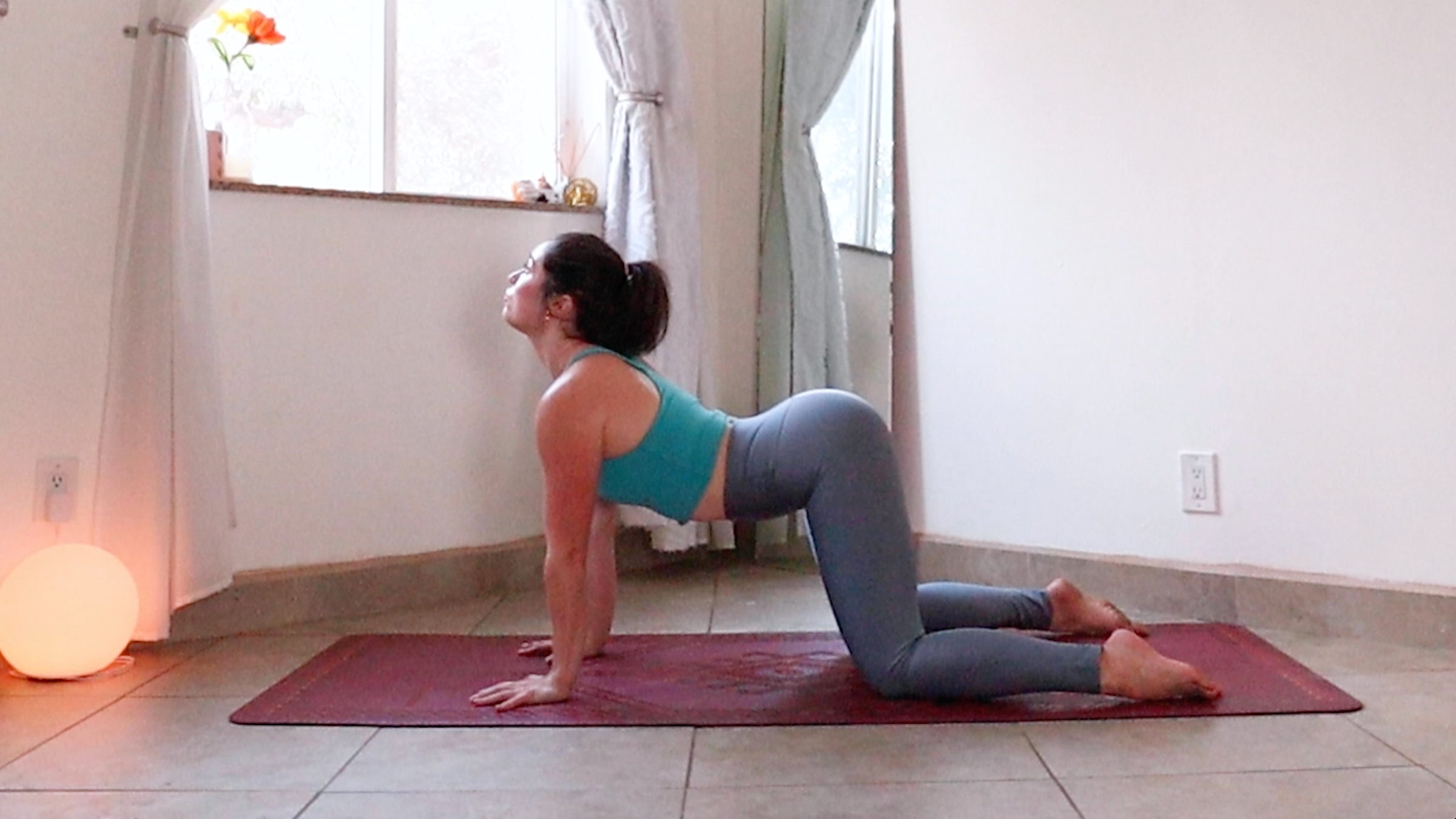
The sequence begins in a Tabletop position, grounding the practitioner by ensuring hands are firmly beneath the shoulders and knees under the hips.
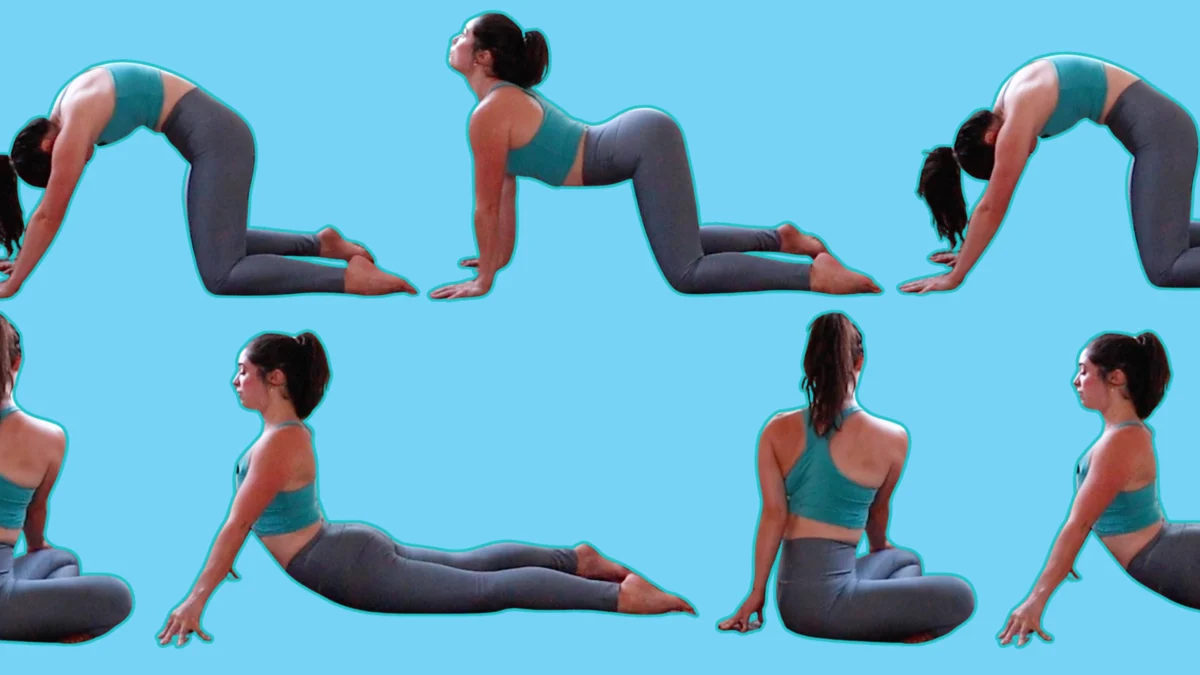
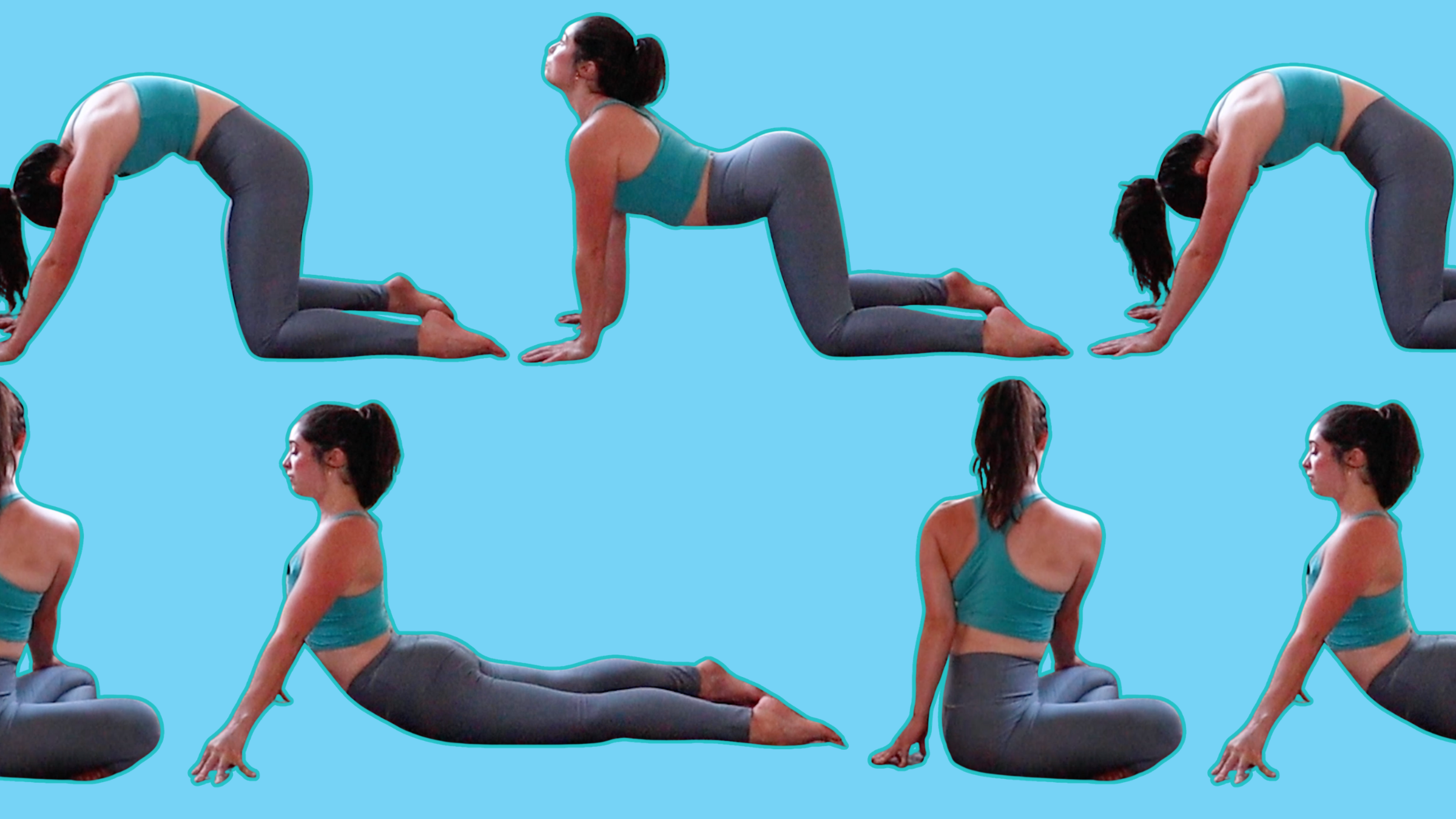
- Cow Pose: As you inhale, lower the belly toward the mat, drawing the chin and chest upward. This creates space in the anterior chain and prepares the spine for mobility.
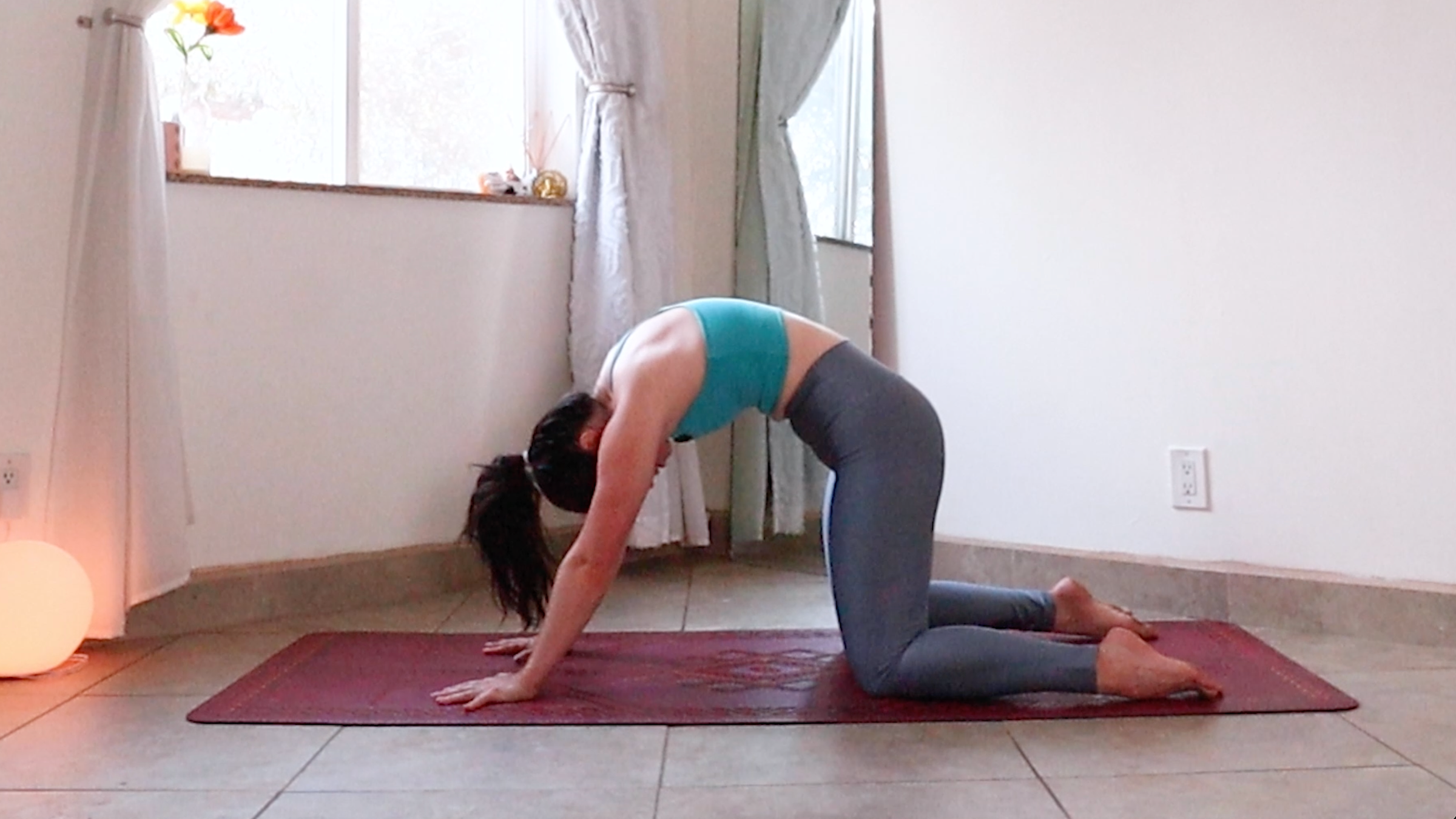
- Cat Pose: With the exhalation, the spine rounds, the chin tucks toward the chest, and the shoulder blades spread.
This rhythmic oscillation should be repeated at least five times. The objective is not perfection, but fluidity. Practitioners are encouraged to deviate from the linear path—rocking the hips side-to-side or shifting weight forward and backward—to target specific areas of latent tension.
Phase 2: Active Recovery and Spinal Decompression
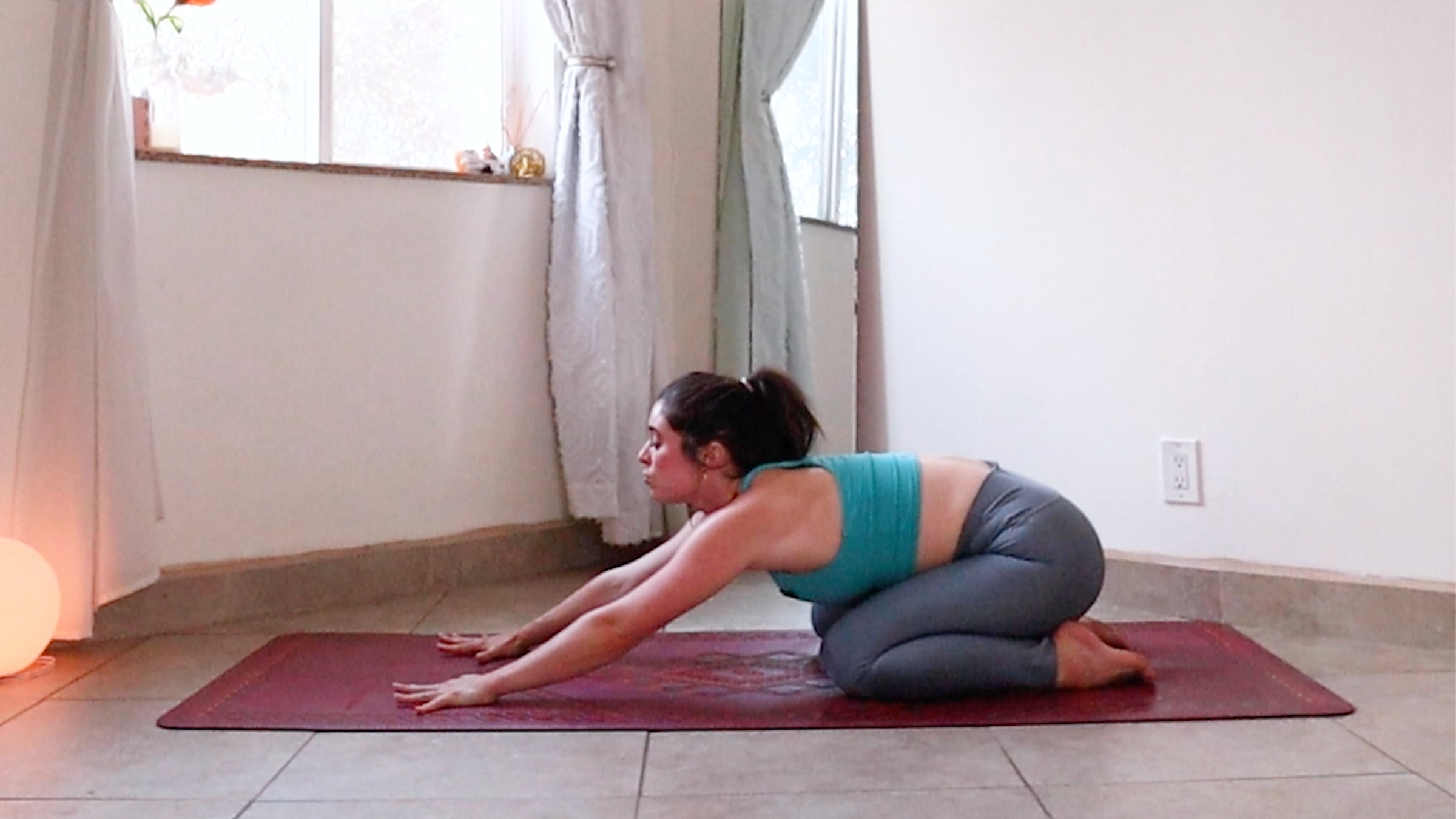
Following the initial mobilization, the sequence transitions into a Child’s Pose Variation. By rocking the sit bones back toward the heels while maintaining an active heart and forward gaze, the practitioner lengthens the spine without losing engagement.
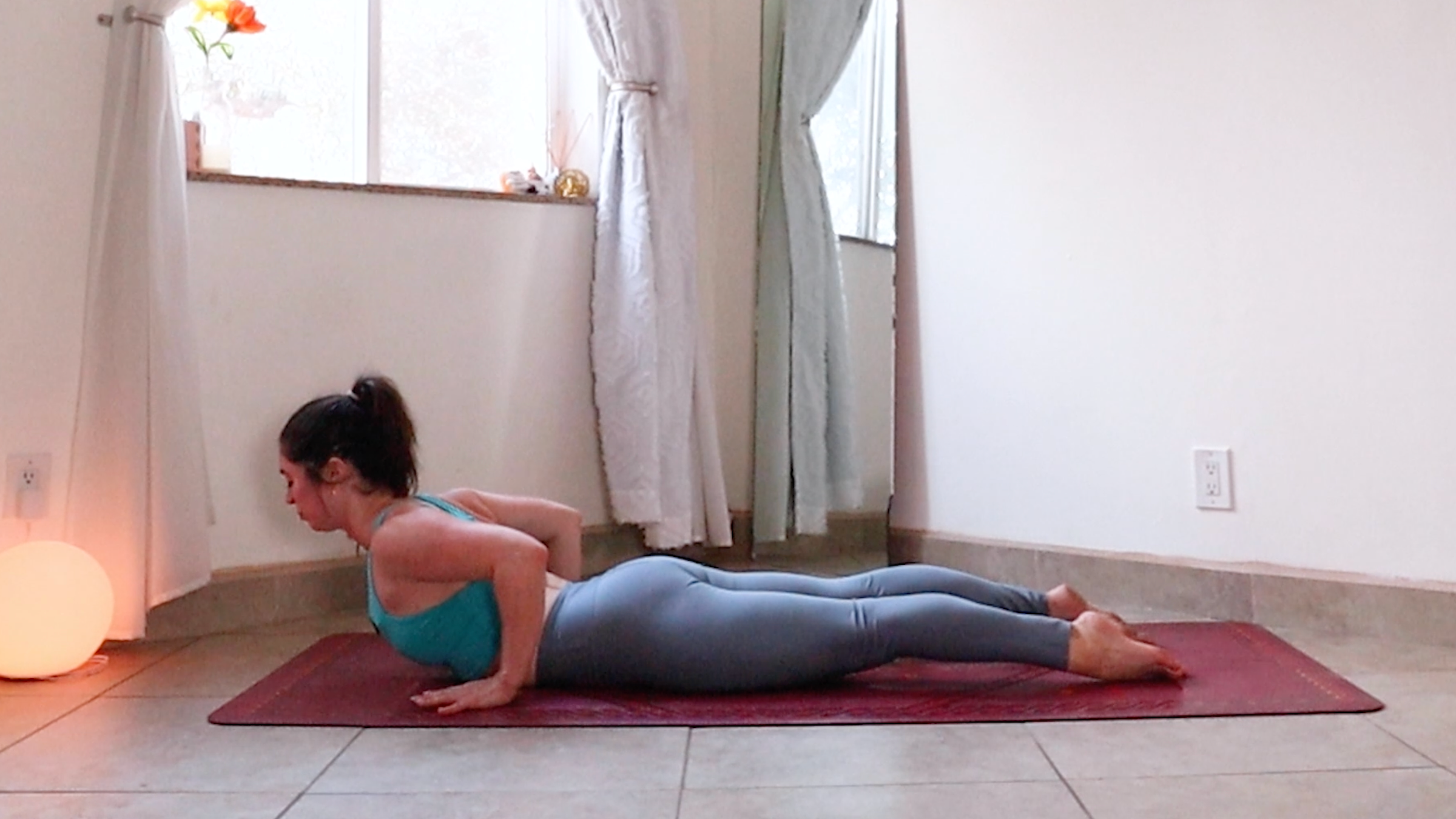
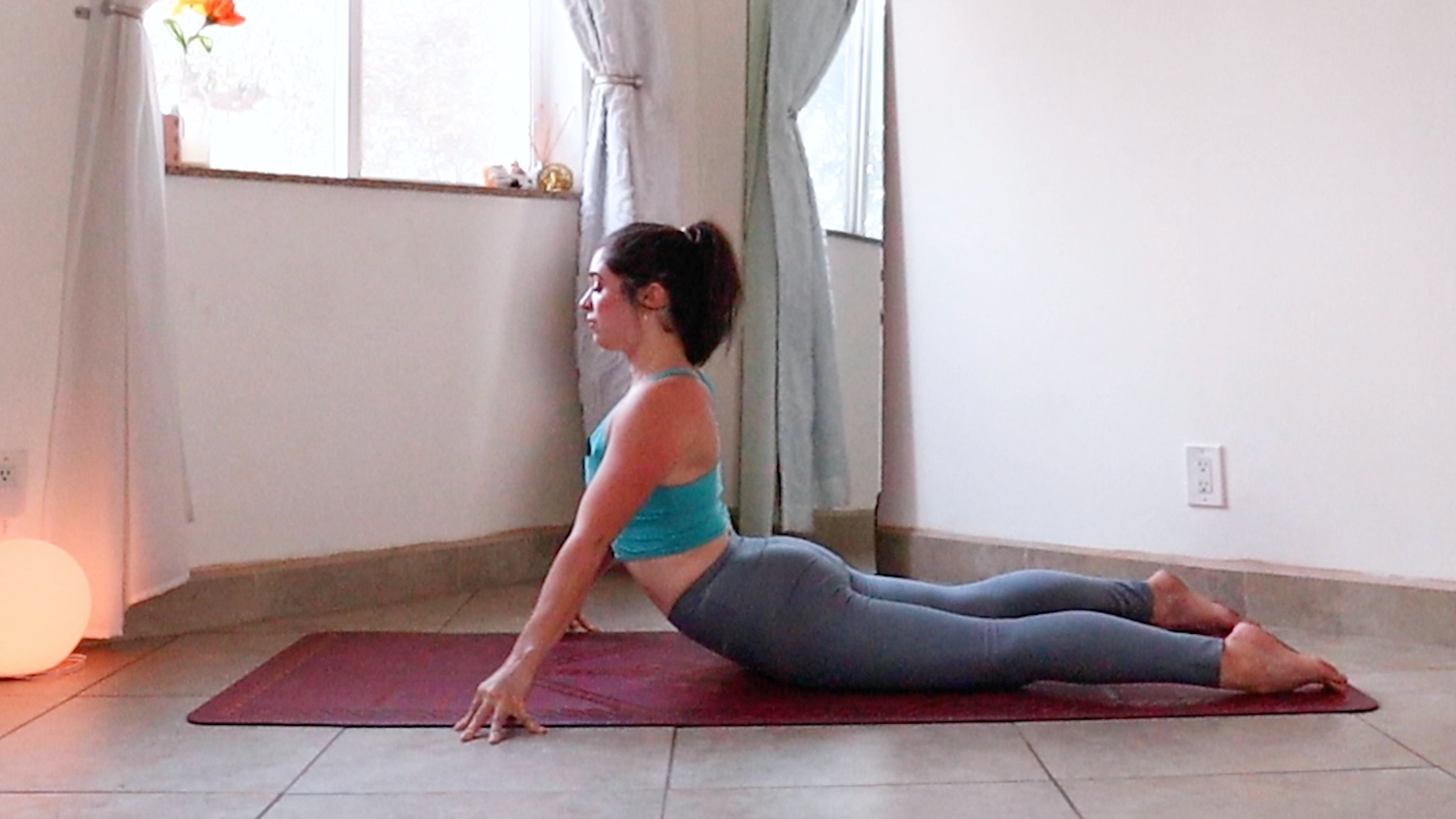
Transitioning into Baby Cobra allows for a gentle stretch of the abdominals and chest. By pressing the palms into the mat and lifting the chest to a comfortable height, the practitioner engages the posterior chain, counteracting the "slump" associated with prolonged sitting.
Phase 3: Targeted Release with "Broken Wing"
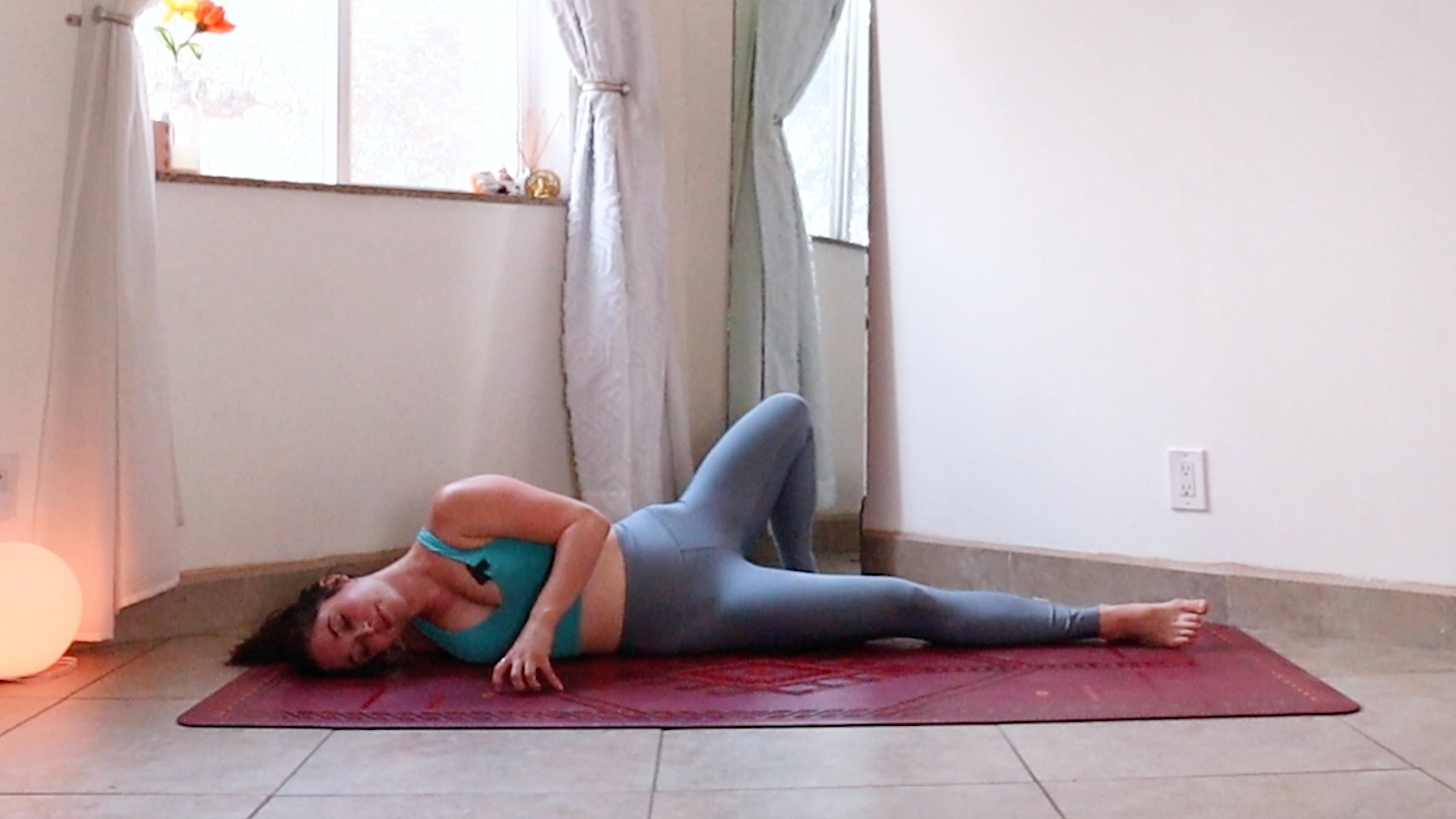
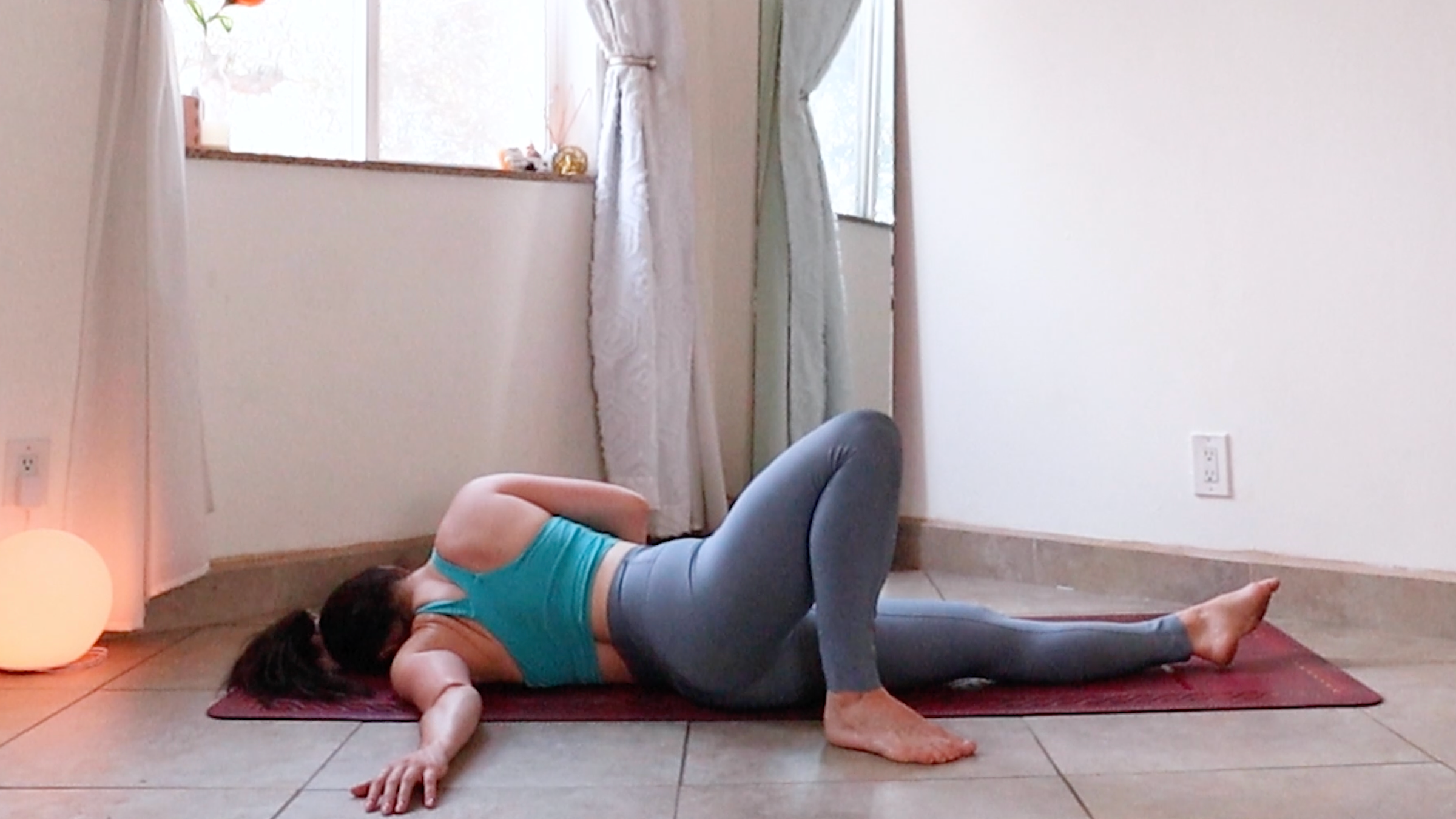
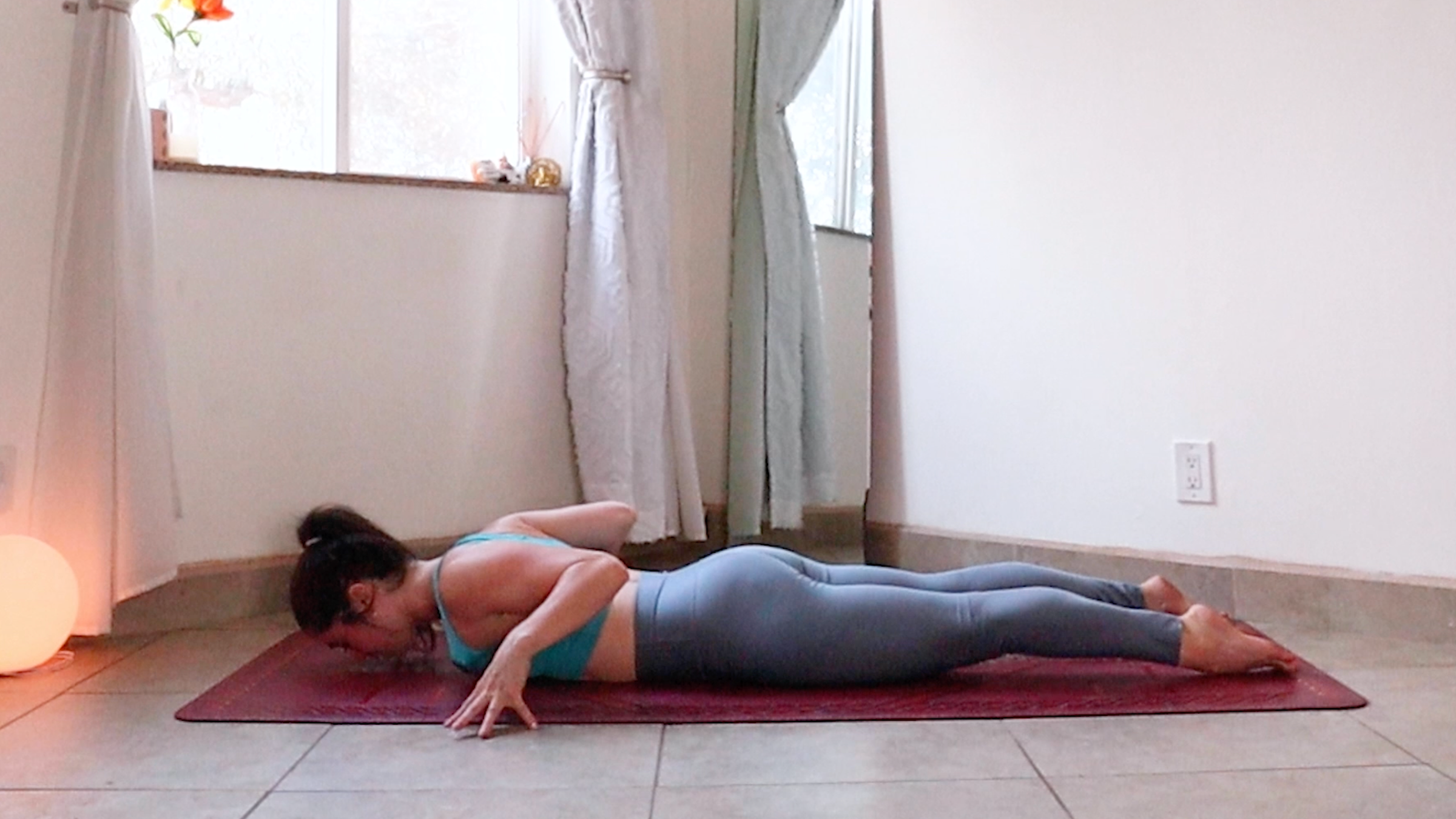
One of the most effective movements for upper-body tension is the Broken Wing pose. By extending one arm to the side in a "T" position and pressing into the opposite hand, the practitioner rolls onto their outer hip, creating a profound stretch through the shoulder girdle and pectoral muscles. This area is often the "vault" where desk workers store stress. Holding this for two rounds of breath on each side allows the fascia to begin its release process.
Phase 4: High Cobra and Kneeling Side Planks
Returning to the mat, the sequence incorporates High Cobra Lifts. By tenting the fingers and engaging the thighs, the practitioner builds controlled strength while deepening the backbend. This is followed by the Kneeling Side Plank, which focuses on lateral flexion. By reaching the top arm overhead, the practitioner opens the intercostal muscles between the ribs, facilitating deeper, more efficient breathing.
Phase 5: The "Wave" of Dynamic Movement
The concluding portion of the active phase involves the transition between Downward-Facing Dog and Plank Pose. By "waving" the spine forward into a plank and back into a dog, the practitioner facilitates spinal articulation and core activation. This dynamic movement, repeated three times, acts as a systemic flush for the body, increasing circulation and lymphatic drainage.
Implications for Daily Wellness
The implications of adopting such a routine are significant. Medical experts note that even 15 minutes of daily, conscious movement can drastically reduce the cortisol levels associated with chronic muscle tension. By creating a "mini-flow" that can be repeated as needed, the practitioner moves from a state of passive endurance to one of active self-care.
Expert Insight on Muscle Maintenance
Physical therapists suggest that the "intuitive" aspect of this flow—listening to where the body needs more time—is essential for injury prevention. "Often, we overstretch muscles that are already overtaxed," notes a leading instructor. "This flow prioritizes movement patterns over static holding, which is generally safer for the average individual."
Closing the Practice: The Internal World
The final stage of the sequence is arguably the most important: The Seated Twist and Closing.
- Seated Twist: After the dynamic movement, the seated twist helps to wring out remaining tension in the lumbar and thoracic spine.
- Closing Meditation: By concluding with 1–5 minutes of seated stillness, the practitioner integrates the benefits of the flow. This period of mindfulness is not merely "resting"—it is a conscious assessment of how the body feels.
Closing at heart center serves as a symbolic act of gratitude. It acknowledges that the body is a vessel requiring consistent maintenance and that the act of "showing up" is a victory in itself.
Conclusion: A Sustainable Habit
This 15-minute sequence is not intended to be a singular event but a sustainable pillar of a healthy lifestyle. By stripping away the complexity of modern exercise and returning to the foundational mechanics of the spine and joints, individuals can reclaim their physical agency. As you move through the remainder of your day, observe the residual effects of the practice: the ease in your shoulders, the depth of your breath, and the newfound space within your own body.
Remember, the goal of this practice is not to achieve the most aesthetic pose, but to ensure that your body remains a comfortable, fluid place to reside. Whether performed in the morning to shake off the night or in the evening to release the workday, this flow stands as a testament to the power of small, consistent actions in the pursuit of long-term health.