







In the realm of bioarchaeology, few questions have remained as contentious and enduring as the evolutionary history of Treponema pallidum—the bacterium responsible for syphilis. For decades, the presence of congenital lesions in skeletal remains has served as a "smoking gun" for researchers attempting to map the global migration of venereal syphilis. However, a groundbreaking study led by Charles Sturt University is now dismantling this diagnostic cornerstone, suggesting that the clinical markers once thought to be exclusive to syphilis may have a far more complex and ancient origin.
The research, published in the International Journal of Osteoarchaeology, provides compelling evidence from prehistoric Vietnam that non-venereal treponemal diseases—such as yaws—were capable of vertical, mother-to-child transmission thousands of years ago. This discovery not only reframes our understanding of ancient pathology but also calls for a complete reassessment of how scientists interpret the health of past populations.
The Diagnostic Paradigm Shift: A Historical Overview
The conventional wisdom in osteoarchaeology has long been rooted in a specific diagnostic binary: skeletal evidence of congenital infection was almost axiomatically equated with venereal syphilis. This assumption played a pivotal role in the "Columbian Hypothesis," a long-standing debate concerning whether syphilis was introduced to the Old World from the Americas by Christopher Columbus’s crew or if it had been present in other regions all along.
Historically, when researchers discovered dental abnormalities (often termed "Hutchinson’s teeth") or specific cranial lesions in the remains of children, they frequently categorized these findings as congenital syphilis. Because venereal syphilis is notoriously known for its ability to cross the placental barrier, its presence in ancient remains was used to confirm the existence of the disease in specific geographical contexts.
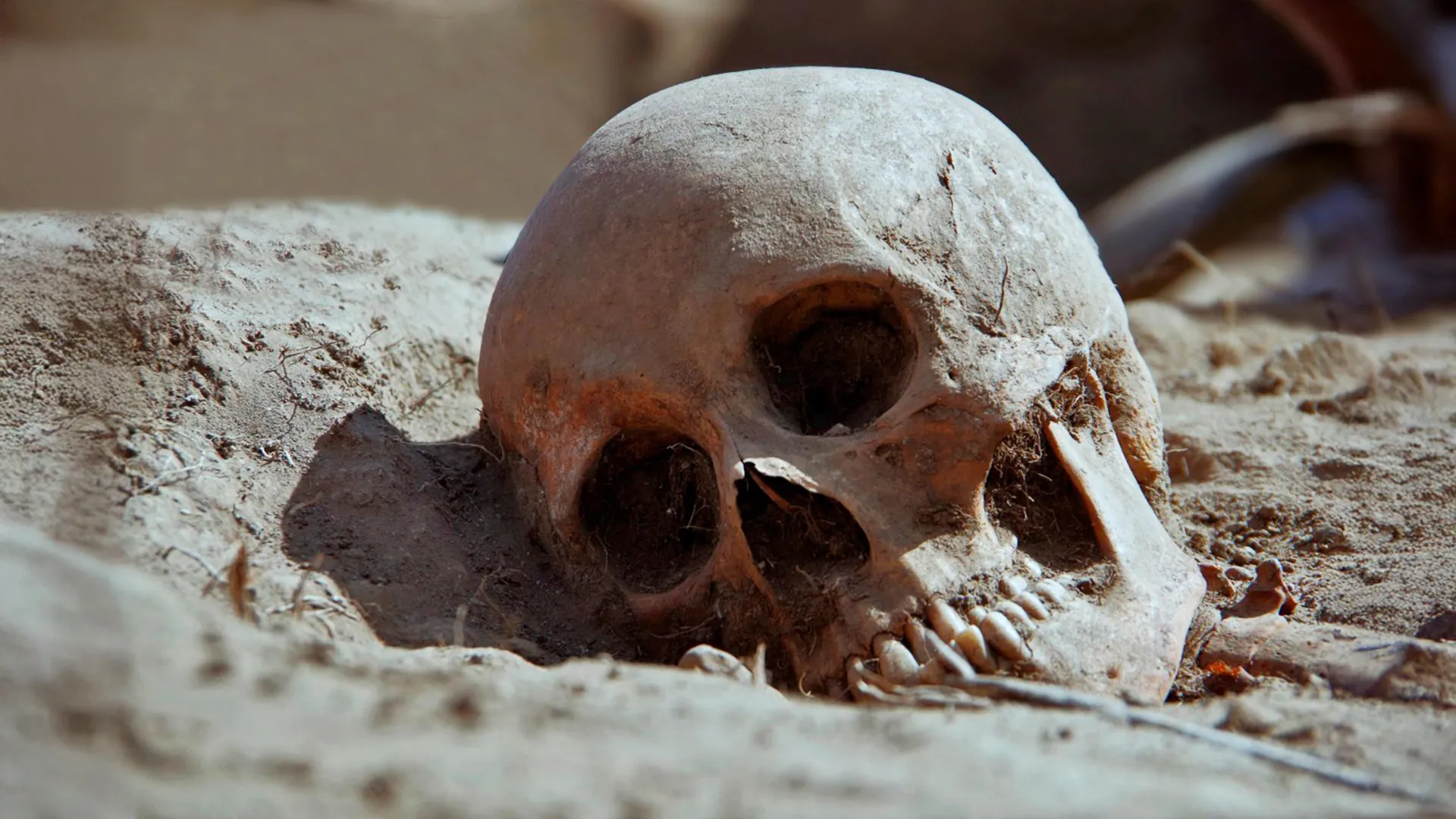
However, the international research team, led by Dr. Melandri Vlok of the Charles Sturt School of Dentistry and Medical Science, has effectively disrupted this narrative. By analyzing skeletal remains from Vietnam dating back 4,000 to 3,200 years, the team identified three children who displayed classic signs of congenital treponematosis, yet whose environmental and epidemiological context strongly contradicts a diagnosis of venereal syphilis.
Methodology and Supporting Data: The Vietnam Study
The study was an exhaustive undertaking, involving the analysis of 309 individuals across 16 archaeological sites in Vietnam, spanning a vast chronology from 10,000 to 1,000 years before the present.
The researchers focused heavily on the Man Bac site in northern Vietnam, a location that has previously yielded significant data regarding prehistoric health. Among the 309 individuals examined, only three children exhibited the diagnostic skeletal and dental lesions associated with congenital treponematosis. These lesions, which included characteristic changes to the enamel of the teeth and inflammatory markers in the long bones, were clear indicators that the children had been infected while in utero or shortly after birth.
The Epidemiological Discrepancy
The researchers noted a glaring inconsistency between the pathology and the transmission method of the disease. At Man Bac, the distribution of treponemal infection was heavily skewed toward children and adolescents. In the context of modern infectious disease, such an age profile is indicative of yaws—a non-venereal disease spread through skin-to-skin contact, common in tropical environments—rather than venereal syphilis, which is primarily transmitted through sexual activity.
"The epidemiology of the site strongly points toward a non-venereal form of treponemal disease," Dr. Vlok noted. "Yet we still see evidence of congenital transmission. That’s the surprising part."
By identifying congenital transmission in a population where the overall disease pattern is non-venereal, the researchers have effectively decoupled the "congenital" symptom from the "venereal" diagnosis. This suggests that the bacteria responsible for yaws, or other related treponemes, may have possessed the capacity for vertical transmission much earlier and more frequently than previously theorized.
Official Perspectives and Expert Commentary
The significance of these findings extends far beyond the borders of Vietnam. By proving that congenital infection is not an exclusive indicator of syphilis, Dr. Vlok and her co-authors are demanding a recalibration of the entire field of paleopathology.
"For decades, congenital infection in archaeological remains has often been taken as strong evidence of venereal syphilis," Dr. Vlok explained. "Our research shows that this assumption may not always hold true. Other treponemal diseases may also have been transmitted from mother to child. If congenital transmission can occur in non-venereal treponematoses, then we need to rethink how we interpret skeletal evidence in the past. Some cases previously labeled as congenital syphilis may represent entirely different diseases."
The collaborative nature of the study, which included experts from both Australia and Vietnam, also brought to the forefront the logistical and ethical hurdles of modern bioarchaeology. Co-lead author Ms. Minh Tran, a PhD student from the University of the Philippines, Diliman, emphasized the complexities of conducting such research in tropical environments.
"In tropical environments, recovering ancient DNA is incredibly difficult, and destructive sampling raises important ethical questions," Ms. Tran noted. "Future research must move in new directions working in genuine partnership with communities connected to these remains, considering preservation before any biomolecular work begins."
Implications for Medical History and Evolution
The implications of this study are profound, particularly regarding the "origin of syphilis" debate. If skeletal markers are no longer sufficient to distinguish between the various strains of Treponema, then the historical records we have built based on these markers may be fundamentally flawed.
The Challenge of Ancient DNA
The study highlights a major roadblock in current research: the degradation of genetic material. In tropical regions, high humidity and temperature fluctuate, often destroying DNA before it can be sequenced. This leaves researchers reliant on morphological analysis—the study of the shape and structure of bones—which, as this study proves, can be misinterpreted if diagnostic assumptions are outdated.
Without clear biological or genetic proof of pre-Columbian venereal syphilis, the scientific community is now forced to confront the possibility that the evolutionary history of the Treponema pathogen is significantly more intricate than a simple lineage of "syphilis vs. yaws."
The Adaptability of Pathogens
The study also highlights the remarkable adaptability of the Treponema bacterium. Rather than viewing these diseases as static entities, the researchers propose a more fluid model of evolution where pathogens co-evolved alongside human migration, societal development, and changing climates.
"Treponemal diseases have a far more complex history than we once thought," Dr. Vlok concluded. "Understanding that complexity is essential if we want to reconstruct how infectious diseases shaped human history. Especially as treponemal disease like yaws is re-emerging due to the climate crisis."
Conclusion: A Call for Future Research
The work conducted by the Charles Sturt University team serves as a cautionary tale for the scientific community: be wary of legacy assumptions. As our analytical tools improve, so too must our interpretative frameworks.
Moving forward, the field of osteoarchaeology is likely to see a pivot toward more integrated approaches, combining traditional skeletal analysis with community-led ethical standards and, where possible, advanced biomolecular techniques. By recognizing that congenital transmission is a biological capability shared by a wider spectrum of treponemal bacteria than previously recognized, researchers can now begin to untangle the true, complex history of these ancient diseases.
This study does not simply provide a new answer to an old question; it fundamentally changes the nature of the inquiry itself, proving that in the study of human evolution, the smallest details—such as the marks on a child’s teeth—can hold the power to rewrite our collective past.