





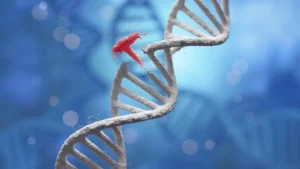


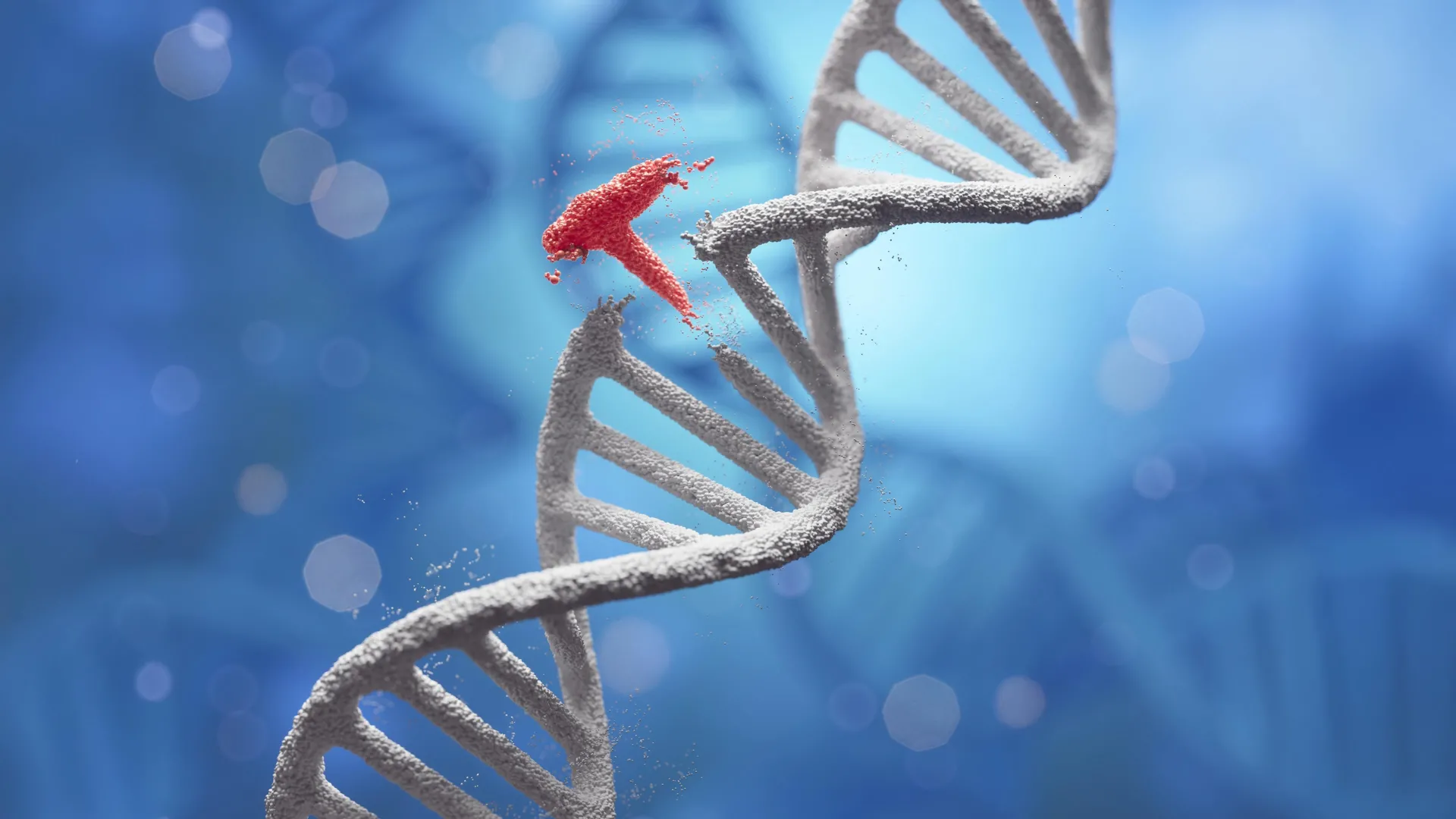
DNA—the fundamental blueprint of life—is a long, complex molecular chain that governs everything from the color of a flower to the susceptibility of a human to disease. For decades, scientists have sought to "edit" this blueprint with the same ease that a writer edits a manuscript. While genetic engineering has made monumental strides, the physical tools for cutting and stitching DNA have remained surprisingly rigid.
Now, a team of researchers in Japan has unveiled a breakthrough that could reshape the field of synthetic biology. By harnessing the unique properties of silver nanoparticles, scientists have developed a method to cut and reconnect DNA strands with unprecedented efficiency and precision. Published in the journal Nucleic Acids Research, this study describes a technique that outperforms conventional enzymatic methods by up to five times, opening new doors for gene therapy, synthetic biology, and the creation of life-saving medicines.
The Challenge: The Limitations of "Biological Scissors"
To understand the significance of this discovery, one must first understand the current state of genetic engineering. Scientists typically use "restriction enzymes"—proteins that function like molecular scissors—to cut DNA at specific, pre-determined sequences. Once cut, these fragments are rejoined using an enzyme called T4 DNA ligase.
However, this traditional "cut-and-paste" approach is fraught with technical hurdles. Restriction enzymes are highly selective; they only recognize specific DNA sequences. If a target site does not contain the exact sequence required by the enzyme, the scientist is effectively blocked from making a cut. Furthermore, these enzymes often produce very short "sticky ends"—the overhanging, single-stranded DNA sequences that allow fragments to bind to one another. Short sticky ends are inherently unstable, leading to low binding efficiency and unreliable assembly.
For years, researchers have looked for a more flexible, chemical-based alternative to these biological enzymes, but previous attempts—most notably those utilizing silver ions—suffered from poor recovery rates and non-specific reactions that damaged the very genetic material they were meant to modify.
A Chronology of Innovation
The Early Hurdle: Silver Ions
The seeds of this discovery were sown in the early 1990s, when researchers first discovered that silver ions could catalyze the cleavage of 3′-thiol-modified DNA. While theoretically promising, the method was practically unusable. When applied to DNA, silver ions acted inconsistently, attaching to random locations along the strand and causing the DNA to precipitate (clump together and fall out of solution). In early trials, the recovery rate of usable DNA was a meager 14%, making the process far too inefficient for modern laboratory standards.
The Shift to Nanotechnology
In a recent collaborative effort, Professor Hiroshi Abe and Assistant Professor Masahito Inagaki from Nagoya University, alongside Professor Natsuhisa Oka from Gifu University, revisited this chemical reaction with a modern twist. They hypothesized that if they transitioned from silver ions to silver nanoparticles, they could maintain the cleavage power while gaining control over the reaction environment.
By using nanoparticles, the team discovered they could easily separate the "scissors" from the "material" through centrifugation. This simple mechanical shift solved the primary problem of the 1990s: the purification of the final product.
Optimizing for Stability
The team’s initial experiments with silver nanoparticles were effective but required extreme heat—up to 95°C—to reach near-complete cleavage. Such temperatures are catastrophic for long-chain DNA, which tends to degrade or denature under prolonged thermal stress.
The breakthrough came when the team coated the silver nanoparticles with polyethylene glycol (PEG). This water-soluble polymer acted as a stabilizer, preventing the nanoparticles from clumping and allowing the reaction to proceed efficiently at much lower, biological temperatures. By optimizing these conditions, the researchers achieved a 91% cleavage efficiency at a gentle 50°C in just one to two hours.
Supporting Data: Why Efficiency Matters
The power of this new method lies in the "sticky ends." Because the silver nanoparticle method is not restricted by the rigid sequence requirements of traditional enzymes, researchers can design much longer, more stable sticky ends.
The Comparison Metrics
- Traditional Restriction Enzymes: Typically limited to short, 4-base overhangs. The team’s data showed that these produced a joining efficiency of only 8%.
- Silver Nanoparticle Method: The researchers successfully engineered 8-base and even 18-base overhangs. With the 18-base overhang, the joining efficiency soared to 44%—a fivefold increase in efficacy compared to the standard 4-base approach.
- Recovery Rates: Thanks to the "built-in purification effect"—where unwanted DNA fragments remain attached to the nanoparticle surfaces while the desired fragments remain in the solution—the recovery rate jumped from the original 14% to a staggering 98%.
To prove the practical utility of this method, the team performed a "functional test." They assembled a DNA fragment encoding Green Fluorescent Protein (GFP)—a standard marker used in biology—and introduced it into human HeLa cells. The cells successfully expressed the protein, proving that the DNA assembled by the silver nanoparticles was not only intact but biologically active and capable of being "read" by living machinery.
Official Responses and Perspectives
Assistant Professor Masahito Inagaki, the study’s first author, emphasized that the goal was never just to find a new way to cut DNA, but to find a better way to build it.
"We believe this technology will be useful for synthesizing genomic DNA," Inagaki noted in an official statement. "We have shown that two DNA fragments can be joined. Now, the challenge is to determine whether multiple fragments can be joined simultaneously."
The implications for the industry are significant. By moving away from the expensive and sequence-dependent nature of restriction enzymes, researchers can reduce the cost and time required for high-level synthetic biology. This is particularly relevant for the development of mRNA libraries—the backbone of the latest generation of cancer vaccines—and the creation of artificial protein drugs that require the precise assembly of long, complex genetic sequences.
Implications: The Future of Synthetic Biology
The ability to assemble DNA at scale is the "Holy Grail" of modern biotechnology. Currently, the most ambitious projects in synthetic biology, such as the creation of synthetic yeast genomes or the design of entirely new bacterial strains, are limited by the difficulty of stitching together thousands of smaller DNA fragments.
1. Advancements in Gene Therapy
Gene therapy involves replacing faulty genes with healthy ones. Current methods often struggle to deliver large, complex genes into cells because the assembly of these genes is so labor-intensive. The efficiency gains offered by the Nagoya-Gifu team could accelerate the development of therapies for complex genetic disorders that were previously considered "un-tinkerable."
2. mRNA and Cancer Vaccines
The COVID-19 pandemic highlighted the speed at which mRNA technology can be deployed. However, the creation of mRNA libraries for personalized cancer vaccines requires the rapid and accurate assembly of various DNA templates. This silver nanoparticle technique offers a scalable, high-recovery method that could drastically shorten the bench-to-clinic timeline for these life-saving immunotherapies.
3. Genome-Scale Engineering
The next frontier for the research team is multi-fragment assembly. If the method can be refined to connect several pieces of DNA in a single reaction vessel, it could allow for "genome-scale" synthesis. This would enable scientists to build entire metabolic pathways into crops, creating plants that are more resilient to climate change, require less fertilizer, or produce higher nutritional yields.
Conclusion
The transition from silver ions to PEG-coated silver nanoparticles represents a triumph of chemical engineering over biological limitations. By solving the dual problems of cleavage efficiency and DNA recovery, Professor Abe and his team have provided the scientific community with a versatile, robust, and highly efficient tool for the next generation of genetic discovery.
As the team looks toward the future, the focus remains on scalability. If the promise of joining multiple fragments simultaneously is realized, this method may well become the new standard in molecular biology labs worldwide. In the complex, microscopic world of DNA, the simplest solutions—like a coat of polymer and a pinch of silver—often lead to the most profound shifts in our understanding of life itself.
Funding Disclosure: This research was supported by the Japan Science and Technology Agency (JST) and the Japan Agency for Medical Research and Development (AMED), with additional support from the Tanaka Kikinzoku Memorial Foundation.