




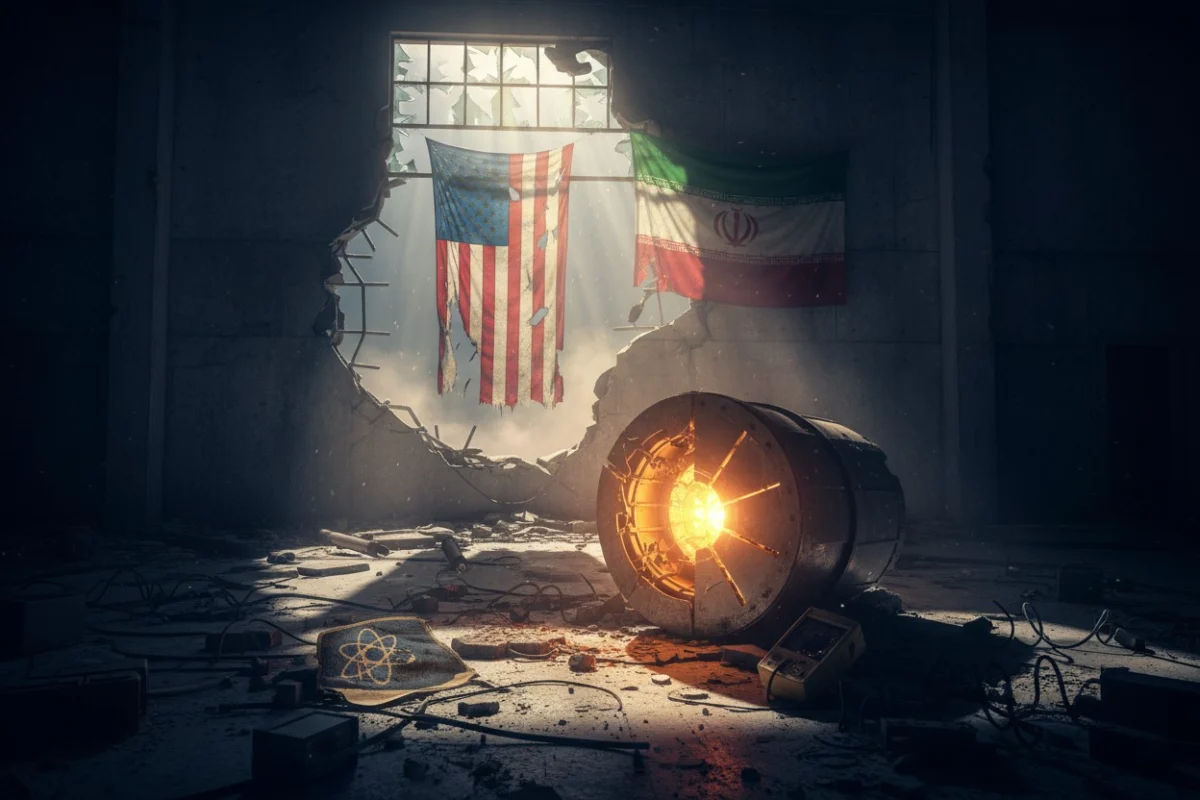
VIENNA — The fragile architecture of international diplomacy faced a severe stress test this week as the United States successfully blocked Mohammad Eslami, the head of the Atomic Energy Organization of Iran (AEOI), from attending the International Atomic Energy Agency (IAEA) General Conference in Vienna. The move, which prevented the top Iranian official from entering Austria, has sent shockwaves through the diplomatic community, prompting accusations of "visa lawlessness" from Moscow and fueling fears that the last remaining channels for nuclear de-escalation are rapidly closing.
The travel ban, enforced via the revocation of an Austrian visa, was the direct result of a U.S. veto within the UN Security Council sanctions committee. As the world watches the Strait of Hormuz—currently paralyzed by a shipping blockade—and monitors the ongoing, volatile conflict involving Iran and Israel that ignited in late February, the exclusion of Tehran’s primary nuclear interlocutor signals a dangerous shift from negotiation to total diplomatic isolation.
The Chronology of a Collapsing Accord
The exclusion of Eslami is not an isolated event but rather the latest chapter in a long-standing erosion of the 2015 Joint Comprehensive Plan of Action (JCPOA). To understand the severity of this week’s developments, one must look at the timeline of the unraveling agreement:
- 2015: The JCPOA is signed, providing Iran with sanctions relief in exchange for verified constraints on its nuclear enrichment program.
- 2018: The United States, under the Trump administration, unilaterally withdraws from the deal, initiating a "maximum pressure" campaign.
- 2025 (Last Year): France, Britain, and Germany invoke the "snapback" mechanism under the JCPOA, arguing that Iran’s continuous expansion of enrichment activities constituted a material breach of the deal. This move automatically reinstated a raft of UN sanctions, including travel bans on key Iranian nuclear and military officials.
- February 2026: A broader regional conflict between Iran and Israel erupts, further complicating the already frozen nuclear negotiations.
- August 2026: The 60-day deadline for the revival of nuclear talks passes without progress, effectively rendering the existing diplomatic framework dormant.
- September 2026: Austria, acting under pressure from the UN Security Council, revokes Mohammad Eslami’s visa after the U.S. blocks a requested exemption, leading to the current diplomatic standoff.
The Legal Battlefield: Snapback Sanctions and "No-Objection" Rules
At the heart of the dispute lies the technicality of the UN Security Council’s sanctions committee. While the IAEA headquarters agreement—a binding legal document between the UN and Austria—generally mandates that host nations provide access to member-state representatives, the "snapback" sanctions triggered by the E3 (France, Britain, and Germany) created a legal conflict.
The sanctions mandate a strict travel ban on individuals associated with Iran’s nuclear and ballistic missile infrastructure. While host countries like Austria can theoretically request waivers for UN-sanctioned events, the committee operates on a "no-objection" basis. This means a single member of the Security Council—in this instance, the United States—can veto an exemption without having to provide a legal justification.
U.S. Ambassador Preston Wells Griffith III defended the decision in a press briefing, stating, "The United States will not permit the Iranian regime to exploit IAEA proceedings as a stage for state-sponsored propaganda. We cannot allow those who sidestep substantive cooperation on nuclear transparency to use the halls of Vienna to manipulate international opinion."
Official Responses: A Global War of Words
The reaction from Tehran was immediate and vitriolic. Iran’s ambassador to the IAEA, Reza Najafi, characterized the move as a flagrant breach of the IAEA headquarters agreement. "This is a violation of the host country’s obligation and a direct assault on the rights of a sovereign member state," Najafi told delegates during the opening session. "If the IAEA cannot protect the right of a member to attend its own statutory meetings, its credibility as a neutral arbiter is effectively dissolved."
In Tehran, the Ministry of Foreign Affairs summoned the Austrian charge d’affaires to deliver a formal protest. Spokesman Esmail Baghaei suggested that the move was orchestrated by the U.S. to "provide political cover" for the ongoing war in the region. Baghaei argued that the IAEA is increasingly being co-opted into a "threat narrative" that ignores the realities on the ground.
Russia, a key ally of Tehran, did not mince words. Russian envoy Mikhail Ulyanov lashed out at the Western bloc, accusing them of engaging in a "campaign of visa lawlessness." Ulyanov noted that the use of travel restrictions to settle political scores sets a "destructive precedent" that threatens the future of all multilateral organizations located in Europe.
Implications: The High Cost of Isolation
The implications of this incident extend far beyond the absence of one official. The blocking of Eslami represents a strategic move toward "diplomatic containment," but it carries significant risks:
- Erosion of Oversight: By limiting the ability of Iranian officials to engage in dialogue, the international community risks pushing Tehran toward further opacity. If Iran feels it is being systematically barred from international forums, it may see little incentive to maintain current levels of IAEA access to its nuclear sites.
- The "Neutrality" Crisis: The IAEA’s status as a neutral technical body is predicated on its independence from the geopolitical agendas of the P5 members. When the host nation of a UN agency is forced to deny access to a member state based on the dictates of a single superpower, the agency’s technical credibility is compromised.
- Regional Instability: With the Strait of Hormuz currently closed to standard shipping—a move that has sent energy markets into a tailspin—the diplomatic freeze makes it significantly harder to negotiate a de-escalation of the broader regional war.
- The Russia-Iran Pivot: With the impending ratification of a mutual defense treaty between Moscow and Tehran, the exclusion of Iranian officials from Western-aligned forums may accelerate the formation of an alternative diplomatic bloc, further bifurcating the international order.
Historical Context and the Path Ahead
The shadow of history looms large over these events. Despite the current tensions, Iran continues to rely on the 2007 National Intelligence Estimate (NIE), which concluded with "high confidence" that Iran had ceased its nuclear weapons program in 2002, to argue that its current activities are strictly peaceful and protected under the Nuclear Non-Proliferation Treaty (NPT).
Meanwhile, the rhetoric from Washington remains inconsistent. While the U.S. administration enforces strict travel bans, President Donald Trump has recently signaled a paradoxical openness to dialogue, stating on his Truth Social platform that "the failing Nation of Iran wants to make a deal, quickly and badly." This discrepancy between the administration’s hardline diplomatic actions and the President’s personal rhetoric creates a confusing signal for Tehran, leaving them unsure of whether to prepare for further escalation or an eventual return to the negotiating table.
IAEA Chief Rafael Mariano Grossi, who has spent the last year attempting to navigate the geopolitical minefield, continues to push for a technical path forward. In his opening address, he maintained that the agency remains "stubbornly optimistic" about resolving outstanding safeguards issues. However, as the diplomatic doors in Vienna are slammed shut, that optimism appears increasingly detached from the reality of a world moving toward deeper fragmentation.
As this standoff continues, the international community faces a sobering realization: the mechanisms designed to prevent nuclear proliferation are being repurposed as tools of political warfare. When dialogue is replaced by visa denials, and when the neutral ground of Vienna becomes a battleground for sovereign states, the threshold for conflict inevitably lowers. Whether the IAEA can regain its footing as a neutral broker, or if it will be permanently relegated to a secondary role in a world of hardening blocs, remains the most pressing question in international security today.