








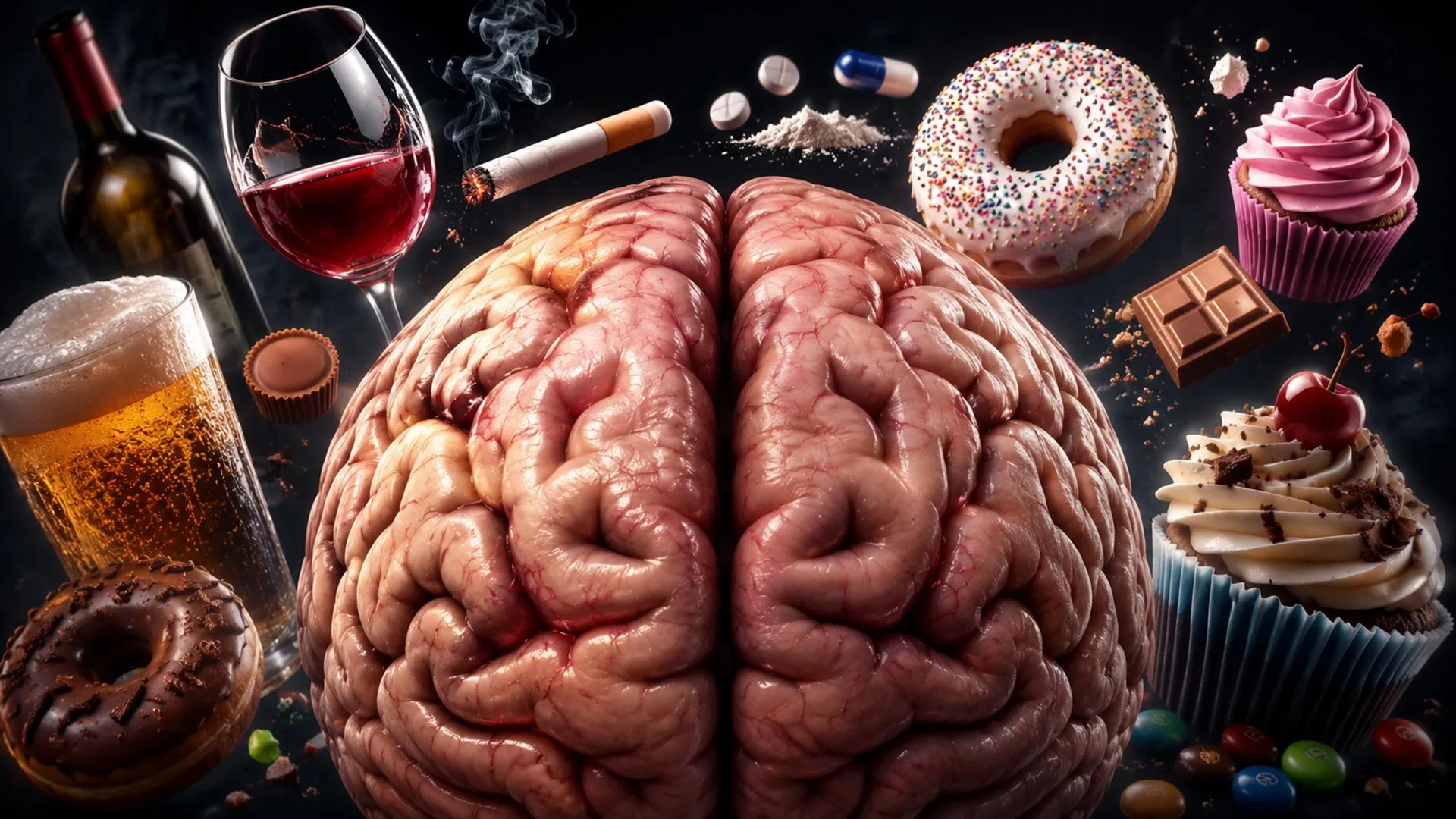
For decades, the mental image of a perfectly seared burger or the crisp, golden pour of a cold pint of beer has been understood as a powerful driver of human behavior. This cognitive link between thinking and doing serves an evolutionary purpose: it motivates us to seek out the essential resources—calories, hydration, and social connectivity—necessary for survival. However, in an era of hyper-palatable processed foods and widespread substance accessibility, this ancient reward circuitry often malfunctions, leading to a spectrum of disorders ranging from clinical obesity to severe substance use disorders.
For years, neuroscience struggled to pinpoint exactly where this "craving" originates. Now, a breakthrough in the form of a new class of weight-loss medications—GLP-1 agonists like Ozempic and Wegovy—has provided researchers with an unexpected, high-resolution lens through which to observe and potentially intercept the neural pathways of addiction.
The Main Facts: A Paradigm Shift in Neuropharmacology
GLP-1 receptor agonists were originally engineered to mimic the glucagon-like peptide-1 (GLP-1) hormone. Their primary clinical function is to stimulate insulin release, slow gastric emptying, and enhance satiety. By helping patients manage blood sugar levels, these drugs revolutionized the treatment of type 2 diabetes. Yet, the secondary effects observed in clinical settings were profound: patients reported not only significant weight loss—rivaling the outcomes of bariatric surgery—but also a mysterious, widespread "quieting" of cravings for alcohol, nicotine, cocaine, and opioids.
The implications are seismic. If a single class of drugs can suppress the urge for both food and illicit substances, it suggests that the brain’s "reward system" is far more interconnected than previously believed. We are moving away from a siloed understanding of addiction, where food and drugs are treated as distinct neurological phenomena, toward a unified theory of desire controlled by a centralized neural hub.
Chronology of Discovery: From Septal Rage to Molecular Targets
The journey to understanding this phenomenon began long before the advent of modern GLP-1 drugs.
- 1953: Behavioral researchers Joseph Brady and Walle Nauta identified the "lateral septum," a brain region whose injury in animal models led to "septal rage"—a state of heightened aggression. Conversely, stimulating this area appeared to have a calming effect, suggesting the lateral septum played a vital role in emotional regulation.
- 1970s: Early studies began to document the link between vivid mental imagery and the onset of drug-seeking behavior, establishing that cravings were not just chemical, but cognitive.
- 2000s–2010s: As GLP-1 agonists were deployed for diabetes, anecdotal reports of "reduced food noise" began to emerge. Simultaneously, preclinical animal models began showing that these drugs could dampen self-administration of cocaine and amphetamines.
- 2023–2024: Advanced neuroimaging and mapping studies identified that the lateral septum is not just an emotional regulator, but a critical node in the brain’s memory-reward network. Recent lab findings, including those from our own research, have shown that GLP-1 drugs physically modulate the activity in the lateral septum, effectively "turning down the volume" on the signals that drive consumption.
Supporting Data: Mapping the Reward Circuitry
For decades, neuroscientists focused their attention on the ventral tegmental area (VTA) and the nucleus accumbens (NAc)—the brain’s primary dopamine-producing "reward centers." These regions are responsible for the dopamine spikes that make us feel good when we consume a reward. However, they lacked a significant density of GLP-1 receptors, leaving researchers searching for the "upstream" mechanism that dictates why we crave a specific reward in the first place.
The search led back to the lateral septum. Unlike the dopamine-producing regions, the lateral septum is densely packed with GLP-1 receptors. Furthermore, it receives direct input from the hippocampus—the brain’s seat of episodic memory.
The hippocampus houses "place cells," which map our position in space and time. New research has revealed that the lateral septum also contains place cells, but with a critical twist: they respond to the value of a location. They effectively cross-reference the question "Where am I?" with the evaluation "What is good here?"
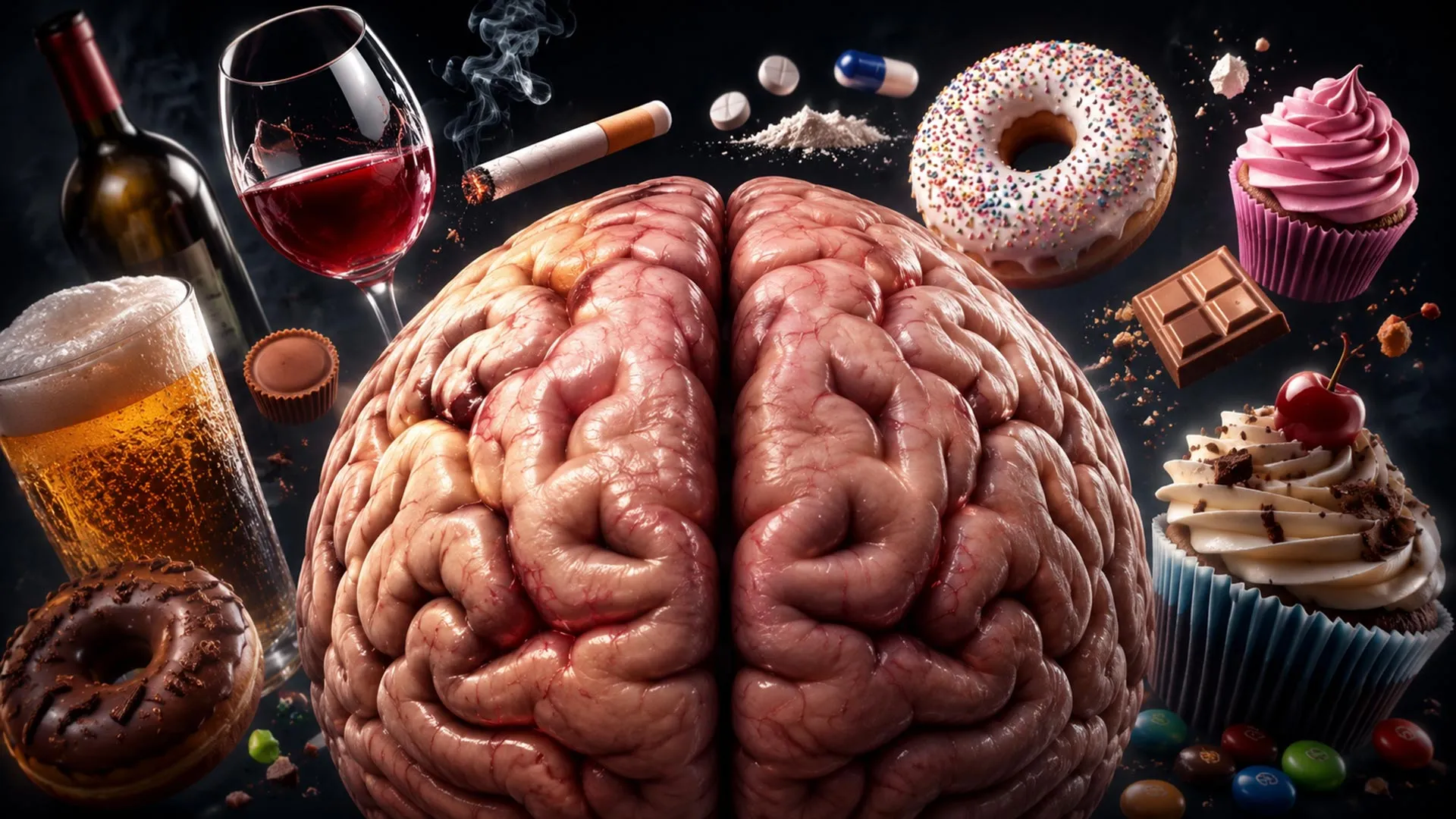
When the lateral septum determines that a specific context is associated with a reward, it communicates that information to the dopamine-producing machinery. By acting on the lateral septum, GLP-1 agonists appear to interrupt this communication chain at the source. They prevent the "thought" of the reward from successfully triggering the "wanting" mechanism, effectively breaking the link between the mental image of a burger or a drink and the subsequent behavior of seeking it out.
Official Responses and Clinical Observations
The medical community has greeted these findings with a mixture of excitement and cautious optimism. Dr. Scott Isaacs, a leading endocrinologist, has noted that the "calming" of the brain’s reward center explains why patients often describe the experience of taking these drugs as being "released from the shackles" of constant food preoccupation.
However, clinical bodies such as the American Society of Addiction Medicine (ASAM) emphasize that while GLP-1 agonists are a powerful biological tool, they are not a "cure-all" for the psychological and environmental complexities of addiction. The consensus among leading researchers is that these drugs should be viewed as a form of "neural circuit stabilization." By reducing the intensity of cravings, these drugs provide patients with the "cognitive space" needed to engage in traditional behavioral therapies and lifestyle changes.
Implications: The Future of Addiction Treatment
The discovery that the lateral septum is a primary target for GLP-1 drugs is, in effect, a map to the home of human cravings. This shift in understanding has three primary implications for the future of medicine:
1. Broad-Spectrum Addiction Therapy
If the lateral septum is a universal gateway for cravings, it suggests that GLP-1 agonists could eventually be used as a front-line treatment for a wide range of dependencies. Clinical trials are already underway to assess their efficacy in treating Alcohol Use Disorder (AUD) and nicotine dependence.
2. Personalized Neuroscience
Understanding that these drugs work by modulating the "what is good in this place" signal from the hippocampus suggests that treatment could eventually be personalized. By analyzing how an individual’s lateral septum processes environmental cues, doctors might one day predict which patients will respond best to GLP-1 therapy versus traditional neurological interventions.
3. A New Ethical Framework for Obesity and Addiction
The most significant implication is perhaps the destigmatization of these conditions. By identifying a clear, biological mechanism—the lateral septum’s over-responsiveness to environmental cues—we can move away from viewing addiction and obesity as failures of "willpower." Instead, they are recognized as a miscalibration of the brain’s navigation and reward-processing systems.
As we continue to map the lateral septum, we are moving closer to a future where we can surgically or pharmacologically manage the "noise" of addiction. We are not just learning how to treat obesity; we are learning how the human brain constructs desire, and for the first time, we have the tools to change that construction. The "permanent present tense" of the addict, characterized by an inability to move past the immediate craving, may finally have a pathway toward a future where the mind is no longer held captive by the memory of a reward.