





By Industry Analysis Desk
September 16, 2026
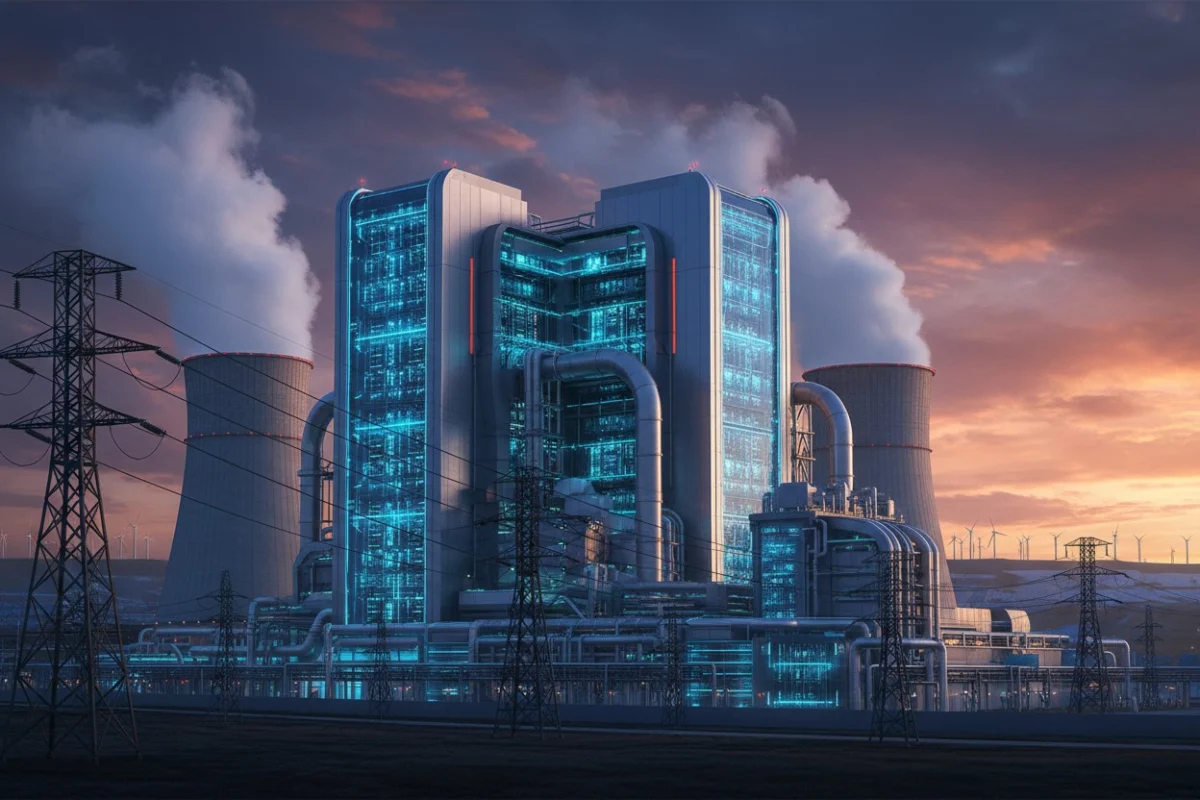
The rapid ascent of artificial intelligence is no longer merely a story of software breakthroughs and venture capital; it has become one of the most consequential drivers of American energy policy in the 21st century. According to a revised outlook published on September 14, 2026, by BloombergNEF, U.S. data centers are now projected to consume a staggering 15 billion cubic feet of natural gas per day for electricity generation by 2035.
This figure represents a seismic shift in energy forecasting. It is more than double the estimate of 6.9 billion cubic feet per day published by the same firm just nine months earlier in December 2025. As the AI arms race intensifies, the sheer volume of fuel required to power the massive computing clusters housing large language models is placing an unprecedented strain on the U.S. electrical grid and triggering a fierce national debate over climate goals, economic competitiveness, and energy security.
The Scale of the Buildout: A $110 Billion Infrastructure Surge
The sheer scale of this energy demand is difficult to comprehend. If the 15 billion cubic feet per day projection holds, U.S. data centers alone would consume more natural gas than every country on Earth, with the exception of China, Russia, Iran, and the United States itself. For perspective, Germany—the largest economy in Europe—consumes roughly 9 billion cubic feet of natural gas per day for its entire economy. By 2035, American data centers are expected to burn through significantly more gas than the entirety of Germany’s industrial, residential, and commercial sectors combined.
To meet this demand, Moody’s estimates that the U.S. requires more than 30 gigawatts of new gas-fired power generation, part of a massive $110 billion power-plant buildout. Data from S&P Global indicates that orders for heavy-duty gas turbines have reached their highest levels since the year 2000, as tech giants and utilities scramble to secure the hardware necessary to bring online the next generation of data centers.
This buildout comes with a significant environmental price tag. Bloomberg reporting from August 2026 suggests that the proposed gas plants specifically tied to data center expansion could increase total U.S. power-sector carbon emissions by 20%, potentially derailing long-term net-zero climate commitments.
A Grid in Crisis: From PJM to Texas
The pressure is already manifesting as a systemic crisis for the nation’s power grids. The PJM Interconnection, the largest regional power grid in the U.S., is currently launching an emergency plan to secure 15 gigawatts of new generation to offset the surging load from AI-driven facilities. Grid operators have issued dire warnings of a potential 60-gigawatt shortfall within the next decade—a gap that threatens to undermine energy reliability for approximately 65 million people.
The financial fallout is already being felt by consumers. The most recent PJM capacity auction reached a record-breaking $16.1 billion, and electricity prices in affected regions have spiked to 33 cents per kilowatt-hour—a rate roughly four times higher than the current average in China.
Texas, often viewed as the frontier of the energy transition, is seeing similar volatility. The Electric Reliability Council of Texas (ERCOT) reported that grid connection requests have ballooned to 99 gigawatts, up from 40.8 gigawatts just one year ago. This demand is a complex cocktail of AI computing, traditional data center growth, cryptocurrency mining, and the emerging hydrogen economy. In a move highlighting the industry’s shift toward proprietary power, Google recently confirmed it would partner with a proposed 933-megawatt natural gas plant in Armstrong County, Texas, specifically to power its AI operations.
The "Gas-First" Logic: Why Operators Sidestep Renewables
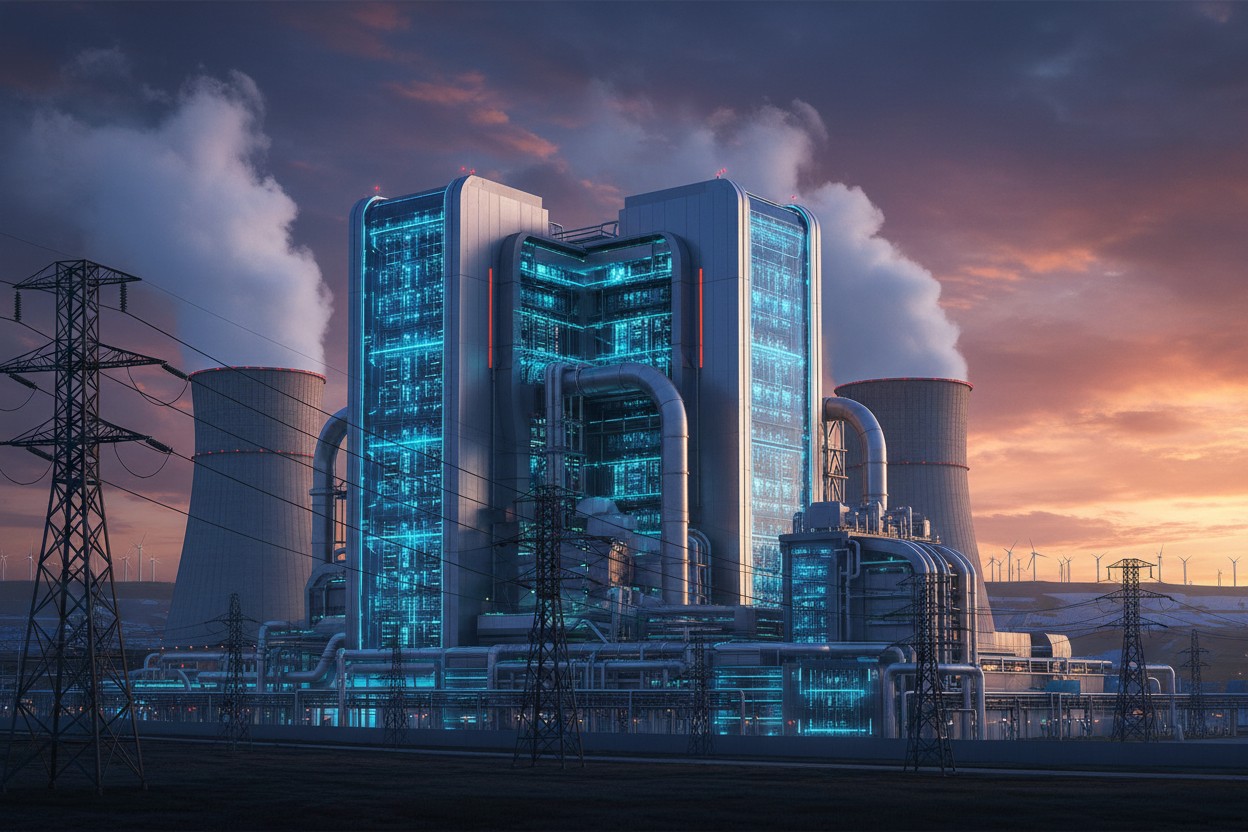
Why are tech giants, which often tout sustainability and carbon neutrality, flocking to natural gas? Industry officials point to a triad of factors: speed, reliability, and grid congestion.
- Speed to Market: Gas-fired power plants are faster to permit and construct than large-scale renewable projects.
- Baseload Reliability: Unlike wind and solar, which are inherently intermittent, gas provides reliable, "always-on" power that can run 24/7—a requirement for the continuous, high-intensity compute cycles of AI.
- Interconnection Queues: Grid queues for utility-scale wind and solar projects currently stretch between three and five years in many regions. Faced with the pressure of the AI race, tech firms are choosing to bypass these delays by building "behind-the-meter" gas plants.
This trend toward behind-the-meter generation—where companies own their power plants and operate them independently of the main grid—creates a "transparency gap." RBC Capital Markets has noted that because these plants are private, the accountability for their emissions is significantly murkier. Furthermore, BloombergNEF analysis suggests the marginal cost of operating an on-site gas plant is often lower than the industrial electricity tariffs offered by local utilities, making it an economically rational choice for companies under pressure to lower operational costs.
Official Responses and the "National Security" Argument
The debate has polarized political leaders, with some framing the energy boom as a critical component of national security. Senator John Fetterman (D-Pa.) captured this sentiment in an August 2026 post on X, stating, "AI supremacy and energy dominance underpins our national security." Fetterman went on to criticize the "political pandering and hyperbole over data centers," suggesting that stalling this growth would only benefit foreign rivals like China.
However, the rapid development has triggered a backlash from state regulators concerned about the impact on local ratepayers.
- Massachusetts: Gov. Maura Healey issued an executive order requiring developers of data centers larger than 25 megawatts to either provide clean power or contribute to a ratepayer protection fund.
- Pennsylvania: Gov. Josh Shapiro has taken a more aggressive stance, signing an order to curb unchecked growth, vowing not to let residents be "bullied by greedy developers." Conversely, his administration has also introduced preferential permitting for data centers that meet stringent environmental and cost-responsibility standards.
- Arizona: Attorney General Kris Mayes has formally requested that state lawmakers pause all new data center construction until a comprehensive state plan is developed to manage the demand.
Public sentiment remains deeply skeptical. A Gallup poll conducted in March 2026 revealed that seven in 10 Americans oppose the construction of new data centers in their local communities. This climate of tension has become a theater for foreign influence, with X identifying a bot network of roughly 200,000 accounts—some of which were actively attempting to manipulate the U.S. debate on AI energy policy.
Looking Ahead: The Narrowing Window for Alternatives
Is there a way to break the dependence on fossil-fuel-intensive growth? While advancements in AI chip efficiency—such as low-power accelerators and more efficient cooling systems—are helping to moderate demand, no current forecast suggests these gains will be enough to significantly alter the projected trajectory.
The primary challenge remains the supply chain for power generation hardware. Industry reports indicate that the available global stock of gas turbines is already fully committed to big tech companies for several years to come.
Analysts warn that the window for choosing a different energy path is closing rapidly. With $110 billion in infrastructure projects already in the pipeline, the U.S. energy landscape is on the verge of being "locked in" to a fossil-fuel-heavy trajectory for the next 30 years. The BloombergNEF outlook stresses that data center operators have an urgent responsibility to provide transparent Scope 2 emissions reporting and verifiable renewable procurement timelines, rather than relying on vague 2040 net-zero pledges.
As the debate continues between industry titans, state regulators, and environmental advocates, one thing remains clear: the race for AI supremacy is no longer just happening in the cloud. It is being fought in the gas pipelines, the power plants, and the capacity auctions of the American heartland, with the reliability of the national grid hanging in the balance. The choices made by policymakers and tech leaders in the next 24 months will define the U.S. energy profile for decades to come.