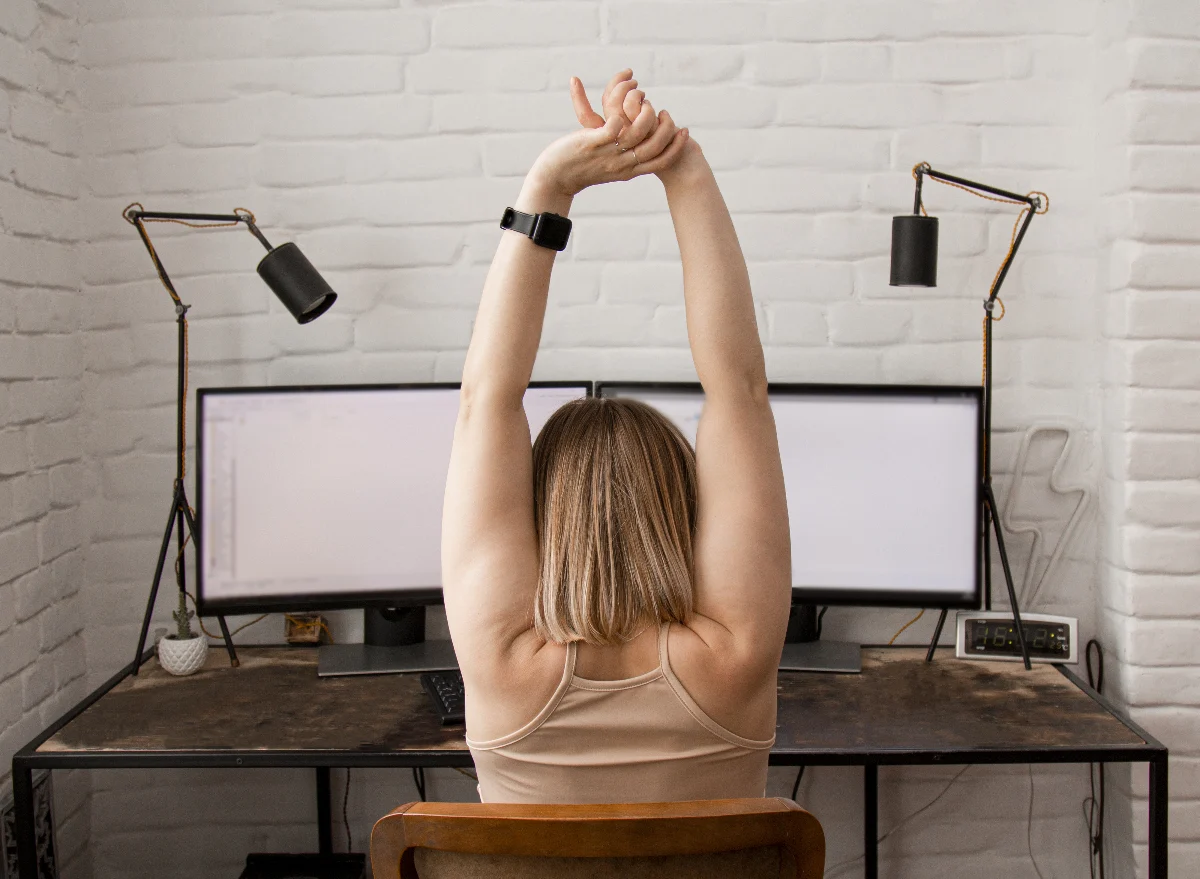
For many professionals, the modern office environment has become a crucible of physical decline. After 55, the cumulative impact of spending a decade—or more—confined to a desk chair begins to manifest in undeniable ways: the hips tighten, the shoulders round forward, the lower back stiffens, and the once-simple act of standing up becomes a labor-intensive chore.
As a personal trainer with nearly 40 years of experience, and having spent the last 25 years at the helm of TRAINFITNESS, the UK’s leading fitness education provider, I have observed this trajectory in thousands of clients. The sedentary lifestyle is not just a lack of movement; it is a physiological remodeling of the human body. However, the very tool that facilitates this decline—the chair—can also serve as the primary instrument of recovery. You do not need a gym membership, a yoga mat, or specialized sportswear to undo the damage. By integrating five specific movements into your workday, you can reclaim your mobility and strength without ever leaving your workstation.
The Physiological Toll of the Desk Bound
To understand why we struggle to stand after hours of sitting, we must look at the musculoskeletal consequences of prolonged stillness. The most prevalent issues I encounter are weak glutes, shortened hip flexors, chronically rounded shoulders, and a rigid lumbar spine.
When you sit for extended periods, the muscles on the posterior chain—the glutes and hamstrings—effectively "switch off" due to disuse. Simultaneously, the muscles at the front of the body, particularly the hip flexors and pectorals, begin to shorten and tighten. This creates a functional imbalance: your body becomes accustomed to a flexed, closed-off posture. For those over 55, this is compounded by a loss of "movement variety." We begin to rely on external support, such as pushing off armrests to stand or rounding the spine to reach for objects, which further deactivates the core stabilizers.

Why Chair-Based Movement Outperforms Traditional Exercise
The primary barrier to fitness for the busy professional is the "time-cost" of traditional exercise. While yoga and pilates are exceptional practices, they are often treated as distinct, occasional events. They do not address the physiological stagnation occurring during the eight hours you spend in your office chair.
Chair-based movement is unique because it interrupts the damage as it happens. By micro-dosing movement throughout the day, you prevent the muscles from staying in a shortened state for hours on end. While you cannot "undo" a decade of neglect overnight, you can restore significant range of motion and functional strength through consistent, targeted intervention. These exercises are designed to be performed discretely and efficiently, acting as a structural reset for the body.
The Five-Step Protocol for Desk Recovery
1. The Chair Sit-to-Stand: Restoring Lower Body Power
The sit-to-stand movement is the gold standard for functional longevity. Sitting for prolonged periods causes atrophy in the glutes and quadriceps, which are essential for walking, climbing stairs, and maintaining balance.
- Execution: Sit at the edge of your chair with feet hip-width apart. Lean your torso slightly forward, engage your core, and drive through your heels to stand up without using your hands for support. Lower yourself back down with a slow, controlled count of three.
- Common Pitfalls: Avoid using momentum or "rocking" your body to gain height. Ensure your knees remain aligned with your toes and do not cave inward.
- Recommendation: Perform 10 to 12 repetitions. The key is the lowering phase; by slowing it down, you force the muscles to perform eccentric loading, which is highly effective for building strength.
2. Seated Shoulder-Blade Squeeze: Counteracting the Hunch
The "office hunch" is a result of weak mid-back muscles struggling to counteract the weight of our forward-leaning arms. This exercise targets the rhomboids and mid-trapezius.

- Execution: Sit tall, away from the backrest. Draw your shoulder blades down and back toward your spine, as if you are trying to hold a pencil between them. Hold for three seconds and release.
- Common Pitfalls: Avoid shrugging your shoulders toward your ears. The movement should be concentrated in the mid-back, not the neck.
- Recommendation: Aim for 12 to 15 repetitions. This is a subtle movement that can be performed during long phone calls or while reviewing digital documents.
3. The Seated Chest Opener: Reclaiming Range of Motion
Tight pectorals pull the shoulders forward, creating a feedback loop of poor posture. This stretch is essential for allowing the chest to expand and the shoulders to rest in a neutral position.
- Execution: Interlace your fingers behind your back or reach for the back corners of your chair. Gently pull your shoulders back and lift your chest toward the ceiling while maintaining a neutral neck position.
- Common Pitfalls: Do not over-arch the lower back. The goal is to feel the stretch across the front of the shoulders and the sternum.
- Recommendation: Hold for 20–30 seconds. Perform this twice daily to mitigate the "forward-reaching" fatigue of typing.
4. Seated Pelvic Tilts: Mobilizing the Lumbar Spine
A slumped posture flattens the natural S-curve of the spine, leading to chronic lower back pain. Pelvic tilts restore fluidity to the base of the spine.
- Execution: Place your hands on your thighs. As you inhale, arch your lower back slightly, tilting your pelvis forward. As you exhale, round your lower back, tucking your pelvis under.
- Common Pitfalls: Do not let the movement migrate to the upper back or shoulders. Keep the action isolated to the pelvis.
- Recommendation: Complete 10 slow, rhythmic rolls. This is particularly effective after a long, intense period of focus.
5. Seated Hamstring Stretch: Relieving Pelvic Tension
Shortened hamstrings pull on the pelvis, which in turn forces the lower back to compensate, leading to stiffness.
- Execution: Sit at the edge of your seat. Extend one leg straight out with your heel on the floor. Keep your back flat and "hinge" from your hips, leaning your torso forward until you feel a gentle stretch in the back of your extended leg.
- Common Pitfalls: Do not round your spine to touch your toes. The goal is a flat-back hinge, which maximizes the stretch on the hamstring rather than the spine.
- Recommendation: Hold for 30 seconds per leg. This stretch is crucial for maintaining the pelvic tilt required for comfortable sitting.
Strategic Integration: Making Movement a Habit
The most effective way to incorporate these exercises is to treat them as "movement snacks." Rather than attempting to block out a 30-minute window—which is rarely sustainable for the busy professional—scatter them throughout the workday.
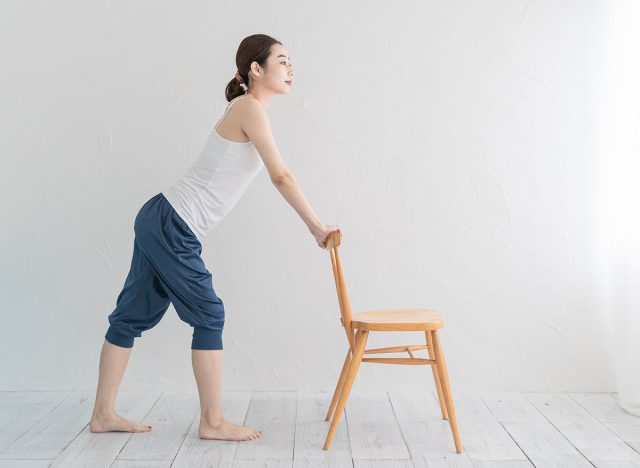
- The "Coffee Break" Protocol: Perform your sit-to-stands every time you rise to get a drink or visit the restroom.
- The "Email" Protocol: Use the time you spend reading incoming emails to perform shoulder-blade squeezes.
- The "Stiffness" Protocol: If you feel a dull ache in your lower back, immediately pause for a set of pelvic tilts.
The most important habit, however, is the "30-Minute Rule." Regardless of your workload, standing up for at least 60 seconds every 30 to 45 minutes is non-negotiable for vascular and muscular health. These exercises work best when they act as an intervention that breaks the cycle of static pressure.
Expected Outcomes and Long-term Implications
What can you expect from this commitment? In the first two weeks, the most noticeable change will be a reduction in the "startup stiffness" you feel when rising from a chair. The transition from sitting to standing will feel smoother and require less effort.
By the four-to-six-week mark, you will likely notice a shift in your resting posture. Because the muscles responsible for holding you upright have been re-engaged, your tendency to slump will naturally decrease. You will find that "sitting tall" no longer requires conscious, exhausting effort—it becomes your default.
While it is unrealistic to claim that these exercises will fully reverse a decade of physical inactivity, the reversal of stiffness and the reclamation of range of motion are entirely achievable. Consistency is the primary factor. By treating the chair as a tool for movement rather than a cage for your body, you can significantly improve your quality of life, mobility, and energy levels.
The goal is not to become an athlete, but to ensure that your body remains a capable, functional vehicle that supports your professional and personal ambitions for decades to come. Stick with these movements, and the chair will stop being the catalyst for your decline and start being the foundation of your recovery.