











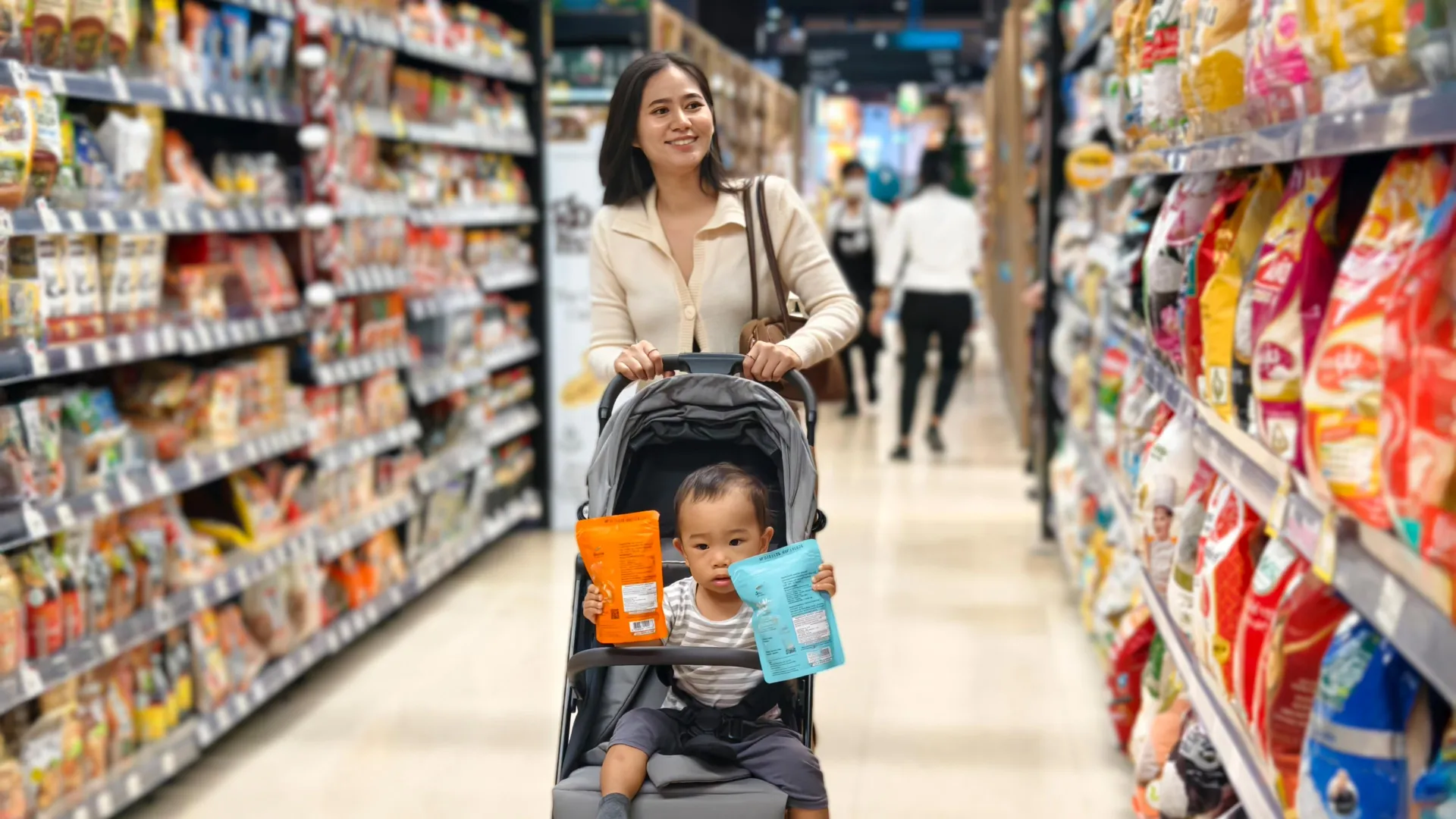
For parents, the grocery store toddler aisle is often viewed as a sanctuary of convenience—a curated space where products are specifically formulated to support the rapid growth and development of children aged six to 36 months. However, a sweeping new analysis suggests that this aisle may be harboring a significant public health concern. A recent study, presented at the American Society for Nutrition’s flagship annual conference, NUTRITION 2026, reveals that the vast majority of packaged toddler foods are ultra-processed and frequently fall short of international nutritional benchmarks.
The Study: A Deep Dive into the Toddler Aisle
The research, conducted by Erin A. Hudson, a JD and PhD candidate at The University of Texas at Austin, and her colleague Marissa Burgermaster, PhD, offers a sobering look at the commercial landscape of early childhood nutrition. The team conducted an exhaustive field survey, photographing and cataloging baby and toddler food sections across 21 different grocery stores in Austin, Texas.
By focusing on products specifically marketed to children aged 6 to 36 months—excluding infant formula, beverages, and standard fruit or vegetable purees—the researchers analyzed a total of 2,783 unique items. Using the Nova classification system, which categorizes foods based on the extent of their industrial processing, the team found that 81% of the products on these shelves were classified as "ultra-processed."
The investigation went beyond mere classification. The researchers measured these products against the World Health Organization (WHO) Nutrition and Promotion Profile Model (NPPM), a rigorous set of standards designed to ensure that commercial foods meet the nutritional needs of growing children. The results were startling: nearly half—49%—of the surveyed items failed to meet at least one of the WHO’s essential nutrient benchmarks.
Chronology of the Investigation and Disclosure
The findings were unveiled on July 26, 2026, during the "Ultra-Processed Foods: Methodological Advancements" oral session at the Gaylord National Resort & Convention Center in National Harbor, Maryland.
- Data Collection Phase: Researchers visited 21 Texas-based grocery stores, capturing high-resolution imagery and nutritional data for thousands of individual SKUs.
- Analytical Phase: The team cross-referenced the nutritional profiles of 2,783 products against the WHO NPPM standards, specifically screening for sugar, sodium, fat, and energy density.
- The Disclosure: The data was compiled and presented to the scientific community at NUTRITION 2026, highlighting the prevalence of ultra-processed ingredients in products marketed as "healthy" or "toddler-friendly."
While these findings are considered preliminary—as they have not yet undergone the formal peer-review process typically required for publication in a scientific journal—the scale of the study provides a robust snapshot of the current retail environment in the United States.
Supporting Data: Where the Products Fall Short
The nutritional shortcomings identified by Hudson and Burgermaster were not merely minor deviations; they represented significant departures from healthy dietary patterns for toddlers.
Breakdown of Nutritional Deficiencies
The study identified specific areas of concern where products frequently failed to meet the WHO’s recommendations:
- Excessive Sugar: 17% of the products failed to meet recommended sugar content levels.
- High Sodium: 25% of the products exceeded the recommended sodium thresholds.
- Inadequate Fat: 11% of the products did not meet the standard for healthy fat content.
- Energy Density: 12% of the products fell short of recommendations regarding caloric density.
The researchers specifically called out common culprits. Fruit pouches, often marketed as a quick way to feed children fruit, were found to be excessively high in sugar. Oat bars, a staple in many diaper bags, frequently contained levels of sugar and calories that were inappropriate for a toddler’s metabolic needs. Similarly, savory items like mac and cheese and turkey sticks were found to be overloaded with sodium and fat, while "puffs"—a ubiquitous snack for toddlers—often provided high caloric loads with little nutritional return.
The "Ultra-Processed" Problem
The study highlights a critical distinction: not all fat and calories are created equal. Less-processed foods, such as whole peanuts or beef, may contain higher fat or calorie counts, but they also offer a dense profile of essential vitamins, minerals, and proteins.
Ultra-processed toddler foods, however, are fundamentally different. They are characterized by industrial formulations that often strip away natural nutritional value, replacing it with additives, excessive sweeteners, and sodium to improve shelf life, texture, and flavor. The researchers noted that ultra-processed products were significantly more likely to contain high amounts of sugar compared to their less-processed counterparts, even when those items were marketed as health-conscious choices.
Implications: The Long-Term Health Toll
The toddler years are a formative period for physiological development and behavioral habituation. What a child consumes during this window often dictates their flavor preferences and dietary patterns for the remainder of their childhood and into adulthood.
"Many parents may assume that products sold on the baby/toddler food aisles of their grocery stores have to meet certain nutrient standards," Hudson noted during her presentation. "Our findings highlight that half of the toddler foods available in local grocery stores do not."
The implications are twofold:
- Immediate Health Risks: High sugar consumption in toddlers is linked to a host of adverse health outcomes, including the early development of metabolic issues and a predisposition to obesity.
- Habit Formation: By introducing toddlers to overly sweet, salty, or ultra-processed snacks, manufacturers may be conditioning children to prefer these types of foods over whole, nutrient-dense ingredients, making it harder for parents to transition them to a healthy, balanced diet later in life.
Official Responses and the Regulatory Gap
The timing of this research is particularly relevant, as the U.S. Food and Drug Administration (FDA) is currently reviewing its regulations regarding front-of-package nutrition labeling, product claims, and the marketing of food to children.
Unlike several other nations that have implemented mandatory "warning labels" on items high in sodium, sugar, or calories, the United States remains relatively permissive. The absence of these labels creates an information asymmetry that disadvantages parents. As Hudson emphasized, the burden of ensuring a child’s health currently falls squarely on the consumer. "Parents have to be vigilant in checking labels and ingredients to determine the nutrient content and processing level of products for their toddlers," she said.
The researchers argue that the implementation of clear, mandatory front-of-package warning labels would serve as a vital tool for parents navigating the complex "toddler food environment." Furthermore, they suggest that such labeling might incentivize manufacturers to reformulate their products to meet higher standards, effectively moving the market toward healthier offerings.
Navigating the Aisle: A Parent’s Guide
While the findings are concerning, they also provide a roadmap for parents who wish to move away from reliance on processed convenience items. The researchers acknowledge that their study only looked at packaged, shelf-stable goods and does not necessarily reflect the totality of a child’s diet.
To mitigate the risks identified in the study, parents are encouraged to:
- Prioritize Whole Foods: Focus on fresh produce, lean proteins, and simple, minimally processed ingredients.
- Read the Fine Print: Look beyond marketing claims like "natural" or "toddler-approved" and instead scrutinize the ingredient list and the nutritional panel.
- Watch for "Hidden" Ingredients: Be wary of pouches and bars, as these are the categories most likely to contain excessive sugar and calories.
Conclusion: A Call for Change
The research presented at NUTRITION 2026 serves as a wake-up call for both the food industry and federal regulators. When 81% of products in a category designed for the most vulnerable consumers are classified as ultra-processed, it suggests a systemic issue rather than a series of isolated poor product choices.
As the FDA continues its review of food labeling standards, the work of researchers like Hudson and Burgermaster provides the evidence needed to advocate for stronger protections. For now, the takeaway for parents is clear: the convenience of the grocery store shelf should not be mistaken for nutritional quality. In an environment where the market does not always prioritize the health of the child, the responsibility of the label-reader remains the primary defense for the next generation’s health.