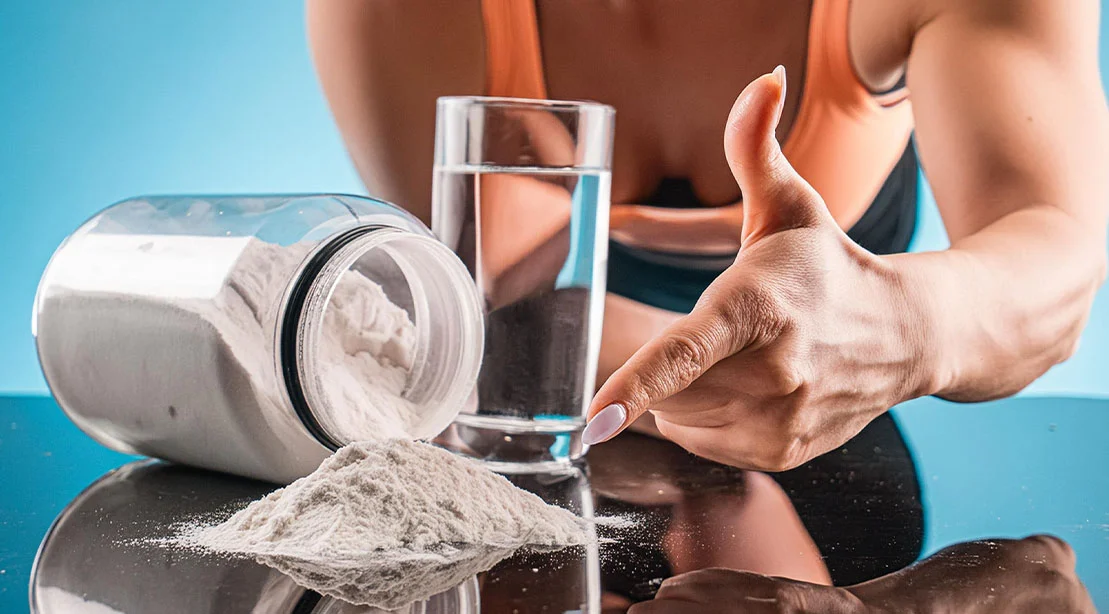
For over three decades, creatine has occupied the least glamorous shelf in the supplement store. It lacks the aggressive, high-octane branding of "anabolic matrices" or the pseudo-scientific, complex nomenclature of modern pre-workout powders. It is simply creatine monohydrate—a humble, chalky white powder that has remained remarkably consistent while virtually every other fitness fad has risen and fallen around it.
Despite its status as the most heavily scrutinized ergogenic aid in sports science, a persistent gender gap has existed in its application. While male athletes have long integrated it into their regimens as a staple, women have historically been more hesitant, often deterred by pervasive myths regarding "bulk" and water retention. However, a new wave of rigorous, female-specific research is finally bringing the data into focus, suggesting that the most boring supplement in the industry might be the most valuable tool for the modern female athlete.
Main Facts: The Science of Creatine
At its core, creatine is not a stimulant, a hormone, or a fat burner. It is a nitrogenous organic acid that occurs naturally in vertebrate cells. When ingested, it is stored primarily in the skeletal muscle as phosphocreatine. During high-intensity, short-duration exercise—such as sprinting, weightlifting, or explosive movements—the body relies on adenosine triphosphate (ATP) for energy.
Phosphocreatine acts as a biological "battery," donating a phosphate group to regenerate ATP rapidly. By increasing the body’s store of phosphocreatine, athletes can theoretically sustain high-intensity efforts for a few seconds longer, potentially allowing for an extra rep in the squat rack or a slightly faster burst during a sprint. It is a fundamental mechanism of cellular bioenergetics, yet its simplicity is often overshadowed by the hyperbolic marketing of the supplement industry.
A Chronology of Research: Bridging the Gender Gap
For decades, the "gold standard" of sports nutrition studies was conducted almost exclusively on male participants. This created a significant "data desert" regarding how creatine interacts with the female endocrine system, menstrual cycles, and muscle physiology.
The tide began to turn in the early 2020s, as researchers acknowledged that female physiology could not simply be treated as a smaller version of male physiology. The most significant shift occurred in September 2026, when a landmark systematic review and meta-analysis were published. The study, which screened over 13,000 records, provided the most comprehensive look at the efficacy of creatine in women to date. By synthesizing data from 34 studies and 692 participants, the authors sought to move past anecdotal evidence and establish a clear, evidence-based consensus.
This meta-analysis followed years of disparate, smaller-scale trials that often lacked the statistical power to draw definitive conclusions. By pooling this data, the scientific community finally had a clear picture: the benefits exist, but they are nuanced.
Supporting Data: What the Numbers Actually Tell Us
When analyzing the 2026 data, the results were not the "earth-shattering" breakthroughs often promised by supplement advertisements. Instead, they were subtle. The meta-analysis revealed a small but statistically significant improvement in performance (0.30 standardized units) and body composition (0.24 standardized units).
The Performance Spectrum
The female-specific literature included a diverse array of athletes: soccer players, competitive swimmers, volleyball players, dancers, and resistance-trained women. The data indicated that performance benefits were most pronounced in:
- High-intensity, intermittent sports: Activities requiring repeated bursts of energy.
- Resistance training: Improvements in maximal strength and power output.
- Lean body mass: A modest increase in lean tissue, often attributed to the ability to train harder and recover more effectively.
The Postmenopausal Context
A parallel 2026 meta-analysis focused specifically on the postmenopausal population—a demographic often ignored in traditional sports science. Examining seven randomized trials with 608 participants, researchers found that creatine was particularly effective at combating sarcopenia (the age-related loss of muscle mass). When combined with resistance training, at least five grams of creatine per day led to measurable improvements in leg-press strength and lean mass preservation. This suggests that for aging women, creatine is not just a performance tool, but a potential longevity intervention.
Official Perspectives and Expert Restraint
The lead authors of these recent meta-analyses have been remarkably cautious. They rated the overall certainty of evidence as "low" to "very low." This isn’t because the supplement is ineffective, but because the variability in the studies—different dosing protocols, different sports, and different testing methods—makes it difficult to issue a "one size fits all" recommendation.
"We are not seeing a magic pill," says Dr. Elena Vance, a lead researcher in sports nutrition. "What we are seeing is a marginal gain that, when compounded over months and years of consistent training, becomes a meaningful advantage. The danger in the supplement industry is the tendency to over-promise. Creatine doesn’t replace the hard work; it just helps you do the work a little bit better."
Addressing the "Bulk" Myth: Why Fear is Misplaced
The most significant barrier to adoption among women remains the fear of unwanted physical changes. The anxiety surrounding "getting bulky" or "holding too much water" is a direct byproduct of decades of misleading fitness marketing.
The Water Retention Reality
It is true that creatine causes an increase in intracellular water. This is a positive, healthy physiological response; it hydrates the muscle cell, which is essential for protein synthesis and metabolic function. However, this is vastly different from the subcutaneous water retention (bloating) that many women fear.
The "Arnold" Fallacy
The idea that a woman can accidentally "bulk up" to the point of appearing overly muscular simply by taking five grams of creatine is physiologically impossible. Muscle hypertrophy is a complex process driven by hormonal profiles, intense caloric surplus, and years of dedicated, heavy-resistance training. Creatine is merely an ergogenic aid; it is not an anabolic steroid. It does not possess the capacity to override the body’s natural hormonal limitations.
Implications for the Modern Athlete
The takeaway for the modern female athlete is twofold: first, stop looking for "miracle" supplements; second, start prioritizing the ones with the most boring, consistent data.
1. It is a Tool, Not a Replacement
Creatine does not replace a well-structured training program, adequate protein intake, or sleep hygiene. If an athlete is not training, taking creatine will not result in muscle growth. It is a catalyst, not the reaction itself.
2. Consistency is Key
The research suggests that for creatine to be effective, it must be taken consistently. The "loading phase"—once a common recommendation—is largely unnecessary for most people; five grams daily is sufficient to saturate the muscle tissues over time.
3. The Shift in Industry Standards
The move toward female-specific research is a victory for transparency. By moving away from "bro-science" and into rigorous clinical evaluation, we are seeing the supplement industry finally mature. The fact that the research is "boring" is actually a sign of quality. In an industry defined by proprietary blends and secret "anabolic matrices," a substance that has been studied thousands of times with the same consistent, modest results is the rarest commodity of all: a product that actually does exactly what it says on the label.
Conclusion
The story of creatine is a story of endurance. While other supplements have relied on flashy marketing, aggressive claims, and fleeting trends, creatine has relied on the slow, methodical accumulation of scientific evidence. For women, the path forward is clear: the fear of the "bulky" side effect is a myth that has kept a valuable performance tool out of their reach for too long.
As we look toward the future of sports nutrition, the focus should remain on these evidence-based, humble staples. Whether you are a competitive collegiate athlete or a postmenopausal woman looking to maintain strength and bone density, the research confirms what the data has been whispering for decades: creatine is safe, it is effective, and it is time to stop overthinking it. It isn’t magic—it’s just science. And sometimes, that is exactly what you need.