











BOSTON — The legal saga surrounding Lindsay Clancy, the Massachusetts mother whose tragic actions in 2023 shattered a quiet Duxbury neighborhood, remains in a state of suspended animation. Following a mistrial declared on September 4, the case has evolved from a heartbreaking look at maternal mental health into a polarized national debate about justice, jury integrity, and the sanctity of the courtroom. At the epicenter of this firestorm is Michael Desronvil, the lone juror who stood against eleven peers to advocate for a murder conviction, setting off a chain reaction of public scrutiny, political maneuvering, and intense debate.
The Crucible of Deliberation: A House Divided
For weeks, the trial of Lindsay Clancy captivated the public. The facts of the case were rarely in dispute: in January 2023, Clancy strangled her three young children—Cora, Dawson, and Callan—before attempting to take her own life. The defense argued that Clancy was a devoted mother suffering from a profound, medically induced state of postpartum psychosis, rendering her unable to appreciate the criminality of her actions. The prosecution, conversely, painted a picture of a calculated individual who understood the consequences of her violence.
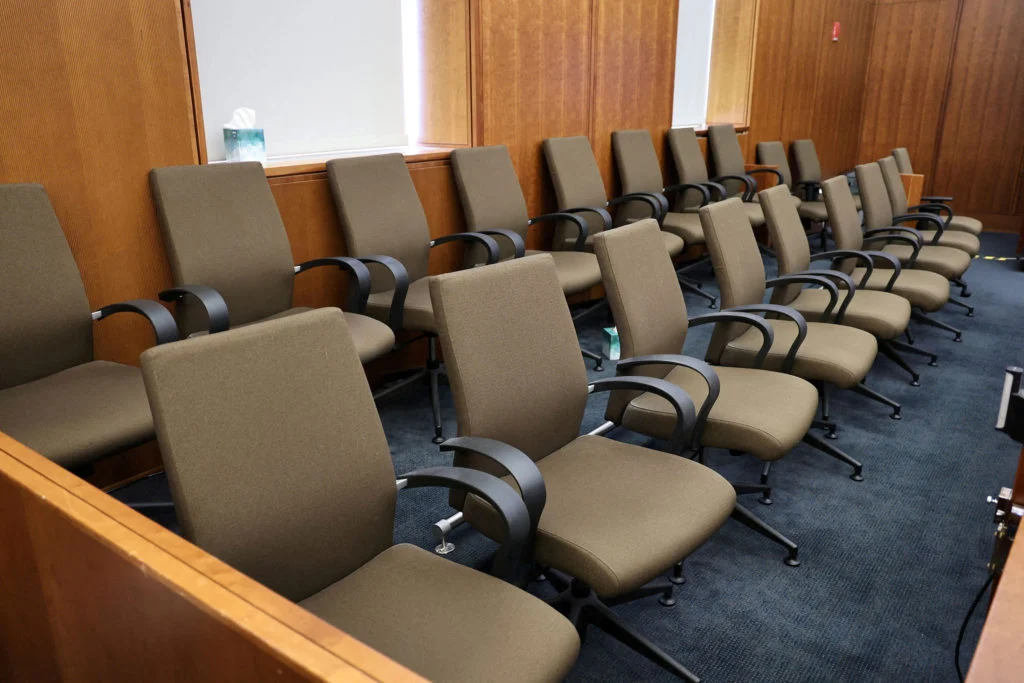
When the jury retired to deliberate, the divide became immediately apparent. Eleven jurors gravitated toward a verdict of not guilty by reason of mental illness. One, however—Michael Desronvil—remained steadfast in his belief that the evidence proved intent.
In his first public statement since the mistrial, released via his attorney, Edward Paltzik, on the social media platform X, Desronvil sought to correct the record. He vehemently denied claims made by the jury foreperson, who had suggested in previous interviews that Desronvil held "reasonable doubt" but chose to convict regardless.
"I didn’t have any doubts," Desronvil stated. "As I tried to explain different possible theories during deliberation, I kept getting cut off as if I had doubts based on the evidence presented. Based on all the physical evidence, key witnesses, and what the prosecution presented, I thought it was enough proof that she knew exactly what she was doing and planned."
Chronology of a Tragedy and Its Aftermath
The timeline of this case serves as a grim map of the events that led to the current legal stalemate:
- January 2023: Lindsay Clancy strangles her three children in their Duxbury home before leaping from a window in a suicide attempt.
- The Trial: Throughout the proceedings, the defense highlights Clancy’s severe decline in mental health and her complex medication regimen, arguing for a lack of criminal responsibility. Prosecutors counter with evidence of her planning and awareness.
- September 4, 2025: After days of tense deliberation, the jury reports an impasse. The judge declares a mistrial, leaving the charges against Clancy pending.
- Post-Trial Fallout: Within days of the mistrial, details regarding the jurors—specifically Desronvil—begin to leak. Public interest turns into investigative scrutiny as the media and online "sleuths" uncover his history of financial instability and past legal entanglements.
- Late September 2025: Desronvil’s legal representative, Edward Paltzik, releases a formal statement defending his client’s conduct, while reports surface that Desronvil has relocated to a secure, rural location in northern New England.
The Scrutiny of the Individual
The aftermath of the mistrial has been as turbulent as the trial itself. Desronvil has been subjected to a level of public examination rarely seen for a private citizen serving on a jury. Reports emerged that at the time of his selection for the jury, he was under a restraining order and facing eviction due to over $12,000 in unpaid rent. Furthermore, news outlets highlighted a 2021 domestic violence charge that was eventually dismissed.
These revelations have fueled intense criticism regarding the jury selection process (voir dire). Critics argue that the vetting process failed to identify potential biases or instability that might influence a juror’s ability to remain impartial. Conversely, supporters of Desronvil argue that his personal life is irrelevant to his role as a juror and that the scrutiny is a form of harassment designed to intimidate those who refuse to follow the "majority consensus."
His attorney, Paltzik—known for high-profile clients including Donald Trump and Martin Shkreli—has adopted a defiant posture. "As a devoted father and man of God, he will not be defeated or shattered by the wicked who wish harm upon him," Paltzik wrote in his statement.
Political Polarization and the "Asylum" Narrative
The Lindsay Clancy case has transcended the courtroom, becoming a flashpoint for American culture wars. The divide over the verdict has aligned, in some circles, with political ideology. Conservative pundits, who have often characterized the legal system as being susceptible to "soft-on-crime" ideologies, have lauded Desronvil as a hero who stood up against a "woke" majority that prioritized empathy over the letter of the law.
This narrative reached the highest levels of government when Florida Governor Ron DeSantis weighed in on the controversy. Suggesting that Desronvil was being targeted for his decision, DeSantis offered a rhetorical lifeline: "If he is being harassed, Florida will provide asylum. I’m sure he’d be welcomed and appreciated."
This intervention has drawn sharp criticism from legal scholars, who argue that the politicization of jury deliberations undermines the judicial process. By framing a juror’s decision as a political act, the system risks turning the impartial jury box into a theatre for national partisan warfare.
Implications for the Massachusetts Justice System
The mistrial has left the Plymouth County District Attorney’s office in a difficult position. The office has not yet signaled whether it intends to pursue a retrial. A second trial would be an immense undertaking, requiring the impaneling of a new jury and forcing the families involved to relive the trauma of the 2023 tragedy.
Furthermore, the case raises significant questions about the standard of "criminal responsibility" in cases involving postpartum psychosis. The fact that eleven jurors accepted the defense’s argument suggests a shift in societal understanding of severe mental health crises. However, the holdout represents a lingering, perhaps irreconcilable, tension regarding personal accountability in the face of psychiatric illness.
The Financial and Social Toll
The logistical reality of this case is also mounting. A fundraiser established for Desronvil, aimed at covering security, legal fees, and lost wages, has raised over $289,000. This influx of capital highlights the intensity of the public’s engagement with the case, but it also reflects the dangerous trend of individual jurors becoming "causes" in the eyes of the public.
Conclusion: A System Under Pressure
The case of Lindsay Clancy is, at its core, a human tragedy that has exposed the seams of the American justice system. The clash between the majority’s desire to account for the complexities of mental illness and one man’s rigid insistence on the letter of the law has resulted in a stalemate that satisfies no one.
As the legal community debates the implications of this mistrial, the focus remains on the fragility of the jury system. When jurors are transformed into political icons or targets of intense public vitriol, the fundamental requirement of an impartial trial becomes increasingly difficult to sustain. Whether or not the state proceeds with a new trial, the legacy of the Clancy mistrial will likely be felt in courtrooms across the country for years to come, serving as a cautionary tale about the intersection of high-stakes litigation, public morality, and the volatility of the modern information age.
The silence from the District Attorney’s office remains the final, unresolved note in a tragedy that, for now, refuses to provide the closure that all parties—and the public—so desperately seek.