







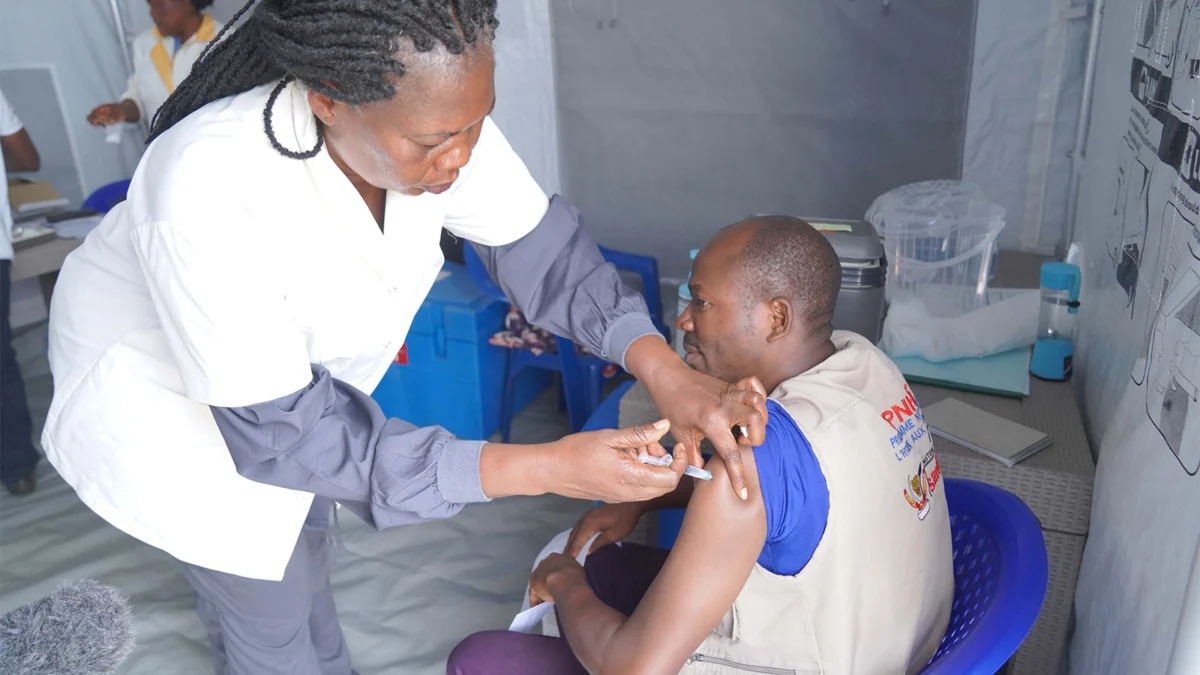
BUNIA, Democratic Republic of the Congo — Under the shadow of an unrelenting viral surge, health authorities in the Democratic Republic of the Congo (DRC) have initiated a high-stakes vaccination campaign in Bunia, the epicenter of what is now recognized as the fastest-growing Ebola outbreak in history. As the death toll mounts and the virus defies traditional containment efforts, the government, supported by international health bodies, has turned to a "compassionate-use" strategy, deploying the Ervebo vaccine to those on the front lines of a medical crisis that threatens to eclipse all previous records of the disease.
The Frontline Defense: Vaccination Strategy
On Saturday, the provincial government of Ituri formally launched a targeted inoculation drive. The priority, according to military governor Maj. Gen. Gaby Kasongo Mulumba, is clear: "Our collective duty is to protect life. Launching this vaccination drive for front-line staff in Ituri is not an arbitrary choice, as these workers are particularly exposed and deeply involved in the response."
The campaign focuses on healthcare professionals and front-line responders in the Bunia and Mongbwalu health zones—areas currently identified as the most volatile epicenters of the outbreak. The strategy aims to reach 20,000 frontline workers across Ituri and North Kivu provinces over the next six to nine months, providing a vital layer of protection for the individuals who are most likely to encounter the virus in the course of their duties.
A Scientific Gamble: The Challenge of the Bundibugyo Strain
The deployment of the Ervebo vaccine is occurring in a complex and somewhat precarious scientific context. Ervebo is a licensed vaccine, but it was specifically engineered to combat the Zaire ebolavirus—a more common and historically prevalent strain. The current outbreak in the DRC, however, is driven by the Bundibugyo ebolavirus.
There is currently no licensed vaccine or specific treatment for the Bundibugyo strain. Consequently, the World Health Organization (WHO) and local health authorities have authorized the use of Ervebo under a "compassionate-use" framework. This regulatory mechanism allows for the administration of medical products that have not yet been formally approved for a specific strain, provided the situation is dire and the potential for benefit outweighs the unknown risks.
Health experts are cautiously optimistic that because the Zaire and Bundibugyo viruses are genetically related, the vaccine may provide a degree of cross-protection. However, the efficacy of this approach remains an open question, and the current rollout includes a rigorous clinical trial component. Of the 70,000 doses approved for use in the country, 50,000 are allocated for general frontline protection, while 20,000 are specifically designated for a clinical study to determine whether the vaccine can truly prevent illness in those exposed to the Bundibugyo virus.
Chronology of the Crisis
The current Ebola outbreak has developed with alarming speed, catching many regional observers off guard.
- Initial Detection: The outbreak was identified following a series of clusters in the eastern provinces. Unlike localized outbreaks of the past, this strain moved quickly through dense, mobile populations.
- Escalation and Insecurity: As the virus moved through Ituri and North Kivu, it encountered a perfect storm of environmental and social obstacles. Ongoing civil unrest and military activity in the region have severely hampered contact tracing and the establishment of treatment centers.
- The Tshopo Expansion: Last month, the campaign saw a significant expansion into Kisangani in the Tshopo province, covering 14 health zones across Tshopo, Bas-Uele, and Haut-Uele. This was a critical step in creating a regional "firebreak" to prevent the virus from moving toward major urban centers.
- The Saturday Rollout: The commencement of the Bunia vaccination drive marks the latest escalation in the government’s efforts to stabilize the most heavily impacted zones.
Supporting Data: A Grim Statistical Reality
The numbers emerging from the Congolese Ministry of Health paint a devastating picture. As of Saturday, the country has recorded 7,541 confirmed cases of the virus. Of those, 3,639 have resulted in death, representing a fatality rate that continues to strain the local healthcare infrastructure. While 1,823 people have successfully recovered, the number of active cases continues to climb.
To put these figures in perspective, this is officially the deadliest of the 17 Ebola outbreaks recorded in the DRC. Global health analysts have warned that if the current trajectory continues, the outbreak is on track to surpass the 2014-2016 West African Ebola epidemic. That crisis, which primarily decimated communities in Guinea, Liberia, and Sierra Leone, claimed more than 11,000 lives and remains the most lethal in recorded history.
The Voices of the Frontline
For the doctors and nurses working in the field, the vaccine represents a necessary, if imperfect, lifeline. Dr. Jeannot Elua, a physician at a facility in Bunia, expressed a sense of resignation tempered by pragmatism. "We healthcare workers don’t really have a choice," he told the Associated Press. "We are going to receive it. Some people here had already received the previous vaccine… it was mandatory."
For others, the decision is shrouded in scientific uncertainty. Dr. Jean Paul Uzele, who was vaccinated with Ervebo during the country’s 10th Ebola outbreak, remains skeptical about the necessity of a repeat dose. "If it arrives, we will receive it too," he said. "But the question is whether we need to be vaccinated a second time."
These testimonies highlight the psychological burden placed on medical staff who must operate in high-stress environments while navigating the uncertainty of experimental medical protocols.
Implications: A System Under Pressure
The Ebola response is currently being undermined by a multifaceted crisis. The WHO has characterized the situation as "out of control," citing several compounding factors:
- Health Workers’ Strikes: Frequent labor disputes regarding pay and working conditions have led to walkouts at critical medical facilities, leaving gaps in care and surveillance.
- Population Displacement: The region is home to large numbers of internally displaced persons (IDPs) fleeing conflict. This constant movement makes it nearly impossible to maintain effective contact tracing.
- Economic Factors: The prevalence of informal gold mining in areas like Mongbwalu drives intense population movement, creating "super-spreader" nodes that are difficult for health authorities to monitor.
The implication for the international community is clear: the failure to contain this outbreak is not merely a medical challenge, but a systemic failure involving security, infrastructure, and public trust. The reliance on the Ervebo vaccine as a "compassionate-use" measure is a testament to the lack of specialized tools for the Bundibugyo strain.
Looking Forward: The Path to Containment
As the 20,000-dose rollout proceeds over the coming months, the international health community will be watching the data closely. The success of this campaign will not be measured solely by the number of people vaccinated, but by the ability of the health ministry to integrate this vaccine into a broader, more robust public health strategy.
The urgency of the moment cannot be overstated. With 70,000 doses currently authorized for use, the DRC is at a critical juncture. If the vaccine proves effective against the Bundibugyo strain, it could provide the breathing room needed to bring the outbreak under control. If it fails, or if logistical and security hurdles continue to prevent the delivery of aid, the international community may be forced to prepare for a sustained, multi-year battle against a virus that has proven to be as unpredictable as it is lethal.
For now, the focus remains on the clinics of Bunia and the brave, if weary, individuals who show up every day to face a microscopic enemy in a landscape defined by large-scale turmoil. Their resilience is the final, fragile barrier between this regional crisis and a potential global health catastrophe.