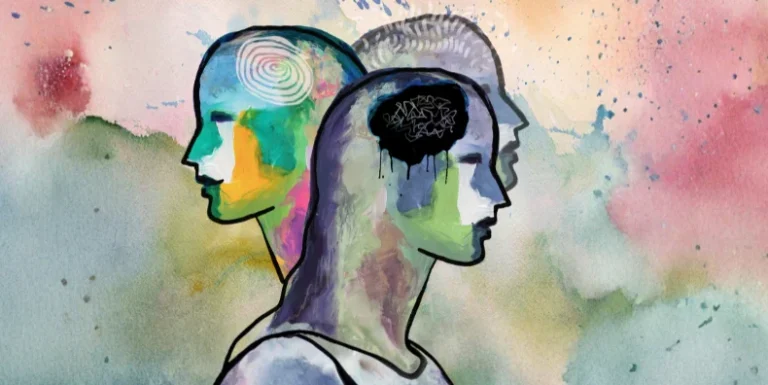












The mental landscape of bipolar disorder is frequently characterized by the dramatic peaks of mania and the debilitating valleys of depression. However, for many living with the condition, the most exhausting terrain lies in the quiet, repetitive, and often invisible struggle of intrusive thought loops. These cognitive "spirals"—unwanted, persistent, and distressing thoughts—can hijack mental clarity, making the simplest of daily tasks feel insurmountable.
Recent psychological insights and clinical observations suggest that managing these thoughts is not merely about "thinking positive," but about employing specific, tactical interruptions to the brain’s neural circuitry. For those navigating bipolar disorder, understanding the mechanics of these loops is the first step toward reclaiming focus and emotional stability.
Main Facts: The Cognitive Burden of Bipolar Disorder
Intrusive thoughts are defined as unwanted ideas, images, or urges that enter the mind involuntarily. While nearly everyone experiences them occasionally, for individuals with bipolar disorder, these thoughts often become "sticky." During depressive or anxious episodes, the mind may fixate on past regrets, catastrophic "what-if" scenarios, or intense self-criticism.
The burden of these thoughts is multifaceted:
- Emotional Exhaustion: The constant "noise" of repetitive thinking drains the individual’s emotional reserves.
- Functional Impairment: When the mind is locked in a loop, concentration on work, education, or social interaction becomes nearly impossible.
- Mood Amplification: Intrusive thoughts are not just symptoms; they are fuel. A negative thought loop can deepen a depressive state or escalate a period of anxiety into a full-blown crisis.
Clinical experts distinguish these loops from "racing thoughts." While racing thoughts—common in mania—involve a rapid succession of different ideas, intrusive loops (or rumination) involve the mind getting "stuck" on a single, often negative, track.
Chronology and Context: How Mood Shifts Fuel the Spiral
The emergence of intrusive thoughts in bipolar disorder is rarely random. They typically follow a chronological pattern tied to the individual’s mood cycle and physiological state.
The Depressive Phase
During bipolar depression, the brain’s "negative filter" is hyper-active. This is when rumination typically takes hold. An individual might spend hours replaying a minor social mistake from years prior or obsessing over perceived failures. The chronology here is backward-looking, focusing on the unchangeable past.
The Anxious/Mixed State Phase
In anxious or mixed episodes, the thoughts shift toward the future. This is the realm of the "worst-case scenario." The mind creates vivid, distressing images of future catastrophes. Unlike simple worry, these thoughts are repetitive and offer no resolution or "way out."
The Role of Sleep Disruption
A critical chronological marker for these thought loops is the disruption of sleep. Sleep architecture is often the first thing to crumble before a mood shift in bipolar disorder. When the brain is sleep-deprived, the prefrontal cortex—the area responsible for "top-down" emotional regulation—weakens. This allows the amygdala, the brain’s fear center, to run unchecked, leading to more frequent and more intense intrusive thoughts. Experts suggest that tracking sleep patterns is often the best early-warning system for predicting when these cognitive spirals will intensify.
Supporting Data: Distinguishing Between Disorders
To effectively treat intrusive thoughts, clinicians must first categorize them correctly. While they are a hallmark of bipolar disorder, they overlap significantly with other conditions.
| Feature | Bipolar Disorder (Rumination) | Obsessive-Compulsive Disorder (OCD) | Generalized Anxiety Disorder (GAD) |
|---|---|---|---|
| Primary Focus | Mood-congruent themes (failure, guilt, hopelessness). | Specific "obsessions" (contamination, symmetry, harm). | General life concerns (finances, health, safety). |
| Duration | Often fluctuates with the mood cycle. | Can be chronic and persistent regardless of mood. | Persistent, "free-floating" anxiety. |
| Mechanism | Linked to emotional regulation deficits. | Driven by the need for "certainty" or ritual. | Driven by the "what-if" cycle of worry. |
Data suggests that across all these disorders, the process of repetitive negative thinking is similar, even if the content differs. For those with bipolar disorder, the thoughts are often "mood-congruent," meaning they perfectly mirror the current emotional state, making them feel dangerously believable.
Expert Insights and Practical Strategies
Psychologists emphasize that the goal of managing intrusive thoughts is not to "stop" them—which is often impossible—but to "defuse" from them. Dr. Bruce Hubbard, a visiting scholar at Columbia University Teachers College, advocates for "cognitive defusion," a strategy where individuals learn to see thoughts as mere mental events rather than absolute truths.
Experts recommend five primary strategies to interrupt the spiral:
1. The Science of Grounding and Focus Shifting
When a thought loop begins, the brain is essentially "overheated." Grounding techniques act as a circuit breaker. By shifting focus to a neutral sensory input—the feeling of breath, the sound of a distant fan, or the texture of an object—the individual exercises the "letting go" muscle. This is not avoidance; it is a deliberate redirection of neural energy. Over time, this strengthens the prefrontal cortex’s ability to override the amygdala.
2. Strategic Distraction and Action
Action is often the antidote to rumination. Experts suggest creating a "distraction menu" during periods of wellness. This menu might include:
- Engaging in a complex task (like a puzzle or a technical hobby).
- Physical movement (which resets the nervous system).
- Social interaction (which forces the brain out of the internal loop).
The key is to identify when a thought has ceased to be "productive problem solving" and has become "anxiety pretending to be productivity."
3. Linguistic Labeling (Naming the Thought)
A powerful tool in Cognitive Behavioral Therapy (CBT) is the act of naming. Instead of saying, "I am a failure," the individual is taught to say, "I am having the thought that I am a failure." This simple linguistic shift creates a psychological "buffer zone." It transforms the individual from the participant in the thought to the observer of the thought.
4. Paradoxical Humor
While bipolar disorder is a serious condition, clinicians sometimes use "humorous defusion" to strip a thought of its power. By imagining a distressing thought being spoken in a ridiculous voice (like a cartoon character), the emotional intensity is lowered. This shift from "threat" to "absurdity" can trigger a physiological reset, reducing the "fight or flight" response associated with the intrusive thought.
5. Externalization via Writing
The "brain dump" is a recognized clinical technique. Writing thoughts down serves two purposes: it provides a physical "container" for the thoughts, allowing the brain to feel it has "stored" the information, and it allows for objective analysis later. When thoughts are on paper, patterns become visible—such as the realization that certain thoughts only occur at 2:00 AM or after a specific stressor.
Official Responses and Clinical Pathways
When intrusive thoughts transition from "exhausting" to "dangerous," professional intervention is required. The medical community has established clear protocols for when these symptoms interfere with functional living.
Therapeutic Frameworks
- Cognitive Behavioral Therapy (CBT): The gold standard for addressing the "content" of thoughts and challenging their validity.
- Dialectical Behavior Therapy (DBT): Particularly useful for "distress tolerance," helping individuals sit with uncomfortable thoughts without acting on them impulsively.
- Mindfulness-Based Cognitive Therapy (MBCT): Focused specifically on preventing the "downward spiral" that leads from a single negative thought to a major depressive episode.
Medical Intervention
Psychiatrists note that if intrusive thoughts are driven by mood instability, adjusting primary mood-stabilizing medications or anti-anxiety protocols may be necessary. If the thoughts involve urges for self-harm or are accompanied by a total loss of sleep, immediate clinical attention is the official recommendation. Unwanted thoughts of harm are common in many disorders and do not necessarily indicate intent, but they must be evaluated by a professional to ensure safety.
Implications: The Path to Cognitive Sovereignty
The long-term implications of mastering these strategies are profound. For the individual with bipolar disorder, the ability to interrupt a thought loop is the difference between a minor "bad day" and a months-long episode.
Furthermore, there is a growing recognition in the workplace and in broader society of "cognitive accessibility." As we understand more about how conditions like bipolar disorder affect focus and mental energy, there is a push for environments that allow for the "mental breaks" and "grounding periods" necessary for those managing these invisible symptoms.
The ultimate takeaway is one of empowerment: While bipolar disorder may influence the types of thoughts that arise, it does not have to dictate the duration of the spiral. By building a toolkit of grounding, labeling, and externalization, individuals can move from being victims of their thought loops to being the active managers of their mental landscape. You are not your thoughts; you are the one who hears them, and eventually, the one who can let them go.