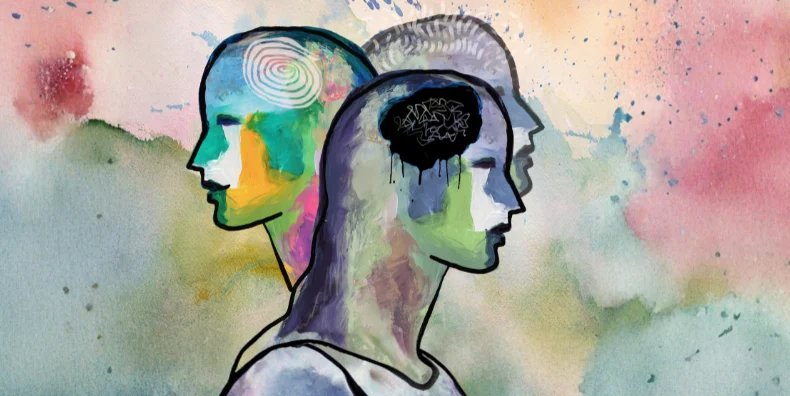
In the complex landscape of mental health, few symptoms are as frequently misinterpreted—or as clinically significant—as irritability. While everyday stress and anxiety can leave anyone feeling short-tempered, for those living with bipolar disorder, a sudden surge in irritability often serves as a primary "breakthrough symptom." It is the psychological equivalent of a smoke alarm, signaling an impending shift into a mood episode long before more dramatic symptoms, such as euphoria or deep lethargy, take hold.
Recent clinical research and expert insights suggest that recognizing this subtle shift is essential for maintaining stability. By identifying irritability early, patients and their healthcare teams can implement proactive strategies to prevent full-scale mania, depression, or the particularly dangerous "mixed state."
Main Facts: Irritability as a Clinical Red Flag
Irritability in the context of bipolar disorder is not a character flaw or a simple reaction to external frustration; it is a manifestation of shifting neurochemistry. Unlike the typical annoyance one might feel at a slow internet connection or a long queue, bipolar-related irritability is often disproportionate, persistent, and uncharacteristic of the individual’s "baseline" personality.
The Scope of the Symptom
According to research published in The Lancet, irritability is a recognized symptom across the entire spectrum of bipolar shifts. It is uniquely versatile, appearing during:
- Hypomanic and Manic Episodes: Often driven by overstimulation and a sense of frustration when the world moves too slowly.
- Depressive Episodes: Appearing as a "low-energy" grumpiness or a lack of tolerance for sensory input.
- Mixed States: A high-risk state where the energy of mania meets the hopelessness of depression, often resulting in a sharp, agitated form of irritability.
The Danger of Misidentification
One of the most critical facts regarding bipolar irritability involves the treatment of mixed states. Studies indicate that if irritability is driven by a mixed state but is misidentified as pure depression, the introduction of an antidepressant can inadvertently worsen agitation and further destabilize the patient’s mood. Therefore, pinpointing the type of irritability is a clinical necessity.
Chronology: The Anatomy of a Mood Shift
Understanding the progression of irritability allows patients to map the "chronology" of an approaching episode. Clinical experts, including former American Psychiatric Association vice president Lewis Judd, MD, emphasize that episodes rarely arrive without warning. They follow a predictable, albeit subtle, timeline.
Phase 1: The Subtle "Simmer"
The earliest stage of a mood shift is often internal. The individual may notice that everyday annoyances which they usually handle with ease—such as a partner’s habit or a repetitive noise—suddenly feel intolerable. This is the "simmer" phase. At this point, the person may still appear "normal" to outsiders, but their internal "fuse" has shortened significantly.
Phase 2: Breakthrough Symptoms and Behavioral Shifts
As the neurochemical shift progresses, irritability begins to manifest in behavior. This is where "breakthrough symptoms" appear. For some, like Terry, a patient from British Columbia, this phase is marked by a change in routine behavior. For her, the 40-minute morning commute serves as a diagnostic tool. When she finds herself yelling at other drivers and labeling them as incompetent, she recognizes it as the first sign that her mood is tilting off-balance.
Phase 3: The "Boil" (Escalation to Anger)
If the initial irritability is not addressed, it often escalates into outward anger. This is the "boil" phase. The internal tension becomes externalized through yelling, harsh language, or social withdrawal. At this stage, the individual is often in the midst of a full hypomanic, manic, or mixed episode, and the opportunity for early intervention has passed.
Supporting Data: Differentiating Bipolar 1 and Bipolar 2
The manifestation of irritability differs slightly depending on the specific diagnosis, though it remains a constant across both Bipolar 1 and Bipolar 2.
Bipolar 2 and Hypomanic Irritability
A comprehensive review in World Psychiatry highlights that for those with Bipolar 2, irritability is often more common than the "classic" euphoric mania. Because hypomania involves a nervous system running on "high gear" without reaching the psychosis or total loss of function seen in Bipolar 1, that excess energy frequently boils over into restlessness and a short fuse.
Data suggests that people with Bipolar 2 spend significantly more time in depressive states, where irritability can manifest as a "sharp" edge to their low mood. In these instances, the patient may not feel "happy" or "energetic" at all; instead, they feel "wired and tired," a hallmark of the agitated depression or mixed state.
Demographic and Clinical Patterns
Research indicates that irritability is often accompanied by a cluster of other physiological markers. Supporting data from clinical observations shows that when irritability rises, it is frequently paired with:
- Sleep Disturbances: A decreased need for sleep (mania/hypomania) or restless, interrupted sleep (mixed states).
- Speech Patterns: Increased talkativeness or "pressured speech," where the person feels they cannot stop talking.
- Cognitive Shifts: Obsessive worrying or "racing thoughts" that fuel the sense of being on edge.
Official Responses: Expert Insights on Management
Medical professionals stress that the goal of identifying irritability is not just for diagnosis, but for immediate intervention. Kemal Sagduyu, MD, a psychiatrist based in Kansas, notes that an irritable mood often creates a "feedback loop." Irritability leads to poor communication, which leads to conflict, which in turn increases frustration and further destabilizes the mood.
Clinical Advice on Self-Reflection
Dr. Lewis Judd suggests a retrospective approach to help patients identify their personal patterns. He advises patients to look back at previous episodes and ask: "What was the very first thing I noticed?" By identifying these personal "breakthrough symptoms," patients can create a personalized early warning system.
The Role of Support Systems
Clinicians also emphasize the importance of external perspectives. Because hypomania and mixed states can impair self-awareness (anosognosia), loved ones are often the first to notice the shift. For example, Laura G., a patient from Toronto, credits her partner with helping her distinguish her "baseline" assertive personality from the "overdrive" irritability that signals an approaching episode.
Implications: The High Cost of Unmanaged Irritability
The implications of ignoring irritability as a warning sign are far-reaching, affecting nearly every facet of an individual’s life. When irritability escalates into anger and conflict, the "downward cycle" begins.
Social and Relationship Strain
Unchecked irritability often leads to "frayed" relationships. Frequent outbursts or a constant "touchy" demeanor can alienate friends and family members, who may not understand that the behavior is a symptom of a medical condition. Over time, this can lead to the ending of friendships and the breakdown of support networks.
Professional Consequences
In the workplace, irritability can be misinterpreted as unprofessionalism or a lack of teamwork. "Workplace harmony" is easily disrupted when an employee is impatient with colleagues or pushes ideas aggressively without listening—a common trait noted by patients like Laura G. This can lead to disciplinary actions or job loss, further adding to the stress that fuels the bipolar cycle.
Clinical Stability
Perhaps the most significant implication is the loss of clinical stability. An unmanaged "simmer" almost inevitably leads to a "boil." By the time irritability has turned into a full mood episode, the intervention required is often more invasive, involving higher medication dosages or even hospitalization.
Conclusion: Strategies for Regulation
Managing bipolar irritability requires a two-tiered approach: immediate coping mechanisms and long-term clinical management.
Immediate Tools for Diffusion:
- Controlled Breathing: Slowing the nervous system through "box breathing" or deep diaphragmatic breaths to lower the physiological "fight or flight" response.
- Physical Space: Removing oneself from the triggering environment (e.g., stepping out of a crowded room or pulling over during a stressful drive).
- Physical Output: Using exercise or movement to "burn off" the agitated energy associated with hypomania or mixed states.
Long-Term Clinical Steps:
If irritability is new, unusually intense, or paired with a decreased need for sleep and racing thoughts, it is imperative to contact a healthcare team. Adjustments to mood stabilizers or the introduction of targeted therapy can prevent the "simmer" from becoming a crisis.
Ultimately, irritability in bipolar disorder should be viewed not as a failure of temperament, but as a vital piece of biological data. Recognizing the "warning simmer" provides the window of opportunity needed to maintain the balance of a stable life.