







By Jana Wu, LCSW, LADC, ICAADC, CASAC
For more than 15 years, I have navigated the complex intersection of mental health and substance use treatment. As I approach my 50th year, I find myself circling a question that feels both deeply personal and profoundly professional: Why is our healthcare system so perpetually quick to alleviate women’s distress before we have taken the time to truly understand its roots?
This question has gained urgent clarity through my clinical work with women in midlife. I have met countless individuals—women in their late 30s, 40s, 50s, and 60s—who have "stumbled" upon kratom. They are not typically the demographic one associates with illicit drug use; they are mothers, career professionals, and caregivers. They are looking for a way to quiet the noise of anxiety, manage chronic pain, or simply find the energy to meet the relentless, crushing demands of a "sandwich generation" existence.
The Evolution of Women’s Distress: A Chronology of "Relief"
The tendency to provide quick, pharmaceutical or herbal "fixes" for women’s emotional and physical states is not a modern phenomenon. It is a historical pattern, a recurring script where the cast of characters changes, but the underlying motivation remains the same: to keep the woman functioning.
19th Century: Hysteria and Neurasthenia
In the 1800s, the medical establishment frequently pathologized women’s stress, fatigue, and irritability under the umbrellas of "hysteria" or "neurasthenia." These diagnoses were often used as catch-all terms for women who struggled to conform to the rigid, exhausting expectations of Victorian domesticity.
Mid-20th Century: The Age of Tranquilizers
By the 1950s, the pharmaceutical revolution provided a new, more efficient solution: the tranquilizer. Drugs like Miltown (meprobamate) became ubiquitous. This trend hit its zenith in 1963 with the introduction of Valium. For decades, it was the best-selling prescription medication in the United States.
The cultural consciousness of this phenomenon was cemented in 1966 with the Rolling Stones’ hit "Mother’s Little Helper," which chronicled the daily chemical maintenance required by a housewife to survive the pressures of family life. It was a dark, satirical acknowledgment of a public health crisis: millions of women were effectively being sedated to ensure the household—and society—continued to function without interruption.
The Modern Era: Kratom and the Search for Autonomy
Fast forward nearly 60 years, and the landscape has shifted, yet the core human experience has not. Today, many women feel failed by a medical system that offers short-term sedation for long-term existential or physiological strain. In this vacuum, kratom has emerged. It is frequently marketed as a "natural" supplement, which appeals to women who are wary of the side effects or stigma associated with traditional psychopharmaceuticals. For these women, choosing kratom feels like an act of agency—an attempt to bypass a system that has historically ignored their underlying needs in favor of symptom suppression.
The Anatomy of the Midlife Crisis
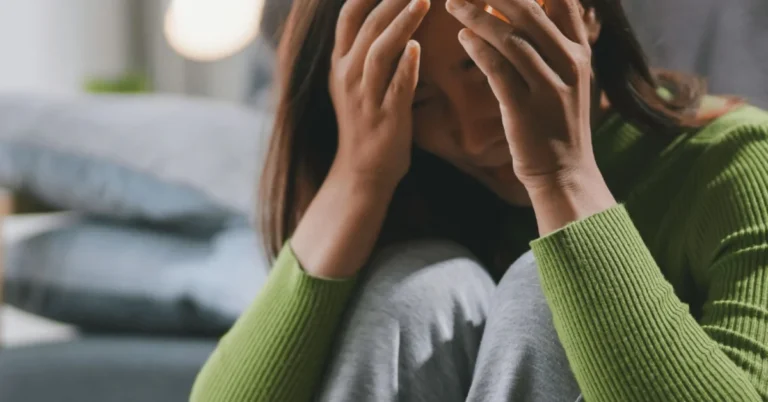
For many of the women I treat, the arrival of perimenopause acts as a catalyst. This biological transition often brings a constellation of symptoms: erratic sleep, mounting anxiety, mood volatility, and brain fog.
Simultaneously, these women are at the peak of their professional and personal responsibilities. They are managing high-pressure careers, raising children, and caring for aging parents. When a woman in this position presents to a primary care physician with "anxiety" or "fatigue," the systemic pressure is to get her back to baseline as quickly as possible. The healthcare system is structurally designed to "quiet" the symptom, not to interrogate the life that produced it.
We rarely ask the difficult questions: Why has this sleep disturbance appeared now? Why is she feeling a sense of impending doom for the first time at age 45? We prioritize the "return to function" over the "investigation of cause."
Supporting Data and Clinical Realities
While kratom—a tropical tree leaf from Southeast Asia—is often touted in online forums as a safer, organic alternative to opioids or benzodiazepines, the clinical reality is far more nuanced.
The "Natural" Fallacy
There is a dangerous conflation of "natural" with "harmless." Because kratom is not regulated by the FDA as an approved medication, the consumer has no guarantee of potency, purity, or contamination levels. A woman purchasing a package at a local smoke shop may be consuming a product with vastly different concentrations of mitragynine (the primary psychoactive alkaloid) than she did the week before. This unpredictability makes it nearly impossible to titrate safely.
The Risk of Poly-Substance Use
Perhaps the most alarming trend I see in my practice is the rise of poly-substance use. Many women who begin using kratom for anxiety are already taking other substances. They may be prescribed benzodiazepines (like Xanax or Klonopin) for their nerves, or they may be consuming alcohol to "take the edge off" at the end of a long day.
Combining kratom with central nervous system depressants—such as alcohol, benzodiazepines, or opioids—is a high-risk behavior. It can lead to severe respiratory depression, dangerous levels of sedation, and a higher threshold for withdrawal symptoms. We are not having this conversation enough in the clinical community. We treat the kratom use as an isolated incident, ignoring the pharmacological ecosystem in which it exists.
The Implications: Whose Discomfort Are We Treating?
When a patient presents to a provider, there is a subtle, often unconscious power dynamic at play regarding whose discomfort is being addressed. Is the treatment designed to alleviate the woman’s suffering, or is it designed to alleviate the discomfort of those around her—her employer, her family, or even a healthcare system that views a non-functioning woman as a problem to be solved?
The Danger of "Relief" as a Treatment Plan
Relief is not a treatment plan; it is a temporary buffer. If we rely on benzodiazepines—or kratom—to mask the symptoms of life’s pressures without addressing the systemic, hormonal, or psychological drivers of those symptoms, we are merely kicking the can down the road.
Physical dependence on benzodiazepines is a well-documented risk that can result in agonizing withdrawal, yet it remains a staple of modern treatment. Kratom, while different in its mechanism of action, presents a similar trap: the "relief" becomes the very thing that keeps the user tethered to the substance.
A Call for a New Clinical Paradigm
As clinicians, we must shift our approach from "symptom management" to "comprehensive inquiry."
- Curiosity over Compliance: We must move away from the reflex to prescribe. When a woman reports anxiety, the intake should include a deep dive into hormonal health, life-stage transitions, and social determinants of health.
- Education on Risks: We must be transparent about the dangers of poly-substance use. Patients need to know that "natural" is not synonymous with "safe," and that mixing substances can have lethal consequences.
- Addressing the Root: If a woman is drowning in the responsibilities of midlife, a pill—natural or synthetic—will not save her. We must support structural changes in how we view mental health, advocating for therapy, hormonal support, and, most importantly, the permission for women to acknowledge their own limits without shame.
Conclusion: Reclaiming the Narrative
We must offer women more than a binary choice between enduring severe, debilitating anxiety and relying indefinitely on a substance to make it disappear.
As a clinician, I have founded the country’s first clinician-led kratom support group, and what I hear in those rooms is a profound desire for agency. These women are not looking to "get high"; they are looking to "get by."
We need to listen to their stories. We need to acknowledge that the path to a substance use disorder is rarely a straight line—it often begins with a woman in pain, a provider who wanted to help, and a prescription or a supplement that offered a fleeting, dangerous moment of peace.
It is time to stop treating the symptoms of a woman’s life and start honoring the complexity of the woman herself. We must ask: What happens when the relief wears off? If we don’t have an answer, we are failing our patients.